

Blog
Reta Peptide Face: What Retatrutide Weight Loss Does to Your Face

A few months into retatrutide the scale is doing what it promised, and then the mirror starts to disagree. Cheeks look flatter, the creases from nose to mouth run deeper, the eyes sit further back and the jawline loosens. Friends say you look tired.
It is the same change people call Ozempic face, and on retatrutide it comes in larger. The 12mg group in the drug’s 80-week trial lost 70.3 lb on average, and when a Vanderbilt team measured faces on CT and MRI scans, about 7% of the midface’s volume went for every 10 kg lost (Sharma, Otolaryngology–Head and Neck Surgery, 2025).
None of that is the peptide working on the skin. It is fat leaving the face along with everywhere else, and how much shows depends on how much comes off, how old the face is and what the body has to rebuild with. For the compound itself, What Is Retatrutide? How the Reta Peptide Works covers the three receptors it targets and the trials behind it.
What is retatrutide face?
It is a deflated look: hollows at the temples and under the eyes, flatter cheeks, deeper folds around the mouth and skin that hangs a little at the jaw and neck. The face looks older than the person feels, often while the rest of the body looks better than it has in years.
The face stores fat in separate pads, some just under the skin and some deep against the bone. Weight loss drains the shallow ones hardest. In the Vanderbilt scans the superficial midface lost a median 11% of its volume and the deep layer 7%, and only the superficial loss tracked the number of kilograms that came off. Skin that spent years stretched over fuller pads does not shrink back on the same schedule, so it settles into folds.
Retatrutide adds nothing special to that. A 2026 review of 46 reports found the same hollowing after bariatric surgery and other large losses, and concluded that the drug name overstates the drug’s part: it is weight-loss deflation laid over each person’s own anatomy and age (Yoo, Aesthetic Surgery Journal, 2026). Retatrutide’s trials never scored faces, so the measurements below come from people on GLP-1 drugs such as semaglutide, and they carry over in proportion to the weight.
Retatrutide face fat: how much goes with the weight
About 7% of the midface for every 10 kg, or 22 lb, of body weight lost. The Vanderbilt group found it by pulling hospital records for 20 people who had head scans both before and after starting a GLP-1 drug. Their median age was 54, they had been on the drug for 321 days on average and they had lost 11.0 kg. Total midface volume fell by a median 9% (Sharma, Otolaryngology–Head and Neck Surgery, 2025).
Retatrutide’s trial averages run well past that 11 kg. Set against the four groups of TRIUMPH-1 and its two-year extension (Jastreboff, New England Journal of Medicine, 2026), the averages look like this:
| Dose and timepoint | Average weight lost | In pounds | In kilograms |
|---|---|---|---|
| 4mg, week 80 | 19.0% | 47.2 lb | 21.4 kg |
| 9mg, week 80 | 25.9% | 64.4 lb | 29.2 kg |
| 12mg, week 80 | 28.3% | 70.3 lb | 31.9 kg |
| 12mg, week 104 (BMI 35+) | 30.3% | 85.0 lb | 38.6 kg |
Every row is two to three times the 11 kg the scan study measured, so the face loses more than that study’s 9%, though no scan study has yet followed people that far. Bodies vary around the averages too: in TRIUMPH-1, 45.3% of people on 12mg lost at least 30%.
Retatrutide face before and after: when it shows
It builds with the weight. Some people see it within the first few months, and by the time a fifth of body weight is gone most do. In the Phase 2 trial the group stepping up to 12mg had lost about 10% by week 12 and 17.5% by week 24 (Jastreboff, New England Journal of Medicine, 2023). How Long Does Retatrutide Take to Work? maps the rest of the curve.
A 2026 survey of 1,226 people losing weight on prescription drugs shows how it builds. Among those down less than 10%, half reported at least one change they disliked in their skin, face, hair or strength. Between 10% and 20%, on GLP-1 drugs, it was 76.6%, and past 20% it was 90.9%. Overall, 29.2% named facial volume loss and 37.7% sagging skin. People on GLP-1 drugs reported most of these changes more often than people on other medicines, and they had also lost more weight (Santiago Mangual, International Journal of Women’s Dermatology, 2026).
Retatrutide face before and after photos online come from users, not trials, and most compare a flattering old picture with a harsh new one. A fair record is easy to keep: the same window light, the same distance, a relaxed face and no smile, taken every four weeks on dose day. Side by side, those show what changed and how fast.
Who sees the most change
People past 40, people who lose the most, and, in one surgical study, men. Age matters because fat props up an aging face. Among 186 pairs of identical twins, the twin carrying four more points of BMI looked older before 40 and younger after it; at eight points the crossover moved to 55. Smoking and years of sun aged the faces too, whatever the weight (Guyuron, Plastic and Reconstructive Surgery, 2009).
Weight loss surgery puts numbers on it. Seven plastic surgeons guessed the ages of 65 patients before surgery and a year after. The average guess went from 40.8 to 43.7, nearly three years older in one calendar year, and the jump was largest in men over 40, in those who started with a BMI in the 40s and in those who lost more than three-quarters of their excess weight (Valente, Plastic and Reconstructive Surgery, 2018). A smaller study asked strangers to rate before and after photos and found the bigger losers looked older but more attractive (Papoian, Archives of Plastic Surgery, 2015).
Speed or amount?
The data follow the amount. The phrase people use is rapid weight loss, yet the 2026 review found the separate effect of speed still unsettled, and the survey above never recorded it. What the evidence shows is a face that changes with the kilograms, whatever the calendar. On retatrutide, the dose climb sets the pace and the dose you stop at sets the total, and the retatrutide dosage chart shows each step.
Reta face vs Ozempic face
The same change in a larger size. Ozempic is semaglutide’s diabetes brand, and it gave the look its name. At its weight-loss dose, semaglutide took off 15.3 kg, 14.9% of body weight, over 68 weeks (Wilding, New England Journal of Medicine, 2021). On the Vanderbilt line that is about 11% of the midface. Retatrutide 12mg took off about 32 kg in 80 weeks, roughly twice the weight and twice the projected volume.
Counting everyone who started, the way the semaglutide figure was counted, retatrutide 12mg still comes to 25.0%, so the gap holds. Its glucagon arm raises the body’s energy use, and nothing so far says it singles out the face. In its body-composition substudy the share of lean tissue lost matched other obesity drugs, a point the page on muscle loss on retatrutide takes further.

How to prevent retatrutide face
Not entirely. Fat leaves the face with the rest, and no food or cream holds it in place. What you control is what the skin rebuilds with, the muscle under it and how much damage it takes along the way.
Food comes first because appetite drops so far. A 2026 review counted at least one documented nutritional deficiency in about 22.4% of people within a year of starting a GLP-1 drug, with low vitamin D in 13.6% at twelve months. Collagen is built from protein, with iron, zinc and copper among its cofactors (Karlin, Aesthetic Surgery Journal Open Forum, 2026). When portions shrink, protein goes on the plate first. The doctors behind the 1,226-person survey put adequate protein, fluids and resistance training at the base of their plan, ahead of any procedure.
Sun is the other lever. Daily sunscreen and a retinoid have the longest record of any habits against aging skin, and thinner cheeks leave less cover over the damage the sun has already done.
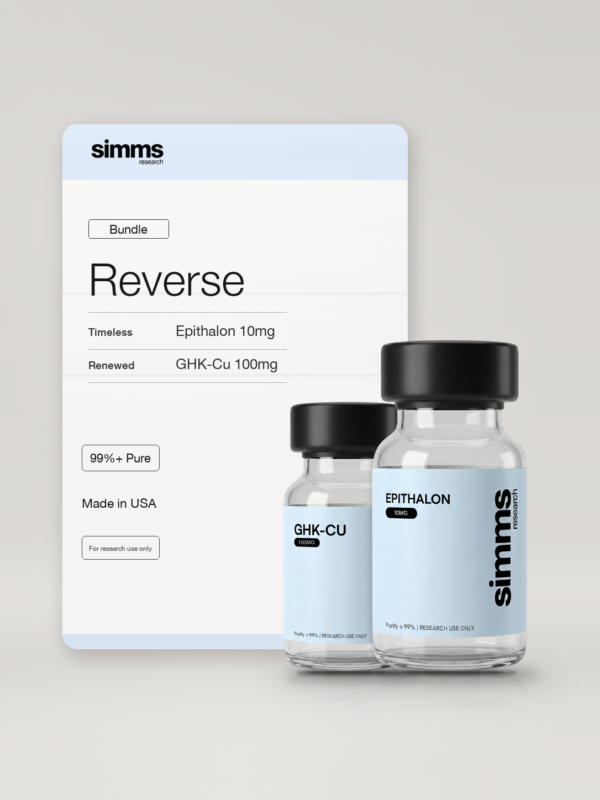
Among peptides, the best human skin data belong to GHK-Cu. In its largest facial study, 71 women with sun-damaged skin used a GHK-Cu cream for 12 weeks and came out with thicker, denser, less lax skin and finer lines (Pickart and Margolina, International Journal of Molecular Sciences, 2018). Those were creams on sun-aged faces, and nobody has tried it on weight-loss laxity yet. Simms Research sells GHK-Cu as research powder in 50mg ($48) and 100mg ($76) vials, and Injectable Copper Peptides for Skin Care covers how the routes compare.
Does loose skin from retatrutide go away?
Partly. Fat that left the face can return with any weight that comes back, and Can You Stop Retatrutide? follows the weight after the last dose. Skin that stays loose once weight holds is what clinics treat.
How long loose skin takes to settle
No study has timed facial skin after GLP-1 weight loss. Surgeons who tighten skin after large losses wait until weight has held steady for several months, because every kilogram still coming off changes the result. The same logic holds for fillers: treat the face you will keep.
What clinics use
In a 2026 survey of 406 dermatologists, plastic surgeons and other clinicians who treat these patients, midface volume loss and loose skin on the face and neck topped the list of concerns, and hyaluronic acid filler was judged the best fix for an average of 47% of patients (Fabi, Dermatologic Surgery, 2026). Collagen stimulators such as poly-L-lactic acid and calcium hydroxylapatite rebuild support over months; radiofrequency, focused ultrasound and microneedling suit milder laxity; a facelift handles heavy skin. Most of this rests on clinic experience rather than controlled trials.
What retatrutide does to your face
The same thing losing that weight any other way would do. It drains the shallow fat pads of the midface, temples and eye area, at roughly 7% of midface volume for every 10 kg, and loosens skin that was stretched over them. Retatrutide takes off more than the drugs before it, so more of its users reach the point where it shows. Complaints climb with every tenth of body weight lost, and past a fifth nine in ten people notice some change in skin, face, hair or strength. Faces over 40 show it most.
The rest is in the user’s hands. The dose sets how far the loss goes, protein and steady nutrition decide what the skin rebuilds with, and sun protection limits the damage that thinner cheeks reveal. Fillers and skin devices handle what remains once weight holds.
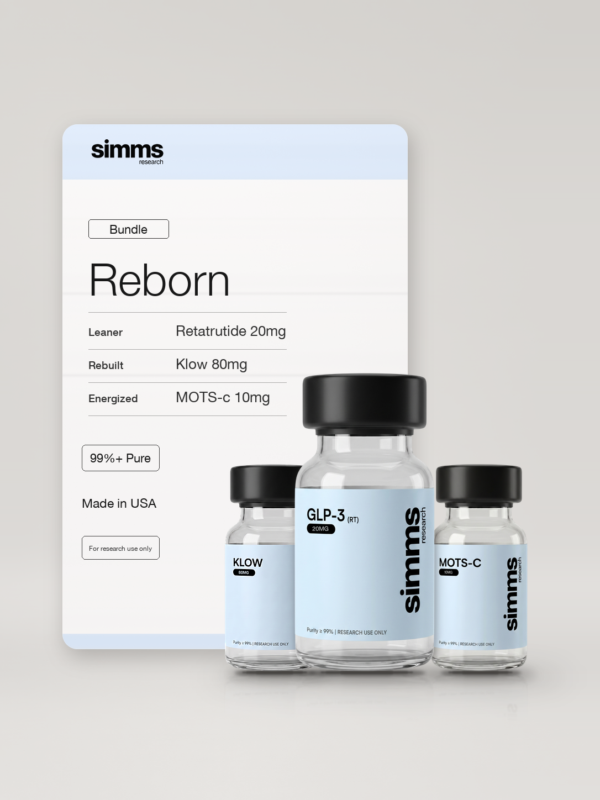
Simms Research sells Retatrutide (GLP-3) as research powder from $84 for a 10mg vial to $259 for 60mg. Its latest report comes from an independent ISO-certified lab: three 10mg vials tested on July 16, 2026 averaged 10.68mg at 99.611% purity, with every field shown on the retatrutide lab results page. Anything ordered before 5PM Eastern leaves Florida that day.
Frequently asked questions
Can retatrutide cause a rash or burning on the face?
Not a rash. The skin complaint retatrutide adds to its class is dysesthesia: tingling, prickling or burning in skin that looks the same as ever, with nothing to see. It is usually mild and fades on treatment, and the rates by dose are in retatrutide side effects.
Does retatrutide cause wrinkles?
Not by acting on the skin. Lines that were already there show more once the fat beneath them thins. In the 1,226-person survey, 24.1% reported worse skin quality, most often dryness with new fine lines, and mostly among those who had lost more than a fifth of their weight.
Will my hair thin along with my face?
It can. Shedding after large weight loss runs on its own delay, and Does Retatrutide Cause Hair Loss? covers when it starts and how long it lasts.
Is Simms Research legit?
The facts are checkable. Simms Research posts its retatrutide lab report with every tested field, ships from Florida the same or next business day, and covers every order with a Free Delivery Guarantee: lost, stolen or damaged packages are replaced at no charge. The support line, 855-592-8507, and support@simmsresearch.com are staffed on weekdays from 9AM to 5PM Eastern.