

Blog
Glutathione Injection Dosage 2026
How many doses and weeks one 1,500mg glutathione vial covers at 100–600mg, the cost per dose, why 3mL of water is too little, units at 5, 6 and 7.5mL, subQ vs IM by volume, and what the batches measured.

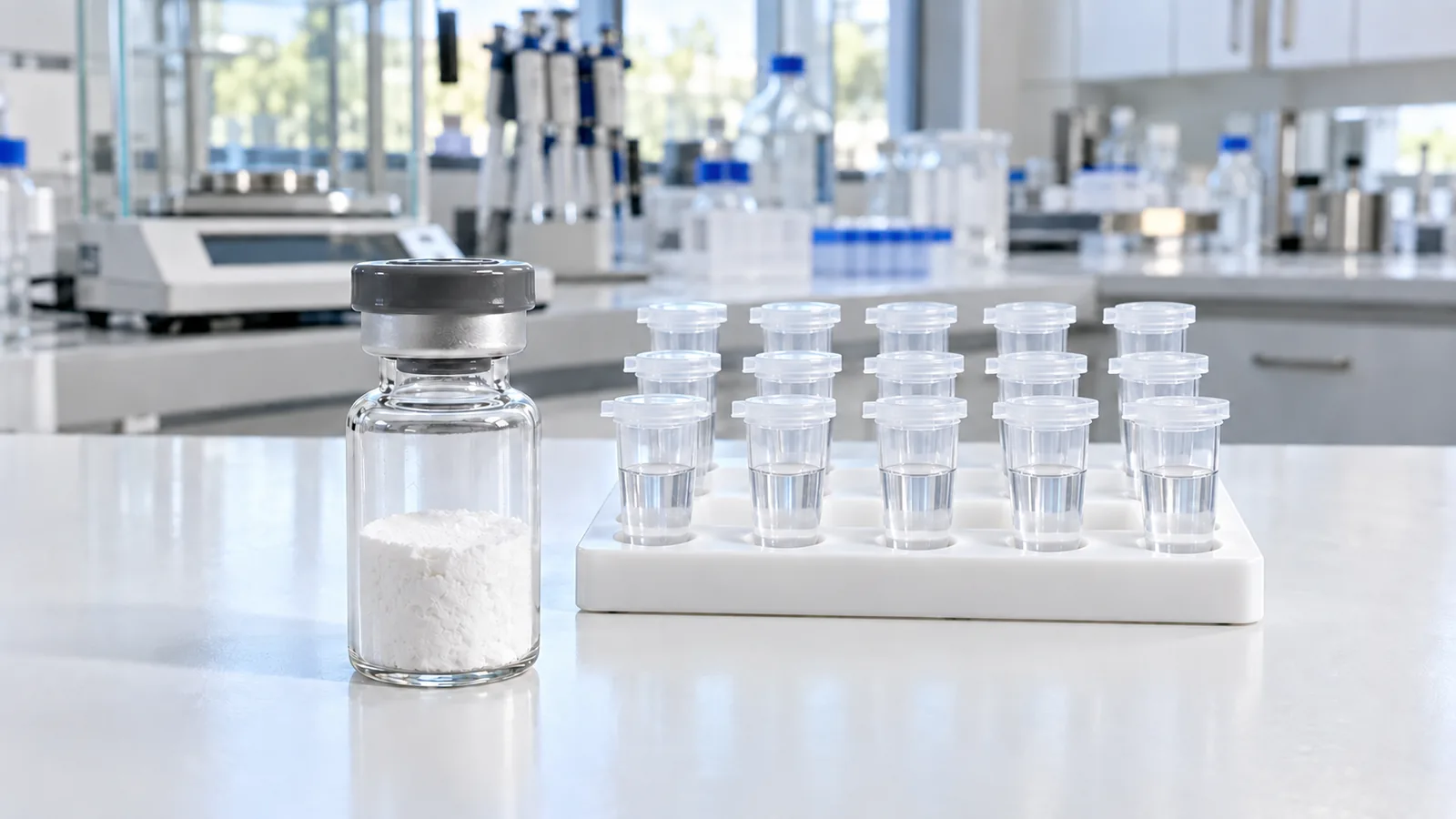
A 1,500mg vial of glutathione holds fifteen 100mg doses, seven 200mg doses or five 300mg doses, so the same $69 vial runs out in one week on one schedule and lasts seven and a half on another. Glutathione is dosed in hundreds of milligrams, not the micrograms most peptides use, and that one difference changes everything downstream: how many weeks a vial covers, how much water it needs, how big each shot is and whether it fits under the skin at all.
The figures below are worked out for the Glutathione 1500mg vial from Simms Research, using its $69 shelf price and the content its latest batch actually measured. The same arithmetic holds for any 1,500mg vial.
How long one 1,500mg vial lasts
Divide 1,500 by the dose for the number of full doses, then divide by how many times a week it runs. Cost per dose is the dose’s share of the $69 vial, which works out to 4.6 cents per milligram.
| Dose and schedule | Per week | Full doses per vial | Vial lasts | Cost per dose |
|---|---|---|---|---|
| 100mg twice a week | 200mg | 15 | 7.5 weeks | $4.60 |
| 100mg three times a week | 300mg | 15 | 5 weeks | $4.60 |
| 200mg twice a week | 400mg | 7 | 3.5 weeks | $9.20 |
| 200mg three times a week | 600mg | 7 | 16 days | $9.20 |
| 300mg twice a week | 600mg | 5 | 2.5 weeks | $13.80 |
| 300mg three times a week | 900mg | 5 | 12 days | $13.80 |
| 600mg twice a week | 1,200mg | 2, plus 300mg left | 1 week | $27.60 |
| 100mg every day | 700mg | 15 | 15 days | $4.60 |
| 200mg every day | 1,400mg | 7 | 7 days | $9.20 |
Two patterns stand out. Twice-weekly 200mg, the middle of the subcutaneous range, empties a vial in three and a half weeks. Anything at 300mg or above, or any daily schedule, goes through a vial in two and a half weeks or less, which puts a 3- or 6-vial order (10% and 15% off on the product page) on the table for runs longer than a fortnight.
The 28-day mixed window caps low-dose schedules
Once water goes in, the vial has 28 days in the refrigerator. That limit, not the milligrams, decides how much of a vial a light schedule can use. At 100mg twice a week the window closes with almost half the glutathione still in the vial.
| Schedule | Doses in 28 days | Used in 28 days | Left when the window closes |
|---|---|---|---|
| 100mg twice a week | 8 | 800mg | 700mg |
| 100mg three times a week | 12 | 1,200mg | 300mg |
| 300mg once a week | 4 | 1,200mg | 300mg |
| 200mg twice a week | 7 (vial empty in week 4) | 1,400mg | 100mg |
| 200mg three times a week | 7 (vial empty by day 16) | 1,400mg | 100mg |
So the 1,500mg vial fits 200mg doses twice a week or more, or 100mg doses three or more times a week. A once-weekly 300mg schedule uses four doses before the window closes. For lighter work, a smaller water volume does not help, because the window starts at mixing, not at the first draw.
Where the glutathione injection doses come from
Glutathione injections have no approved label, so the dose chart comes from three places: a handful of controlled trials, the strength compounding pharmacies sell, and the schedules clinics run. The trials sit well above what clinics use under the skin.
| Study | Route and dose | Schedule | Per week |
|---|---|---|---|
| Lenzi et al., Human Reproduction, 1993 | Intramuscular, 600mg | Every other day for 2 months | About 2,100mg |
| Hauser et al., Movement Disorders, 2009 | Intravenous, 1,400mg | 3 times a week for 4 weeks | 4,200mg |
| Aebi et al., European Journal of Clinical Investigation, 1991 | Intravenous, 2g per square metre of body surface | Single infusion | Single dose |
| Clinic subcutaneous protocols | Subcutaneous, 100mg | Twice a week | 200mg |
The intramuscular trial gave 600mg into the muscle every other day for two months, in men with infertility linked to varicocele or genital tract inflammation, and found better sperm motility and shape. The Parkinson’s trial ran 1,400mg intravenously three times a week for four weeks in 21 people; it was well tolerated and suggested a mild effect on symptom scores. The pharmacokinetic study explains why schedules repeat several times a week: after an infusion, blood glutathione climbed from 17.5 to 823 micromoles per litre and then fell with a half-life of about 14 minutes.
Compounded glutathione is sold at 200mg per mL in 10mL vials and labeled for subcutaneous or intramuscular use once or twice a week, which is where the common 100mg and 200mg doses come from: half a millilitre and one millilitre of that solution.
Doses studied for skin lightening
Most of the skin evidence is oral. A 2018 review in Dermatology Practical and Conceptual found that oral and topical glutathione lowered the melanin index in hyperpigmented skin and were well tolerated. The only intravenous skin trial it covered also lightened skin, but every treated patient had side effects, abnormal liver tests in 32% of them. None of the trials in that review injected glutathione under the skin or into muscle, so injection schedules aimed at skin borrow the clinic doses above.
Is 1,500mg of glutathione too much?
As a single injected dose, it sits just above the 1,400mg the Parkinson’s trial gave by vein, three times a week, without safety problems. The documented ceiling is cumulative rather than per shot: one published case describes reversible liver injury after 1,200mg intravenously every day for a month, 36,000mg in total. That is 24 full vials, against one to four vials a month for the schedules above. Under the skin, 1,500mg in one sitting is a volume problem long before it is a dose problem, as the next two sections show.
How much bac water for 1,500mg glutathione
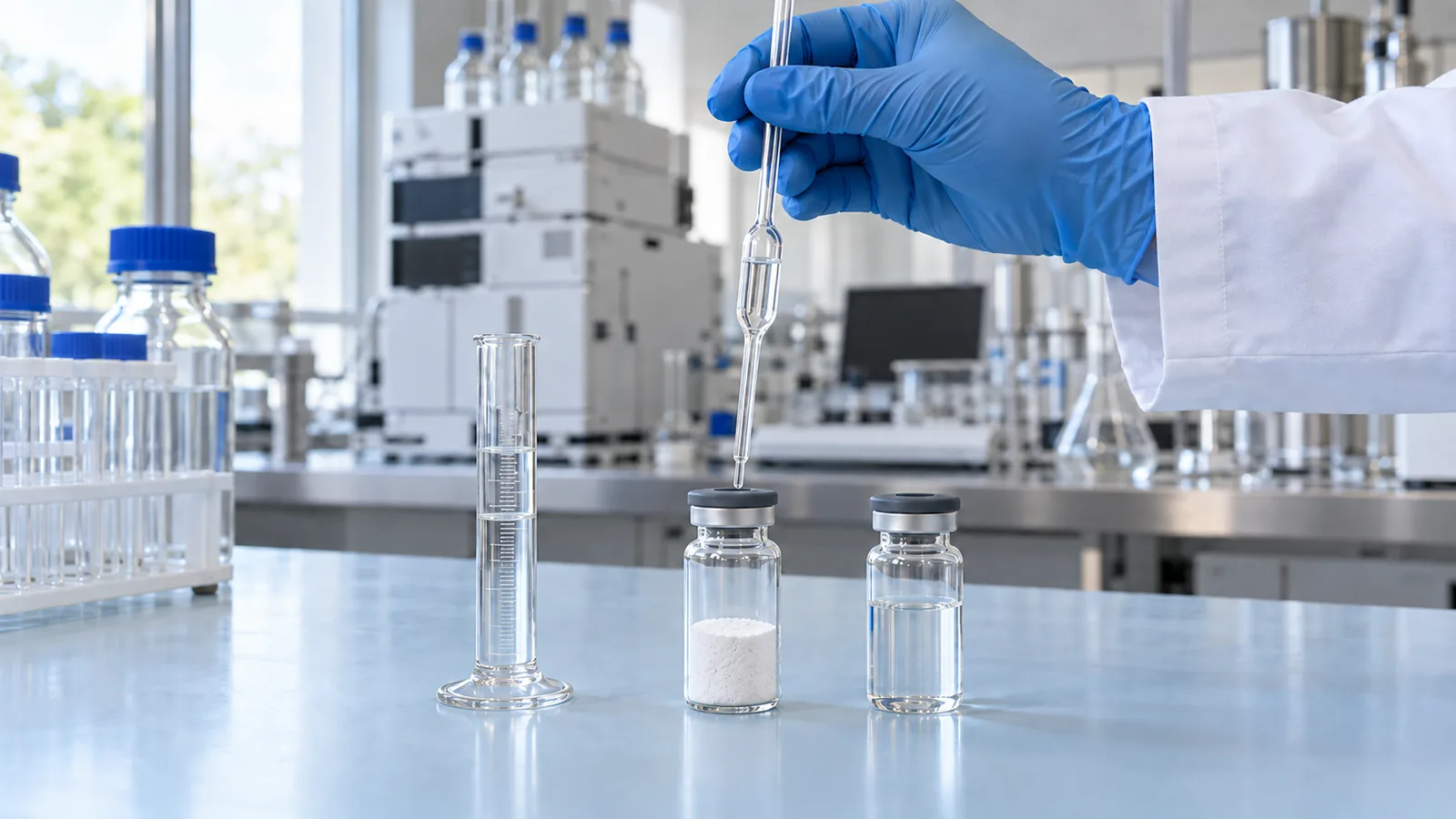
At least 5mL, and 6mL is the better default. Reduced glutathione dissolves in water up to about 292.5mg per mL, so 1,500mg needs a little over 5mL of liquid before every milligram can go into solution. The 3mL most charts give puts the vial at 500mg per mL on paper, well past that point.
Strength matters for a second reason. At these amounts glutathione is no longer a trace ingredient in the water; it is most of what is dissolved. Body fluid sits near 0.29 osmoles per litre, and every 100mg of glutathione in a millilitre adds about 0.33 on its own. Concentrated glutathione is also an acid, with two acidic groups, so a strong solution is both acidic and several times more concentrated than tissue fluid, the likely source of the sting researchers describe under the skin. More water lowers both.
| Water added | Strength on paper | Molar strength | Against body fluid | Inside solubility? |
|---|---|---|---|---|
| 3mL | 500mg per mL | 1.63 mol/L | About 5.6 times | No |
| 5mL | 300mg per mL | 0.98 mol/L | About 3.4 times | At the limit |
| 6mL | 250mg per mL | 0.81 mol/L | About 2.8 times | Yes |
| 7.5mL | 200mg per mL | 0.65 mol/L | About 2.2 times | Yes, pharmacy strength |
Six millilitres keeps the solution comfortably dissolved, puts a 200mg dose at 80 units, and still fits a standard 1mL syringe for anything up to 250mg. It also leaves 4mL in a 10mL vial of Research Water for the next vial. At 7.5mL the strength matches the 200mg per mL that compounding pharmacies sell, at the cost of larger shots.
Bac water or sterile water for glutathione
Bacteriostatic water. Even the fastest schedule in this guide draws from the same vial for a week, and most for two to four. Bacteriostatic water carries 0.9% benzyl alcohol, which keeps a punctured vial usable for 28 days; plain sterile water has no preservative and is meant to be used once. Research Water is bacteriostatic water of exactly that kind.
Glutathione dosage in units
On a U-100 insulin syringe, 100 units is 1mL. Units for a dose are the dose divided by the strength, times 100. The reconstitution calculator does the same arithmetic for any water volume.
| Dose | 5mL water | 6mL water | 7.5mL water |
|---|---|---|---|
| 100mg | 33 units (0.33mL) | 40 units (0.4mL) | 50 units (0.5mL) |
| 150mg | 50 units (0.5mL) | 60 units (0.6mL) | 75 units (0.75mL) |
| 200mg | 67 units (0.67mL) | 80 units (0.8mL) | 100 units (1mL) |
| 300mg | 100 units (1mL) | 120 units (1.2mL) | 150 units (1.5mL) |
| 400mg | 133 units (1.33mL) | 160 units (1.6mL) | 200 units (2mL) |
| 600mg | 200 units (2mL) | 240 units (2.4mL) | 300 units (3mL) |
Two things move the real strength slightly. At 1,500mg the powder adds volume of its own as it dissolves, so the finished liquid runs a little above the water added and each unit holds a little less than the table says. The batch also measured 1,552mg rather than 1,500mg, which pushes the other way. The two partly cancel; the table uses the labeled 1,500mg and the water volume, the way every syringe chart does.
Doses above 100 units do not fit a 1mL insulin syringe in one draw. They need a second draw, a second site, or a larger syringe, and at that point the route question below becomes the real one.
Subcutaneous or intramuscular: volume decides
The trials do not settle the route. The injection trial went into muscle and the rest into a vein, and none compared routes side by side. What does separate the two routes at glutathione doses is how much liquid each one takes comfortably.
Subcutaneous shots are usually kept to about 1mL a site, one full insulin syringe. A deltoid takes about 2mL into the muscle, and the thigh or buttock more. Mixed with 6mL of water, that puts the split here:
| Dose | Volume at 250mg per mL | Fits under the skin in one site? | Usual route |
|---|---|---|---|
| 100mg | 0.4mL | Yes | Subcutaneous |
| 200mg | 0.8mL | Yes | Subcutaneous |
| 250mg | 1mL | Yes, a full syringe | Subcutaneous |
| 300mg | 1.2mL | No, two sites | Two subcutaneous sites or intramuscular |
| 600mg | 2.4mL | No | Intramuscular |
Under the skin, the belly and the outer thigh are the usual sites; into muscle, the deltoid, thigh or buttock. Rotating sites matters more than usual with glutathione because each shot is a large, acidic volume. If a subcutaneous dose stings, the fix is more water, not a faster push: the 7.5mL mix is about a fifth weaker than the 6mL mix and well under half the strength of a 3mL mix.
Mixing a 1,500mg vial
Six millilitres is more than most peptide vials ever take, and the vial is sealed, so the main job is getting that much water in without fighting the stopper. Add it a millilitre at a time with a 1mL syringe, or in two passes with a 3mL syringe, and between additions let the syringe draw back the air the water pushes out. Aim the stream at the glass wall, not the powder, so it does not foam.
A gram and a half of powder takes longer to dissolve than a 10mg peptide cake. Swirl the vial slowly and give it a few minutes; shaking adds air and speeds oxidation. The finished solution is clear and colorless with no flakes left on the glass. A faint sulfur smell when the vial is opened is normal: it comes from the thiol group on glutathione’s cysteine, the same group that makes it an antioxidant.
Keeping mixed glutathione from oxidizing
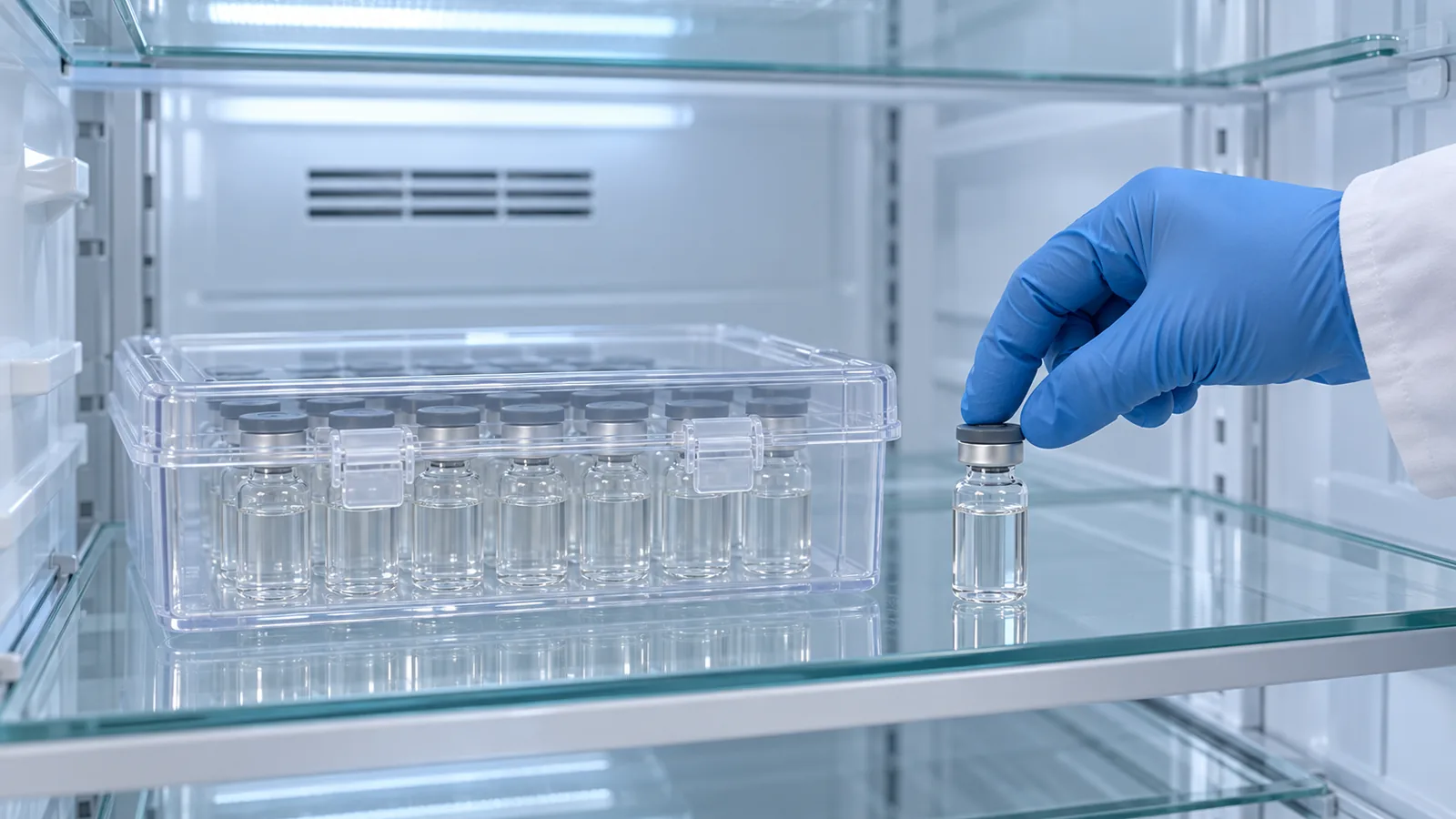
Glutathione works by giving up electrons, and in water it slowly does the same with dissolved oxygen, pairing up into glutathione disulfide, its oxidized form. Warmth, light, air and trace metals all speed that up. That is why the Glutathione 1500mg label says to keep the mixed vial at 2–8°C, dark, and to use it within 28 days, the same window compounding pharmacies put on a punctured vial.
A good vial stays clear and colorless to the last draw. A yellow tint, haze or particles mean it has changed and is done, even inside 28 days. The sealed powder is the stable form: it tolerates room temperature for weeks, keeps in the refrigerator, and goes to −20°C for long storage. Once mixed, it goes back in the refrigerator between every draw; the peptide refrigeration guide covers the rest of the cold chain.
What the 1,500mg vials measured
Every calculation above assumes the vial holds what its label says. The latest batch was tested across three vials and came in above label in all three.
| 2026-GE184 | GE122 | |
|---|---|---|
| Lab | Kovera | Freedom Diagnostics |
| Tested | July 16, 2026 | October 14, 2025 |
| Vials tested | 3 | 1 |
| Labeled content | 1,500mg | 1,500mg |
| Measured content | 1,552.02mg average (1,521.74–1,583.14mg) | 1,593.22mg |
| Purity | 99.625% average (99.441–99.809%) | 99.79% |
| Identity | Glutathione, LC-MS | Glutathione, HPLC with mass spectrometry |
| Endotoxin | Pass (limit 0.5 EU/mL) | Not tested |
| Heavy metals | Arsenic, cadmium, lead, mercury negative | Not tested |
| Sterility | No growth | Not tested |
On batch 2026-GE184 that is 1,552mg on average, about 3.5% over label, with the lowest vial at 1,521.74mg. At 200mg a dose the difference is a quarter of an extra dose per vial; it never leaves a researcher short. The endotoxin screen matters more for glutathione than for most compounds. In 2015, seven people in Sydney fell ill after infusions compounded from one batch of glutathione powder from a new overseas manufacturer, in what the state health ministry’s investigation called probable endotoxin poisoning. Both certificates are on the glutathione lab results page; the guide on how to read a certificate of analysis walks through each line.
Frequently asked questions
How much water do you mix with glutathione?
For a 1,500mg vial, 6mL of bacteriostatic water, for 250mg per mL. Five millilitres is the least that keeps it all dissolved, and 7.5mL gives the 200mg per mL pharmacy strength.
Do I need BAC water for glutathione?
Yes, for any vial drawn more than once. Its benzyl alcohol keeps the vial usable for 28 days; sterile water is single use, and a 1,500mg vial is never a single dose under the skin.
How many units is 200mg of glutathione?
80 units with 6mL of water in a 1,500mg vial, 67 units with 5mL and 100 units with 7.5mL.
Is IM more effective than subQ for glutathione?
The published trials never compared the two. The choice comes down to volume: up to about 1mL per site goes under the skin, and larger doses go into muscle or split across two sites.
Where is the best place to inject glutathione?
The belly or outer thigh for subcutaneous doses; the deltoid, thigh or buttock for intramuscular ones. Rotate sites from shot to shot.
Does glutathione burn under the skin?
Strong mixes can, because concentrated glutathione is acidic and several times more concentrated than tissue fluid. A 6mL or 7.5mL mix stings far less than the 3mL mix many charts use.
Can glutathione be injected once a week?
Yes, and 300mg once a week is a common pattern, but it uses only four doses, 1,200mg, before a mixed 1,500mg vial reaches 28 days. The last 300mg goes unused.
How long is reconstituted glutathione good for?
28 days in the refrigerator, kept dark, and less if the solution turns yellow, hazy or grows particles.
Is it okay to use expired glutathione?
Sealed powder kept cold holds up far longer than mixed solution. A mixed vial past 28 days, or one that has changed color, is replaced rather than used.
Is glutathione approved?
No. Simms Research sells glutathione for laboratory research use only.