

Blog
Retatrutide for Diabetes: How Far It Lowers A1C and Blood Sugar

Retatrutide made its name on weight loss, but its diabetes record runs just as deep. Four trials that have reported gave it to more than 3,200 adults with type 2 diabetes, and three of them are published in The Lancet.
Across those trials, A1C came down roughly two points from a start near 8%. In the first Phase 3 trial, up to 46% of people finished with an A1C under 5.7%, the range of someone without diabetes. And weight came off at 17% to 21% on the top dose, in the group of patients who usually lose the least.
For laboratory research, Simms Research stocks it as Retatrutide (GLP-3): freeze-dried powder in four vial sizes, with the batch certificate posted.
Is retatrutide used for diabetes?
Only inside clinical trials so far. Retatrutide isn’t approved for diabetes or for anything else, and type 2 diabetes is one of the uses Eli Lilly is testing it for.
Lilly’s diabetes program is called TRANSCEND-T2D, and it has three registration trials. The first gave retatrutide or placebo to people taking no diabetes medicine at all. The second put it against Ozempic in people already on metformin. The third tests it in people on basal insulin with reduced kidney function. A fourth trial, TRIUMPH-2, sits in the obesity program but enrolled only people with type 2 diabetes.
Two of its three targets already treat diabetes: GLP-1, the receptor behind Ozempic and Trulicity, and GIP, the one Mounjaro added. Both make the pancreas release insulin in step with blood sugar, strongly after a meal and barely when glucose is low. The third, glucagon, normally tells the liver to let sugar out between meals, so it was the part researchers watched closest. In the trials it showed up as fat burned, not sugar raised. What Is Retatrutide? covers the whole molecule.
Lilly’s first FDA filing is planned for early 2027, on a package built from the obesity, sleep apnea and knee pain results, and the timeline is in When Will Retatrutide Be FDA Approved? A diabetes approval rests on the TRANSCEND results below.
Retatrutide A1C reduction
About two points. On doses of 4mg and up, A1C fell by 1.3 to 2.2 points across the four trials, from starting averages between 7.7% and 8.3%. Each figure is the trial’s main estimate for people who stayed on their assigned dose:
| Trial | Who took part | Weeks | Starting A1C | Retatrutide | Comparison |
|---|---|---|---|---|---|
| Phase 2 | 281 on diet or metformin | 24 | 8.3% | −1.3 to −2.0 points | 0.0 on placebo |
| TRANSCEND-T2D-1 | 537 on no diabetes drugs | 40 | 7.9% | −1.7 to −2.0 points | −0.8 on placebo |
| TRANSCEND-T2D-2 | 1,298 on metformin | 80 | 8.3% | −2.2 points | −1.8 on Ozempic 2mg |
| TRIUMPH-2 | 1,152 with obesity | 80 | 7.7% | −1.4 to −1.6 points | −0.2 on placebo |
The biggest drops came where A1C started highest. TRIUMPH-2 began closest to target, and 92% of its people were already taking diabetes pills, so it had the least room to fall (Bellido, The Lancet, 2026). TRANSCEND-T2D-1 had the opposite setup: people diagnosed about two and a half years earlier, taking nothing. Its placebo group improved by 0.8 points with diet and exercise alone, which leaves retatrutide’s own effect at 0.9 to 1.1 points beyond it (Bajaj, The Lancet, 2026).
Against other drugs it came out ahead twice. In Phase 2, 12mg took A1C down 2.02 points at 24 weeks against 1.41 for dulaglutide 1.5mg, the Trulicity dose many patients use (Rosenstock, The Lancet, 2023). Over 80 weeks in TRANSCEND-T2D-2, the 9mg and 12mg groups each reached 2.2 points, and Ozempic at its highest dose 1.8. Mounjaro hasn’t met it head to head yet; the closest match-up of the two, trial against trial, is in Retatrutide vs Mounjaro.
Does retatrutide lower blood sugar?
Yes, and within weeks. In the first 12-week study, the daily average glucose of people on the three highest dose schedules ran about 50 to 56 mg/dL below the placebo group’s, and A1C was already 1.2 to 1.6 points lower than placebo’s (Urva, The Lancet, 2022).
In Phase 2, fasting glucose, which averaged 170 mg/dL at the start, fell by as much as 69 mg/dL on retatrutide, against 17 on placebo and 28 on dulaglutide. The finger-stick readings people took at home through the day averaged 67 mg/dL lower on 12mg by week 36. By then 80% of the 12mg group had an A1C under 7%, the usual treatment target, against 22% on placebo (Rosenstock, The Lancet, 2023). In TRANSCEND-T2D-1 as many as nine in ten people on retatrutide got under 7%, and in TRIUMPH-2 79% of those on 9mg or 12mg reached 6.5% or lower, against 26% on placebo.
Can retatrutide reverse type 2 diabetes?
It can bring A1C into the non-diabetic range while it’s being taken, and for a large share of people it did. The cut-off for that range is 5.7%. Up to 46% of people on retatrutide finished TRANSCEND-T2D-1 below it. In TRIUMPH-2 it was 40% on 9mg against 4.4% on placebo, and in Phase 2 up to 31% against 3%. The order lines up with how long people had lived with diabetes: about two and a half years in the first trial, about five and a half in the second, about eight in the third.
Remission is a stricter test. It means an A1C under 6.5% at least three months after stopping every glucose-lowering medicine (Riddle, Diabetes Care, 2021), and no retatrutide trial has taken people off the drug to check. Can You Stop Retatrutide Once You Start? covers what other weight-loss drugs show once the shots end: blood sugar follows the weight back.
Does retatrutide help insulin resistance?
Yes. Every insulin-resistance marker the Phase 2 trial took moved the right way, and further than on dulaglutide.
By week 36, fasting insulin was down by as much as 42%, and C-peptide, which shows how hard the pancreas is working to make insulin, by as much as 31%. HOMA2-IR, the standard resistance score built from fasting glucose and insulin, fell by up to 39%. Adiponectin, a hormone that healthy fat tissue releases and that rises as the body answers insulin better, climbed by up to 53% (Rosenstock, The Lancet, 2023). Blood sugar fell while the insulin needed to hold it there fell too, which is what lower resistance looks like.
Weight loss explains much of it, and the liver explains more. A liver clogged with fat ignores insulin and keeps releasing sugar it shouldn’t, and retatrutide’s glucagon side works on that fat directly; the scans are in Retatrutide for Fatty Liver. Lilly is now measuring the effect directly in a 28-week study of 95 adults with type 2 diabetes, testing insulin sensitivity and the cells that make insulin and glucagon on retatrutide, semaglutide and placebo, due to finish in early 2027.
Does retatrutide cause hypoglycemia?
Rarely, on its own or with metformin. Across the 593 people given retatrutide in Phase 2 and TRANSCEND-T2D-1, there wasn’t a single severe low, the kind that needs someone else’s help to treat (Bajaj, The Lancet, 2026).
Milder lows were scarce too. In Phase 2, where 72% of participants were on metformin, 3 of the 190 people on retatrutide had a reading under 54 mg/dL, one each at 4mg, 8mg and 12mg, and nobody on placebo or dulaglutide did (Rosenstock, The Lancet, 2023). The insulin that GLP-1 and GIP call up is matched to the sugar in the blood, so the push fades as glucose comes down to normal.
Sulfonylureas and insulin are where lows come from. Both drive blood sugar down whatever its level, and on the drugs closest to retatrutide the label tells prescribers to consider lowering their dose when the weekly shot starts; Mounjaro’s carries that line. Lilly has also run a 16-week study that brought blood sugar down on purpose, to 48 mg/dL, and timed how fast it climbed back to 70 on retatrutide and on placebo. It finished in May 2026, and the results are still to come. Drinking adds its own wrinkle for anyone on those medicines, covered in Retatrutide and Alcohol.
Can retatrutide raise blood sugar?
Not in the trials, despite the glucagon. In TRIUMPH-3, a trial in people with heart disease where some had diabetes and some didn’t, high blood sugar was logged as a side effect in 3.9% and 3.1% of people on 9mg and 12mg, against 13.4% on placebo. The placebo group ran high three to four times as often.
Retatrutide with metformin and insulin
Metformin is the pairing retatrutide has been tested with most. The A1C drops in the table above mostly came on top of it.
In Phase 2, people joined either on diet and exercise or on at least 1,000 mg of metformin a day, held steady for three months, and 72% came in on it. Everyone in TRANSCEND-T2D-2 took metformin, some with an SGLT2 inhibitor, the class that includes Jardiance and Farxiga. TRIUMPH-2 allowed up to three diabetes pills at once, sulfonylureas among them. In all three, side effects matched the rest of the class, and metformin on its own doesn’t cause lows.
Insulin is the open question. TRANSCEND-T2D-3 gives retatrutide or placebo for 52 weeks to 320 adults on at least 20 units of basal insulin a day, all with moderate or severe kidney disease. Its main treatment period ended in October 2026, and the results haven’t been released. The closest drug has been through the same test: added to insulin glargine for 40 weeks, tirzepatide cut A1C by 2.3 to 2.4 points on 10mg and 15mg against 0.86 on placebo, and people lost 7.5 to 8.8 kg while the placebo group gained 1.6 (Dahl, JAMA, 2022).
Can type 1 diabetics take retatrutide?
No retatrutide trial has enrolled anyone with type 1 diabetes, so there’s no dose, A1C or safety data to go on. Every result on this page comes from type 2, where the pancreas still makes insulin for GLP-1 and GIP to draw on. In type 1 that insulin is gone and every unit is injected, and no drug in the class is approved for it.
Retatrutide dosage for diabetes
The diabetes trials used the obesity trials’ ladder: 2mg once a week to start, then one step every four weeks through 4mg, 6mg and 9mg up to 12mg, with each person stopping at the dose they’d been assigned.
For A1C, the ladder tops out by 9mg. In TRANSCEND-T2D-1, 9mg cut it by 2.0 points and 12mg by 1.9. In TRANSCEND-T2D-2 the two doses tied at 2.2, and in TRIUMPH-2, 9mg edged 12mg, 1.6 against 1.5. Weight keeps rising with the dose: 12.7%, 19.1% and 20.8% on 4, 9 and 12mg in TRIUMPH-2. So 4mg delivered most of the blood sugar effect with about three-fifths of the weight loss, and 9mg nearly all of both. Stomach side effects bunch up in the weeks after each step and grow with the dose; retatrutide side effects has the rates for each one.
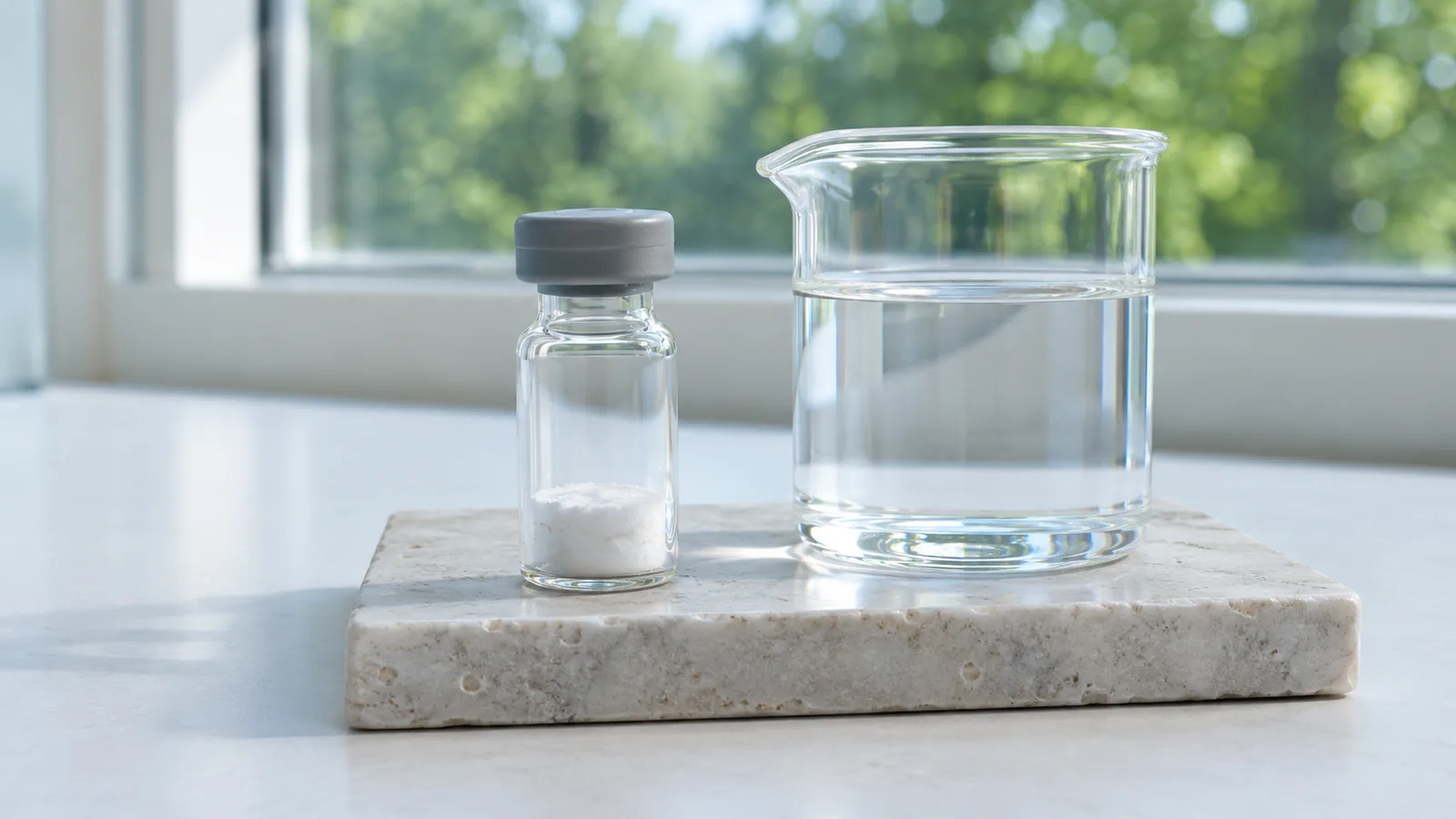
For research, Retatrutide (GLP-3) comes as freeze-dried powder: the 10mg vial is $84 and the 60mg $259, with 20mg at $129 and 30mg at $159. At the 9mg step, one 60mg vial covers six weekly doses with 6mg left over. The retatrutide dosage chart lays out each week, the retatrutide calculator converts a dose to syringe units, and retatrutide cost per month prices every step. An independent ISO-certified lab ran the current batch on July 16, 2026 and found 99.611% purity and 10.68mg of retatrutide in vials sold as 10mg, from three vials tested, with endotoxins passed and heavy metals negative; the full certificate sits under retatrutide lab results.
Is retatrutide good for diabetes?
On the trial record, yes. It takes roughly two points off A1C, beat both Ozempic 2mg and dulaglutide 1.5mg on it where they were tested side by side, and rarely causes lows unless a sulfonylurea or insulin is in the mix. The bigger difference is weight: 20.9% at 80 weeks against 9.4% for Ozempic in the same trial, in people whose diabetes usually holds weight loss back.
The trade is tolerance at the top dose. In that same trial, 7.9% stopped 12mg over side effects against 2.7% on Ozempic, while 9mg reached the same A1C with fewer stopping. The insulin and kidney trial is still to report.
Frequently asked questions
How fast does retatrutide lower A1C?
Within 12 weeks it was 1.2 to 1.6 points below placebo, and in Phase 2 most of the drop was in place by week 24 while weight kept falling. The weight timeline is in How Long Does Retatrutide Take to Work?
Is retatrutide approved for diabetes?
No, it isn’t approved for any use yet. Lilly plans its first FDA filing in early 2027, and TRANSCEND-T2D-3 is the last of the three diabetes registration trials to report.
Does retatrutide replace metformin?
In the trials it was added, not swapped: people on metformin stayed on it, and the A1C results came on top of it. TRANSCEND-T2D-1 showed retatrutide working alone in people taking nothing else.
Is Simms Research legit?
Its retatrutide batch is on record, 99.611% purity and 10.68mg in 10mg vials, with the certificate under retatrutide lab results. Orders placed before 5PM Eastern leave the same day, and a parcel that goes missing or arrives damaged gets replaced free. Support picks up at 855-592-8507 or support@simmsresearch.com, Monday to Friday.