

Blog
How Long Does Bac Water Last? Opened, Unopened and Refrigerated

Bac water lasts until the expiry date printed on the vial while it stays sealed, and 28 days from the first puncture once it’s opened, whichever comes first. The maker sets the first date from its own stability testing. The second is the span the pharmacopeia’s preservative test is built around, and the one hospitals, pharmacies and the CDC all count from.
Two dates decide it because the water itself doesn’t spoil. What runs down is the benzyl alcohol that keeps an opened vial free of bacteria, and a bottle on its last good day looks exactly like one past it.
Simms Research sells its bac water as Research Water, 0.9% benzyl alcohol in sterile water, 10mL for $20, and gives it the same instructions a pharmacy bottle carries. Room temperature while sealed, the date written on the vial at the first puncture, finished within 28 days.
How long does bac water last?
The table covers every state a bottle can be in. Where the vial is kept changes neither date; poor storage can only cut them short.
| State of the vial | How long it lasts | Where it is kept |
|---|---|---|
| Sealed, never punctured | Until the printed expiry date | Room temperature, 20–25°C (68–77°F), out of direct light |
| Opened | 28 days from the first puncture, or the printed expiry if that is sooner | Room temperature, upright and capped |
| Opened and refrigerated | The same 28 days | 2–8°C (36–46°F), which adds no time |
| Frozen at any point | Replace it | No label calls for freezing |
| Hazy, flecked, tinted or with a broken seal | Finished, whatever the date | Anywhere |
| Mixed into a peptide vial | The peptide vial’s own clock, counted from mixing day | The fridge, between draws |
The CDC puts both dates into one rule for clinics: an opened multi-dose vial is dated and thrown out within 28 days unless its maker states another date, and that beyond-use date can never run past the maker’s original expiry (CDC, Preventing Unsafe Injection Practices, 2024). A bottle first opened a week before its printed expiry therefore has a week left, not four.
How long does bac water last unopened?
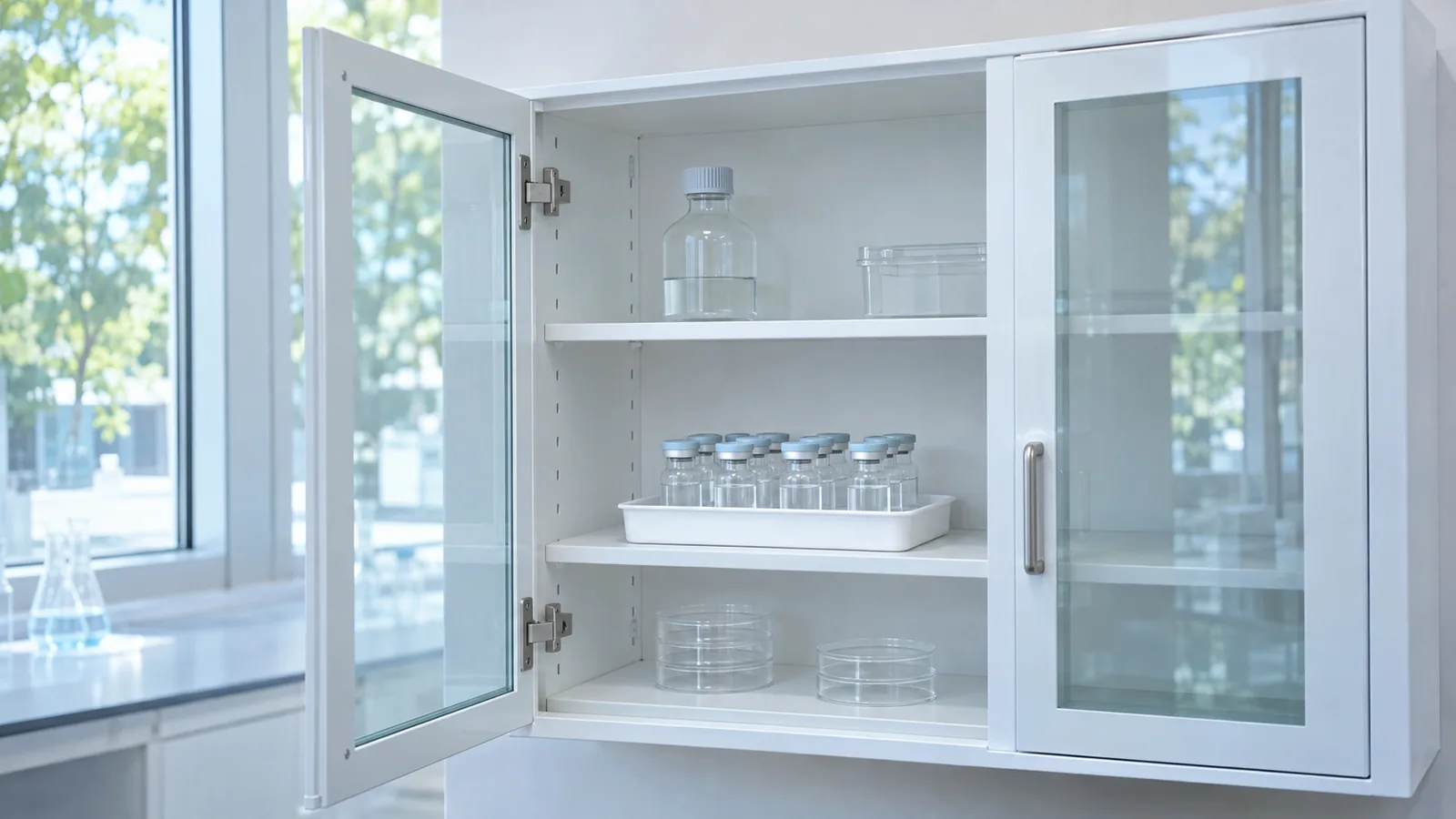
Until the expiry date on the vial, which makers set years out. Hospira prints a lot number and an EXP date on every vial label (Hospira label, FDA, 2026), and Pfizer gives the bac water it supplies as a diluent in the UK a three-year shelf life, kept below 25°C (Pfizer UK product information, 2024).
That date is the maker’s promise that two things still hold: the water is sterile, and the benzyl alcohol is at full strength. Until then a sealed vial asks for nothing more than a shelf at room temperature, out of the sun. Simms Research gives Research Water the same instructions: 20–25°C (68–77°F) while unopened, protected from light.
Does bac water expire?
Yes, sealed or not. The printed expiry covers a vial nobody has touched, and the 28-day limit applies on top of it once the stopper is pierced. A sealed vial past its date isn’t spoiled in any way the eye can catch. It has simply passed the last day anyone tested it for.
Bac water left in a hot car or a cold mailbox
Hospira’s label points to the USP’s controlled room temperature: 20–25°C as the norm, excursions between 15 and 30°C (59–86°F) allowed, and brief spikes up to 40°C (104°F) as long as each lasts under 24 hours. A sealed vial that spent an afternoon in a warm delivery van or mailbox is inside that. One that sat for days in a parked car in July, or froze solid on a porch in January, gets replaced. Carrying a kit on the road is covered in Traveling With Peptides.
How long does bac water last after opening?
28 days from the first time a needle goes through the stopper. How much is left, how often it was drawn from and whether it lived in the fridge make no difference: day 28 ends it.
Why 28 days?
The number comes from the test every preserved multi-dose injectable has to pass. USP chapter 51 requires antimicrobial effectiveness to be shown for all injections packaged in multiple-dose containers, and it shows it the hard way: the product is deliberately contaminated and the survivors are counted at 7, 14 and 28 days. To pass, bacteria have to fall at least tenfold by day 7 and a thousandfold by day 14, then show no increase through day 28, with yeasts and molds held flat throughout (USP chapter 51, Antimicrobial Effectiveness Testing).
The preservative is proven over four weeks and no further. Past that, nothing has been shown, while every puncture since the first day has been one more chance for something to get in. Drug makers build the date into the packaging: Pfizer’s multi-dose trastuzumab vial, mixed with bac water, carries a blank “Discard after” line on its label, filled in on the day it’s opened (Trazimera label, FDA, 2026).
Can I use bac water after 28 days?
No. Day 29 looks exactly like day 27, which is why the calendar decides and the eyes don’t. The arithmetic makes it an easy call, too: the few milliliters left in a 10mL bottle on day 28 are worth less than half of a $20 vial, and the next thing they would go into is a vial like Retatrutide (GLP-3), $84 for 10mg and drawn from for weeks after mixing.
How bac water degrades
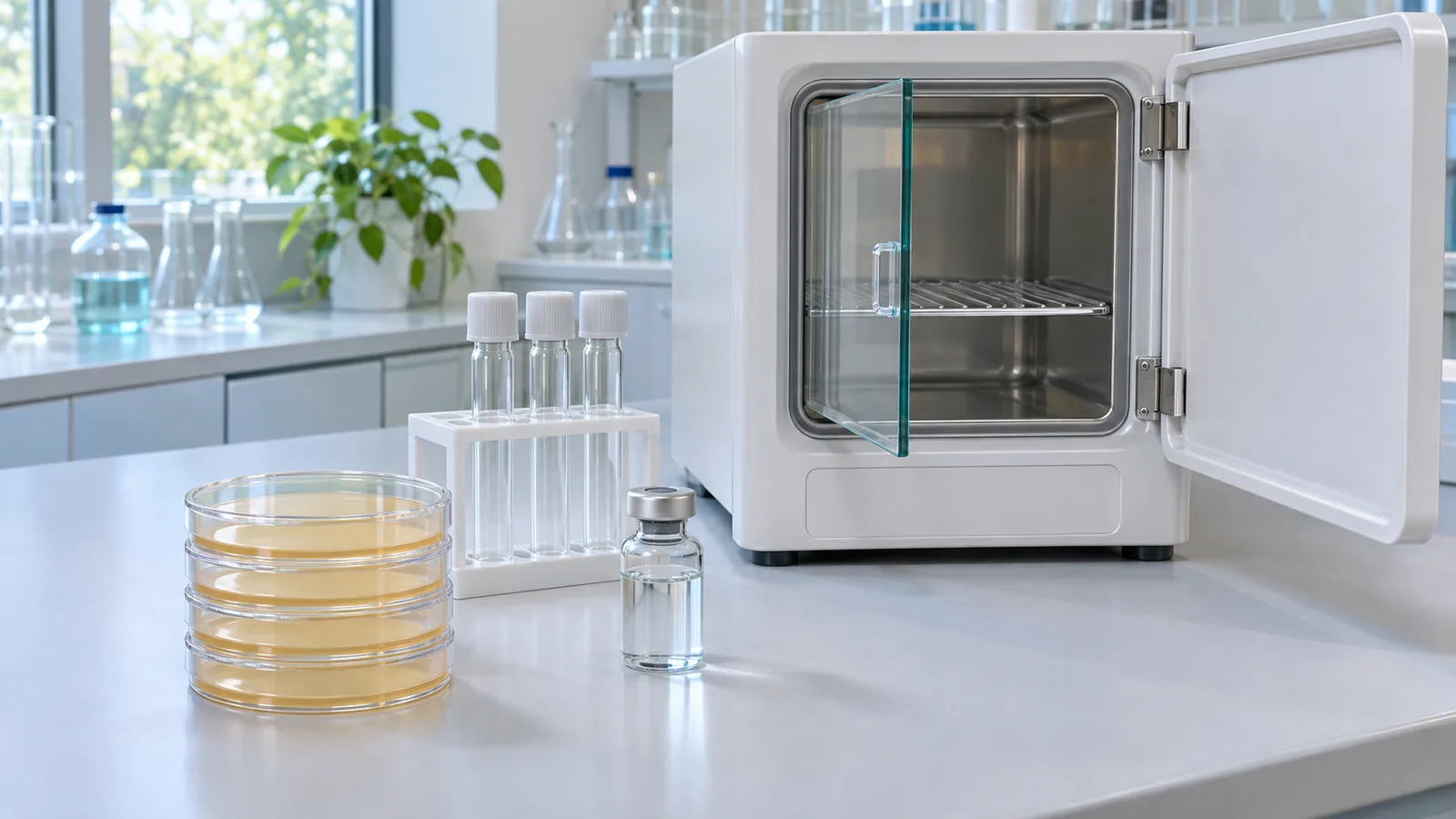
Benzyl alcohol leaves the water in three ways, and none of them shows in the bottle.
Air oxidizes it. Benzyl alcohol slowly turns into benzaldehyde, then benzoic acid, and each step leaves less of the preservative in the water. Benzaldehyde is toxic in its own right, and injectables preserved with benzyl alcohol are tested for it (Mashayekhi, Analytical Sciences, 2011). Heat and light speed the reaction, which is why bac water is kept below 25°C and out of the sun.
The rubber takes some in. In prefilled syringes of bac water diluent, benzyl alcohol fell steadily through a drug maker’s stability testing: the preservative bound to the rubber stopper and tip cap, and passed through them as vapor (Thakare, European Journal of Pharmaceutics and Biopharmaceutics, 2019). Vial stoppers are rubber too, which is part of why even a bottle nobody has opened carries an expiry date.
Every puncture wears the stopper. Each needle leaves a track through the rubber, and a wide one can cut a sliver loose into the water: rubber cores turned up in 26 of 150 repeatedly punctured multi-dose vials in one test, most often with the widest, 18-gauge needle (Chotikawanich, Heliyon, 2022). The insulin syringes used for peptides are far finer than that.
Does bac water go bad?
Yes, in two ways, and only one of them shows. Past its dates it goes bad invisibly: neither the sterility nor the preservative is covered by anything any more. Contaminated, it usually shows, as haze, specks, a film on the glass or any tint in a liquid meant to be invisible.
Hospira’s label sets the bar in one line: the water gets used only when it is clear and its seal unbroken (Hospira label, FDA, 2026). A crimp that spins loose, a flip-off cap already missing when the vial arrives or a stopper torn ragged by repeated draws all fail the second half of it.
A bitter-almond smell is one more sign: it points to benzaldehyde, the benzyl alcohol breaking down. A sliver of rubber in the water points to a cored stopper. Either one ends the bottle, whatever its dates.
What does expired bac water look like?
Usually exactly like fresh bac water. Benzyl alcohol has no color, and a vial past its printed date or its 28 days rarely looks any different, which is why the date on the glass is the check that counts. Haze is a separate failure, and haze in a mixed peptide vial has causes of its own, set out in Cloudy Peptide After Reconstitution.
Can you use expired bac water?
No. Egrifta WR’s instructions have the user check the EXP date on the bac water bottle before mixing, alongside the date on the drug vial, and not use it if it’s expired (Egrifta WR label, FDA, 2026). Replacing it costs $20 for 10mL of Research Water, less than any peptide it would be mixed into.
How to store bac water
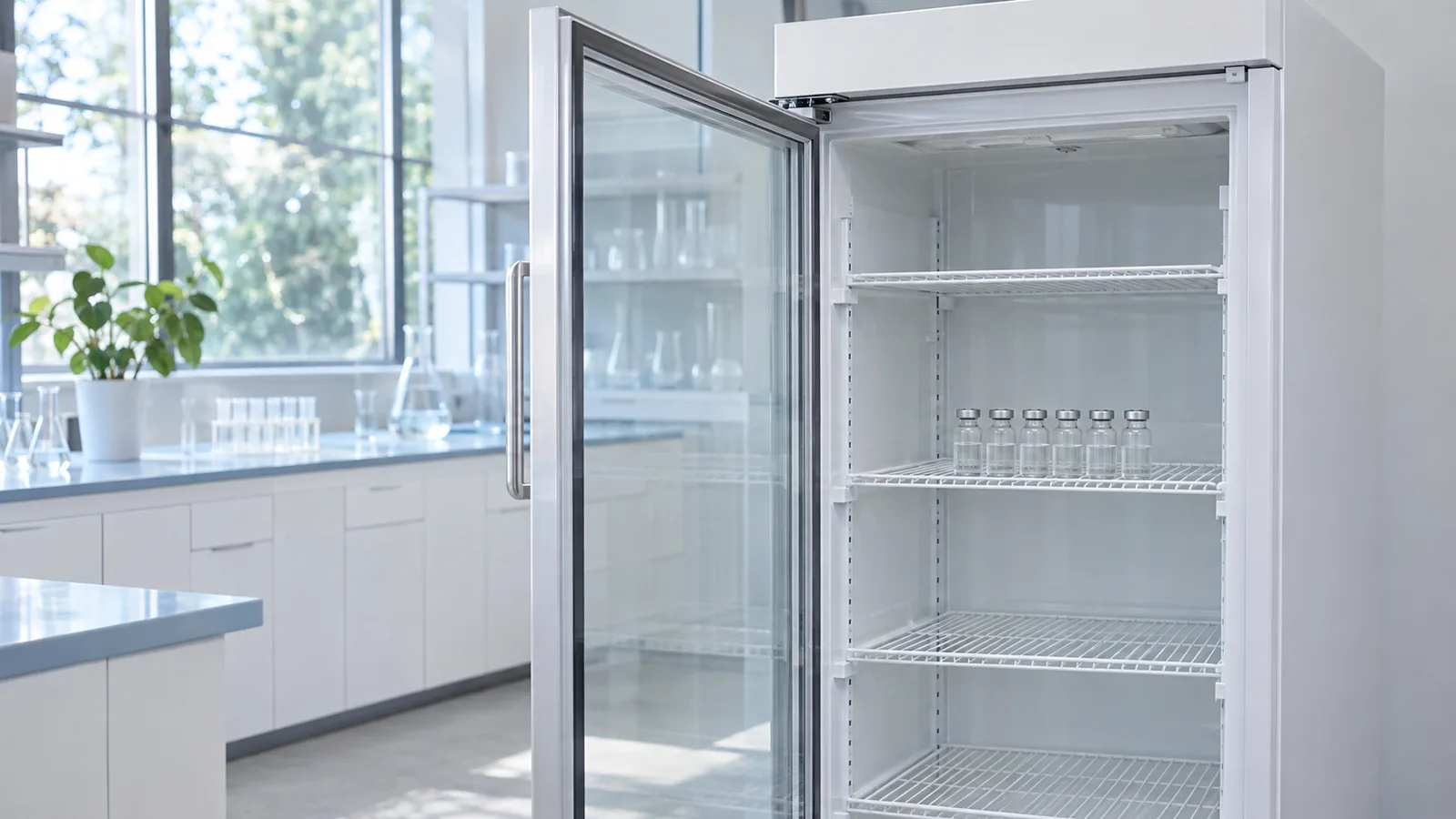
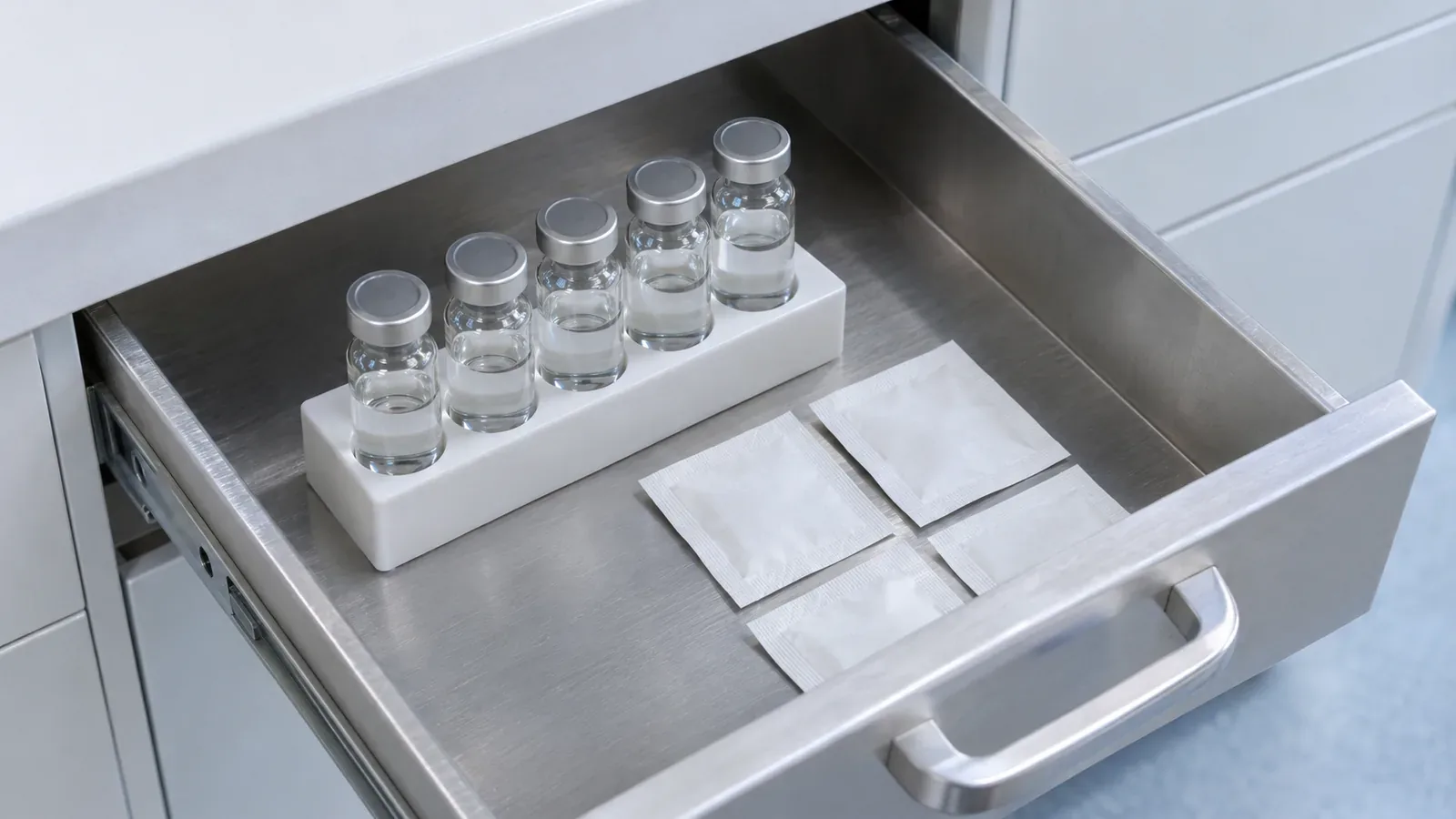
Upright, capped, at room temperature and out of the light, with the date of the first puncture written on the vial in marker. A drawer or a cupboard away from a window or a heater does the job; a sunny sill, a car door pocket or a shelf above the oven don’t.
The date on the glass is the step most often skipped. In a 1,300-bed hospital, only half of 227 opened multi-dose vials carried an opening date, and 13% of those that did were already past their limit (Mattner, American Journal of Infection Control, 2004). In another hospital, 4 of 96 vials in use were no longer sterile, three of them preserved multi-dose vials (Nogler-Semenitz, Wiener Medizinische Wochenschrift, 2007).
Does bac water need to be refrigerated?
No, sealed or opened. The US pharmacy labels say to store it at 20–25°C (68–77°F), and the branded kits that ship it keep it out of the fridge on purpose.
Novarel, an hCG kit, makes the split plain. Each vial ships beside a 10mL vial of bac water, the size Research Water comes in, and the whole box is kept at 20–25°C, with excursions to 15–30°C allowed. Only after mixing does the label send the vial to the refrigerator (Novarel label, FDA, 2025). Serostim and Egrifta WR keep the bac water in their kits at room temperature as well.
Does bac water need to be refrigerated after opening?
No, and room temperature suits an opened bottle better. Nothing on the label changes at the first puncture. Cold also slows the preservative down: when preserved multi-dose vials were seeded with bacteria, a benzyl alcohol vial among them, the bacteria stayed alive significantly longer at 5°C than at 25°C, and the study advised keeping opened vials at room temperature unless the drug inside needs the cold (Lehmann, American Journal of Hospital Pharmacy, 1977).
A bottle kept cold anyway gets ten minutes on the bench before mixing, since powder dissolves more slowly in chilled water.
How long does bac water last in the fridge?
Exactly as long as on the shelf: until the printed date while sealed, 28 days once opened. The fridge adds no days, because the limit counts from the first puncture wherever the vial lives. Drug labels treat mixed vials the same way: Gonal-f gives a vial mixed with bac water a maximum of 28 days whether it sits in the refrigerator or at room temperature (Gonal-f label, FDA, 2025).
Can bac water be frozen?
It shouldn’t be. No label calls for it, and water grows by about 9% as it turns to ice, enough to lift a stopper against its crimp or crack the glass. A bottle that froze by accident gets replaced, since a seal that shifted and settled back looks no different from one that never moved.
The freezer is a poor place for anything mixed with it, too. Benzyl alcohol made freeze-thaw damage to an antibody drug markedly worse, adding aggregates and particles, and the authors advise keeping such solutions at 2–8°C rather than frozen (Xu, International Journal of Pharmaceutics, 2026).
How to use bac water correctly
Check both dates before every mix, the printed expiry and the 28 days since the first puncture, and hold the bottle to the light: clear, colorless, nothing floating.
The flip-off cap comes off once, on the day of the first draw, and that is the date that goes on the glass. From then on the stopper gets an alcohol wipe and a few seconds to dry before every draw, and the bottle goes back in its drawer the moment the draw is done.
Let the water run slowly down the inside of the peptide vial rather than onto the powder, then swirl until it clears. Never shake it. The mixed vial goes into the fridge at 2–8°C (36–46°F) and starts its own clock that day.
Can bac water be used more than once?
Yes, that is what a multi-dose vial is for. One bottle can mix several peptides over its 28 days, as long as every draw starts with a wiped stopper and a fresh sterile needle, so nothing from a peptide vial ever travels back into the water. The amounts for every vial are in How to Reconstitute Peptides, and the peptide calculator turns any amount of water into units on the syringe.
Bac water vs sterile water vs saline
The difference is the benzyl alcohol, and it is the only reason an opened vial lasts 28 days rather than a single use. Take the 0.9%, 9mg per milliliter, out of bac water and what remains is plain sterile water.
One drug label shows the difference on a single product. Pfizer’s trastuzumab kit is mixed with the bac water packed beside it, at 1.1% benzyl alcohol, and the mixed vial is kept in the fridge and drawn from for up to 28 days. For a patient who has to avoid benzyl alcohol, the same powder is mixed with sterile water instead, and the label turns it into a one-time solution: use immediately and discard any unused portion (Trazimera label, FDA, 2026). Same vial, same drug, same 20mL of water. The preservative accounts for all 28 days.
The preservative travels with the water. A peptide mixed with bac water becomes a preserved multi-dose solution in its turn, while one mixed with sterile water has nothing to hold back whatever each needle carries in. Bac Water for Peptides adds distilled water to the comparison, with the amounts for each peptide.
Saline comes both ways as well. Bacteriostatic saline carries the same 0.9% benzyl alcohol in a multi-dose vial (Hospira label, FDA, 2026), while plain saline has none:
| Diluent | Preservative | Draws per vial | Once opened |
|---|---|---|---|
| Bac water | 0.9% benzyl alcohol | Many | 28 days |
| Bacteriostatic saline | 0.9% benzyl alcohol | Many | 28 days |
| Sterile water | None | One | Discard the rest |
| Saline (0.9% sodium chloride) | None | One | Discard the rest |
Research Water: bac water from Simms Research
Research Water comes one 10mL vial at a time, so every four-week stretch can start on a fresh bottle. Three or more vials take 5% off, six or more 10%, and Simms Rewards points on every order turn into free products.
It ships with the peptides it mixes: the same day for orders in before 5 PM Eastern, by UPS Standard or FedEx 2-Day, with FedEx 2-Day free over $200. The Free Delivery Guarantee covers it like every order, so a parcel lost in transit, stolen after a delivery scan or damaged is replaced or refunded.
Frequently asked questions
How long does retatrutide last once mixed with bac water?
Up to 28 days in the fridge, counted from the day it was mixed, not from the day the water bottle was opened; each vial keeps its own clock. How to Reconstitute Retatrutide gives the water for every Retatrutide (GLP-3) size, Do Peptides Need to Be Refrigerated? covers mixed vials of every kind, and How Long Does Tirzepatide Last in the Fridge? covers Tirzepatide (GLP-2).
Where can I buy bac water today?
Pharmacies, online stores and next-day options are compared in Bac Water Near Me: Where to Buy It Today.
Is Simms Research legit?
Every claim can be checked. Batch reports from an independent ISO-certified lab are posted on its lab results pages, orders in by 5 PM Eastern leave the same day, a phone line (855-592-8507) is staffed Monday to Friday, and a Free Delivery Guarantee covers lost, stolen and damaged parcels on every order.
Is there a discount code or affiliate link on this page?
Neither. No link here earns anyone a commission.