

Blog
What Is GLP-3 (Retatrutide)?

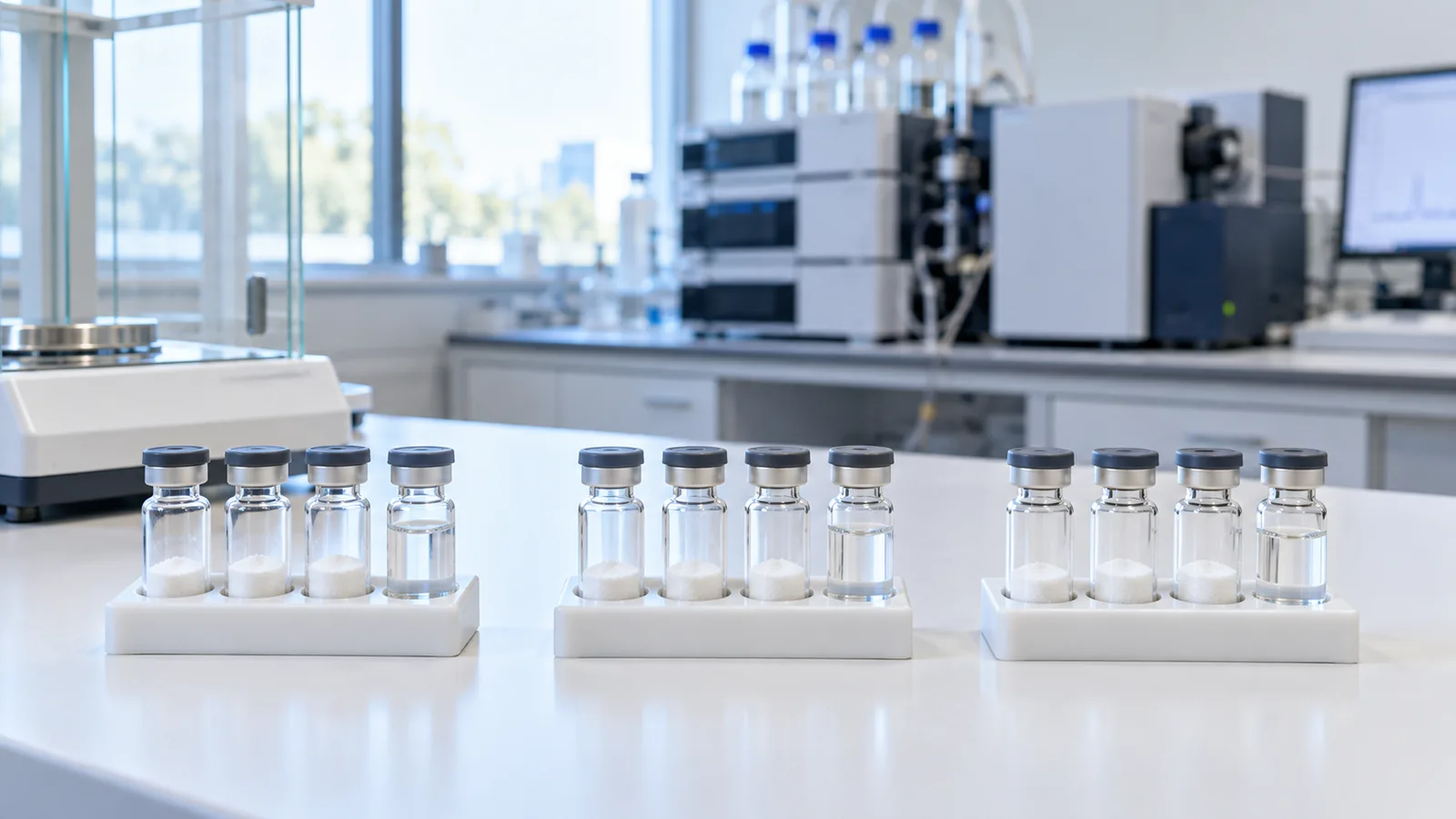
GLP-3 usually shows up as a label before anyone explains it. It sits on a vial or a price list next to GLP-1 and GLP-2, sometimes with RT or R on the end, and the three look like model years of one drug. The numbers actually count receptors, and the compound behind the third has just more than doubled the weight loss of the first in a head-to-head trial. Simms Research sells it under its own name as Retatrutide (GLP-3), with the lab report for the current batch on the product page.
What is GLP-3?
GLP-3 is retatrutide. Every research vial sold under the name, with or without RT on the end, is selling the same molecule: the once-weekly peptide Eli Lilly developed under the code LY3437943. It switches on three receptors at once, those for GIP, GLP-1 and glucagon, and the 3 counts them. GLP stands for glucagon-like peptide, borrowed from GLP-1, the gut hormone that Ozempic copies and that gave its name to the whole class of weight-loss injections.
There is no GLP-3 in the body. The gut makes GLP-1 and GLP-2, both cut from one precursor protein, proglucagon, and when that precursor was decoded in 1983 the two sequences were numbered by where they sit along the chain. The chain holds only two. So GLP-3 names a drug rather than a third hormone, and the 3 doesn’t mean three times the strength of GLP-1.
Retatrutide is a triple agonist, and GLP-3 is an informal label that started in the media. The name lives on vials, price lists and short videos instead. Retatrutide has no brand name yet; that comes with approval.
GLP-1, GLP-2 and GLP-3: what the numbers mean
Among research sellers the three names form a ladder, and each rung adds one receptor. Semaglutide works on one, the GLP-1 receptor, so it is GLP-1. Tirzepatide adds GIP, so stores call it GLP-2. Retatrutide adds glucagon on top of both and became GLP-3.
| GLP-1 | GLP-2 | GLP-3 | |
|---|---|---|---|
| Compound | Semaglutide | Tirzepatide | Retatrutide |
| Receptors it switches on | GLP-1 | GIP and GLP-1 | GIP, GLP-1 and glucagon |
| Developer | Novo Nordisk | Eli Lilly | Eli Lilly |
| Approved brands | Ozempic, Wegovy | Mounjaro, Zepbound | None yet |
| Codes seen on vials | SM, SEMA | T, TZ, TR, TRZ, TIRZ | R, RT, RTA, RETA |
| Best published weight loss | 16.9% at 68 weeks | 22.5% at 72 weeks | 28.3% at 80 weeks |
The middle rung is the one that trips people up. GLP-2 is also a real gut hormone with an unrelated job: it keeps the lining of the small intestine growing and absorbing. The approved drug that copies it, teduglutide (Gattex), treats short bowel syndrome and plays no part in weight loss. In the research market, though, GLP-2 just means tirzepatide, which Simms Research sells as Tirzepatide (GLP-2).
What is GLP-3 RT?
GLP-3 RT is retatrutide, and so are GLP-3 R, GLP-3R, GLP 3 (RT) and RETA. The number places the compound on the ladder and the letters name it: RT, R, RTA and RETA all stand for retatrutide, the way TZ, TRZ and TR mark tirzepatide and SM marks semaglutide. A vial marked GLP-3 R and one marked GLP-3 RT hold the same molecule and are dosed the same way.
Some stores drop GLP from the label altogether and use a house code such as AP-RTA-3, where RTA and the 3 carry the same meaning. Those are decoded one by one in Retatrutide Code Names Explained. The one GLP-3 label that holds more than retatrutide is a blend: a vial sold as GLP-3 RT 25mg / Cag 5mg also contains cagrilintide, an amylin analogue, so only 25mg of its 30mg is retatrutide.
What does GLP-3 do?
GLP-3 does three jobs at once. It cuts appetite, it keeps blood sugar in check after meals, and it pushes the body to burn more of its stored fat. Each job traces back to one of its three receptors, and one injection covers a week: a fatty-acid tail binds retatrutide to albumin, the main protein in blood, which stretches its half-life to about six days.
The appetite effect comes from the GLP-1 receptor. It slows how fast the stomach empties, turns down hunger signals in the brain and lets the pancreas release insulin when glucose climbs after a meal. That receptor is all semaglutide works on, and people on it eat less because they want less.
GIP is the second gut hormone that triggers insulin after eating, and it acts on fat tissue directly as well. Tirzepatide is built on the GIP and GLP-1 pair, and retatrutide keeps both before adding its third.
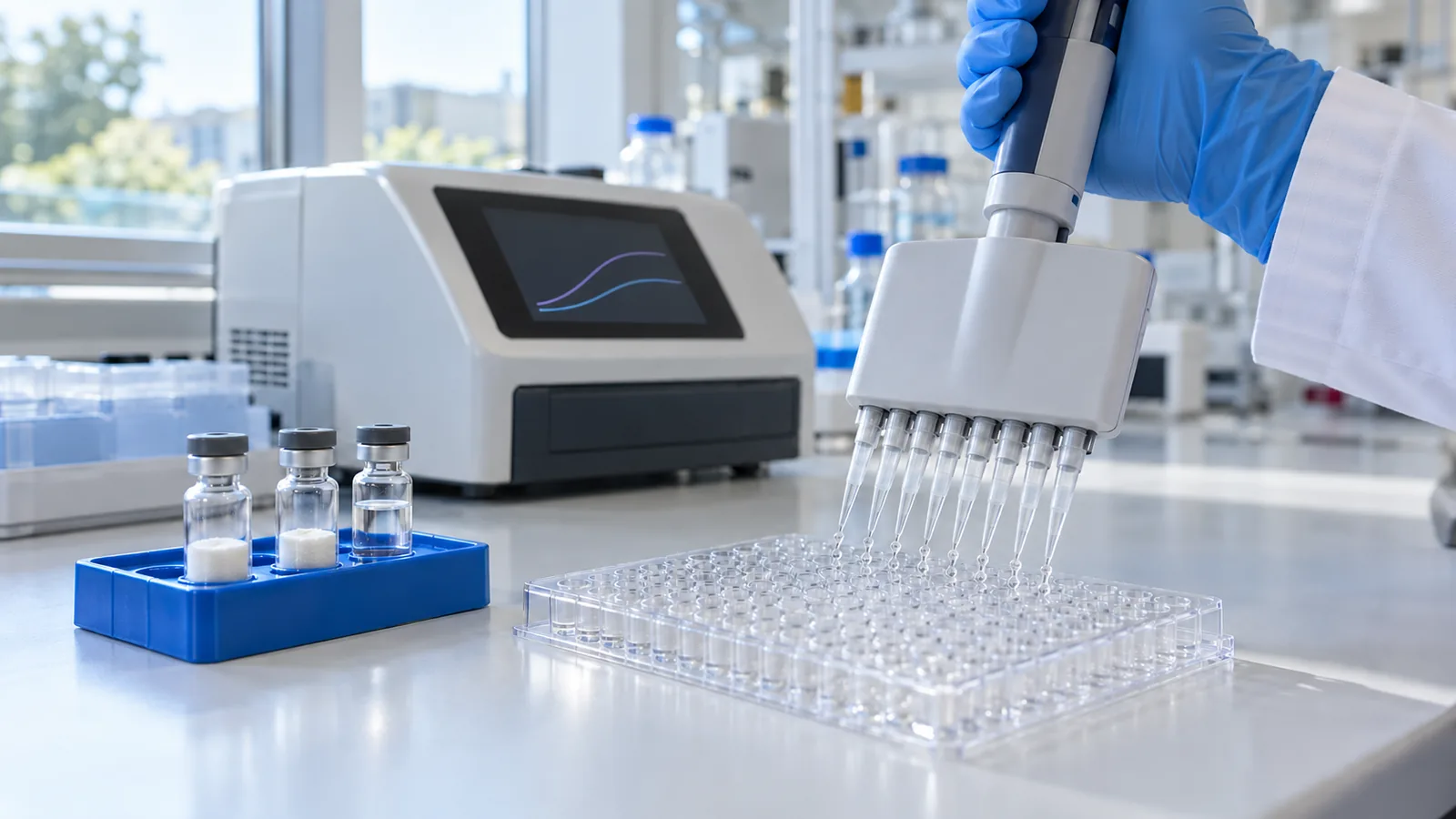
Glucagon is the receptor that makes GLP-3 different. The body uses glucagon to lift blood sugar when it runs low, but the same receptor tells the liver to break down fat and raises the energy the body burns each day. With GLP-1 and GIP holding glucose steady, the glucagon signal works mostly on the burning side. The liver shows it first: in a 24-week Phase 2 substudy, liver fat fell by more than 80% on the two highest doses.
GLP-3 weight loss: what the trials show
On the top dose, GLP-3 took off 28.3% of body weight over 80 weeks in TRIUMPH-1, Lilly’s main Phase 3 obesity trial, against 2.2% on placebo. The trial ran in 2,339 adults with obesity or overweight and no diabetes, and the average undersells how far the top dose went: 45.3% of people on 12mg lost 30% or more, and 65.3% finished below a BMI of 30, the line for obesity. The lower doses reached 19.0% on 4mg and 25.9% on 9mg.
Every Phase 3 trial reported so far has met its main goal. Type 2 diabetes trims the number, as it does on semaglutide and tirzepatide, and TRIUMPH-2 reached 20.8% at 80 weeks in people with both. The curve was still moving where the trials ran longest. In TRIUMPH-1’s extension, people who started at a BMI of 35 or higher and stayed on 12mg to 104 weeks had lost 30.3%, about 85 lb.
What is GLP-3 peptide used for?
That depends on who holds it. A research vial of GLP-3 is a laboratory compound, used to study what glucagon-receptor signalling adds to GIP and GLP-1 across energy use, liver fat, blood glucose and body weight. In Lilly’s own program, retatrutide is being tested in Phase 3 trials for obesity and the conditions that travel with it: type 2 diabetes, knee osteoarthritis pain, obstructive sleep apnea, chronic low back pain, heart and kidney disease, and fatty liver disease.
GLP-3 side effects
The side effects are the ones GLP-1 and GLP-2 compounds are known for: mostly in the gut, mostly mild to moderate, and larger at higher doses. Measured against what the placebo group reported anyway, 4mg added nausea for about one participant in seven in TRIUMPH-1 and 12mg for a little over one in four. Vomiting climbs most with dose, from about six extra cases in a hundred on 4mg to one in five on 12mg. On 4mg, fewer people quit over side effects than did on placebo.
One effect is largely retatrutide’s own. Dysesthesia, an altered or heightened sensation in the skin, is what searches call GLP-3 skin sensitivity. In TRIUMPH-1 it reached 5.1% on 4mg and 12.5% on 12mg, against 0.9% on placebo, and most cases were mild or moderate and cleared while treatment continued. The Retatrutide Dosage Chart lists side effects at every dose, and Side Effects of Retatrutide for Women covers the ones that land differently on women.
Is GLP-3 FDA approved?
No. No regulator anywhere has approved retatrutide, and as of November 2026 Lilly has not filed it. The clinical data are complete, and once Lilly finishes the manufacturing section of the application it plans to submit retatrutide to the FDA in the first quarter of 2027. The steps from filing to a decision are in When Will Retatrutide Be FDA Approved?
GLP-3 vs GLP-1
GLP-3 has now beaten GLP-1 head to head. In TRANSCEND-T2D-2, reported on October 28, 2026, Lilly put retatrutide against Ozempic 2mg, its highest approved dose, in 1,298 adults with type 2 diabetes. At 80 weeks retatrutide 12mg had taken off 20.9% of body weight, or 47.4 lb, and 9mg 19.5%, against 9.4% on Ozempic. Both retatrutide doses also lowered A1C by 2.2 points, to Ozempic’s 1.8.
The gut side effects ran close. Nausea came in at 23.8% on 12mg against 21.3% on Ozempic, and vomiting at 15.0% against 13.2%. The gap was in how many people stopped over side effects, 7.9% on 12mg against 2.7% on Ozempic, and in dysesthesia, at 6.5% against 2.7%.
Both times a higher rung of the ladder has met semaglutide in a trial, it has won. Tirzepatide reached 20.2% to semaglutide’s 13.7% at 72 weeks in SURMOUNT-5, and retatrutide more than doubled Ozempic here. GLP-3 against GLP-2 is still running in TRIUMPH-5, and until it reads out, the dose-by-dose picture of the two Lilly compounds is in Retatrutide vs Tirzepatide.
Is GLP-3 better than GLP-1?
For weight loss, yes: by more than double in the one trial that measured them side by side, and by about eleven points across their separate obesity trials, where semaglutide’s best was 16.9% at 68 weeks and retatrutide’s 28.3% at 80. Where GLP-1 still leads is track record and tolerance. Semaglutide has been on the market since 2017, fewer people stopped it over side effects in the head-to-head, and GLP-3 stays a trial drug and a research compound until Lilly’s filing clears.
GLP-3 cost and what the lab report shows
A 10mg research vial of GLP-3 costs $84 at Simms Research, and their Retatrutide (GLP-3) runs to $129 for 20mg, $159 for 30mg and $259 for 60mg. Lilly hasn’t priced retatrutide. That comes after approval.
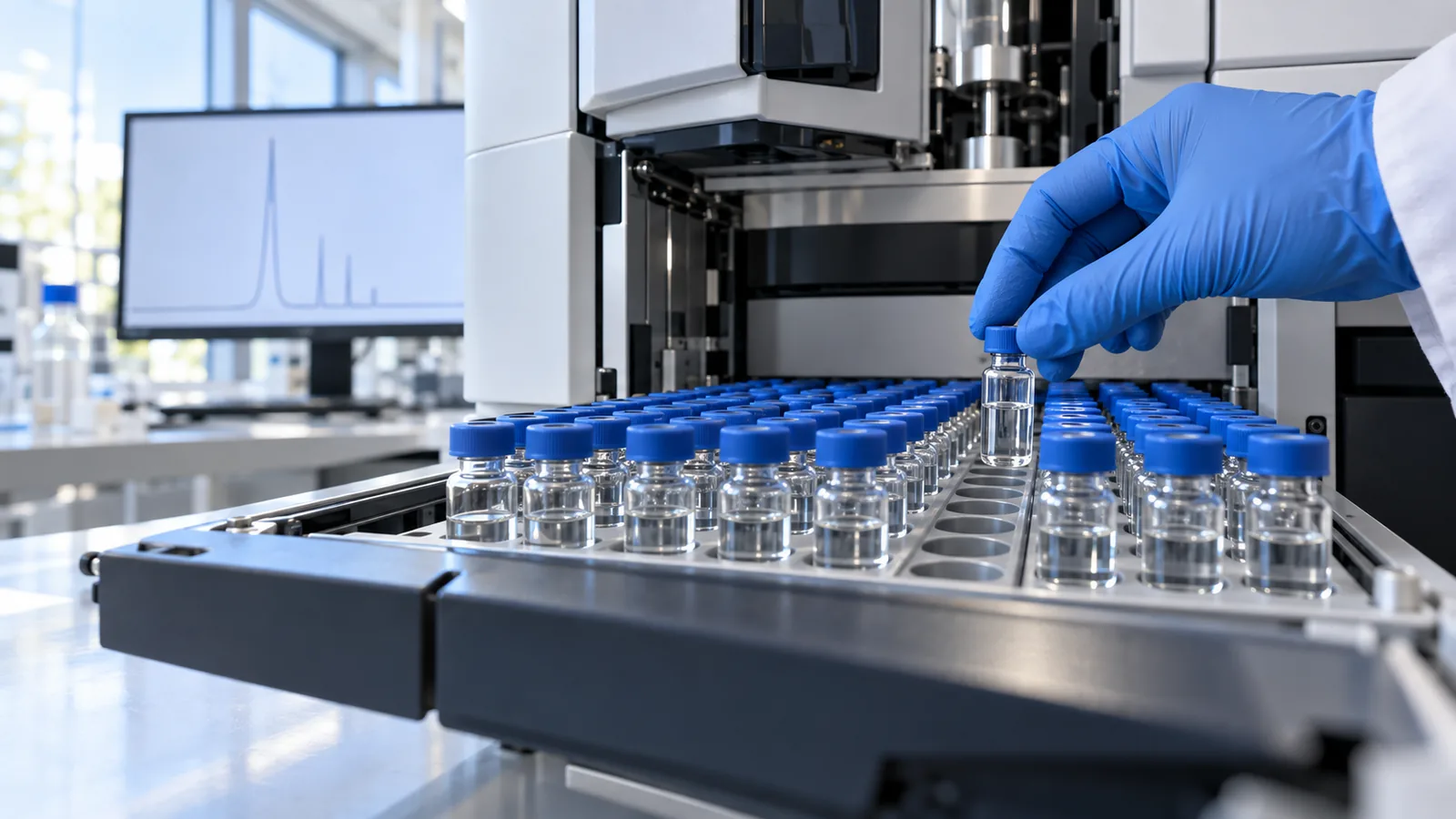
The price only means something if the vial holds what the label says, and a lab report answers that in three parts. Identity, from LC-MS, weighs the molecule, and it is the only test that tells GLP-3 from GLP-2, because pure tirzepatide passes a purity test as easily as pure retatrutide. Purity, from HPLC, says how much of the powder is that one molecule. Net content says how many milligrams are really there, which sets every dose worked out from the label.
Simms Research’s current batch, 2026-G460, was tested by a third-party lab across three vials in July 2026: 99.611% purity and 10.68mg in a vial labelled 10mg, with identity confirmed by LC-MS. The certificate names the compound GLP3 and carries retatrutide’s CAS number, 2381089-83-2, so the paperwork ties the nickname to the molecule. The batch sits in their retatrutide batch records, and the Simms certificate guide explains each field. Once a vial checks out, How to Reconstitute Retatrutide gives the water for each vial size.
Frequently asked questions
Is GLP-3 a peptide?
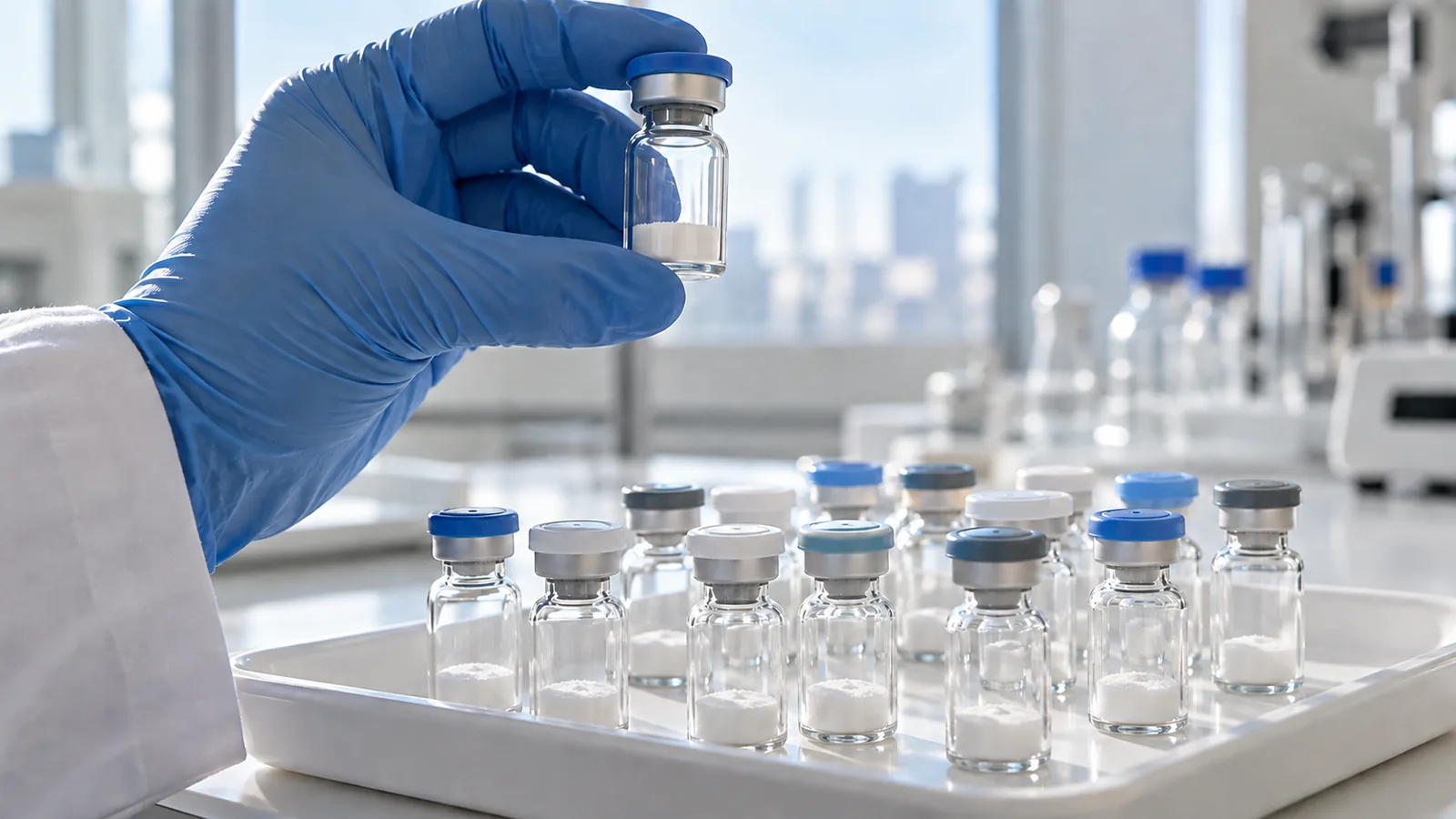
Yes. Retatrutide is a chain of 39 amino acids with a fatty-acid tail attached, supplied for research as a white freeze-dried powder.
Is GLP-3 the same as tirzepatide?
No. Tirzepatide is the compound the market calls GLP-2. It works on two receptors, GIP and GLP-1, and is approved as Mounjaro and Zepbound. Retatrutide adds glucagon and has no approved brand yet.
Is Ozempic a GLP-3?
No. Ozempic is semaglutide, which works on the GLP-1 receptor alone, so it sits on the first rung of the ladder. GLP-3 is retatrutide.
What is the GLP-3 dose?
In Lilly’s trials retatrutide is injected once a week, starting at 2mg and rising every four weeks to a target of 4, 9 or 12mg. The Retatrutide Dosage Chart turns each step into units on a syringe.
How long does GLP-3 take to work?
Weight starts coming off in the first month. In the Phase 2 trial, the group headed for 12mg was about 3% lighter by week 4, 17.5% by week 24 and 24.2% by week 48, and still losing. The full curve is in How Long Does Retatrutide Take to Work?
Is Simms Research legit?
Yes. Simms Research is a US-based store in Tampa, Florida. They sell retatrutide under its own name rather than a code, and they publish a third-party certificate for each batch, covering purity, net content and identity, in batch records anyone can open before ordering.