

Blog
Side Effects of Retatrutide for Women: Top 5 You Should Know
The five retatrutide side effects that land differently on women, with trial numbers: nausea, skin sensitivity, UTIs, hair loss and birth control.


Retatrutide side effects in women
Retatrutide is Eli Lilly’s once-weekly triple agonist: one peptide that activates the GIP, GLP-1 and glucagon receptors. It finished its main Phase 3 obesity trial, TRIUMPH-1, in 2026 with an average weight loss of 28.3% on the 12mg dose, and Lilly plans to file for approval in early 2027. For research it is sold as Retatrutide (GLP-3); What Is GLP-3? covers where the nickname comes from.
Women make up about 70% of people on GLP-1 drugs and most of the people in their trials. Earlier obesity trials enrolled 67–78% women, and the TRIUMPH program capped female enrollment at about 70% so it would still have enough men. Women also lose more on the same dose. In the Phase 2 trial, women on 8mg and 12mg lost 28.5% and 26.6% of their weight in 48 weeks, against 19.8% and 21.9% for men.
The side effects don’t land evenly either. In health-record data across GLP-1 drugs, women report nausea and vomiting at 2.5 times the rate of men, and higher estrogen levels track with worse symptoms. Women have slower gut transit on average and weigh less, so the same weekly dose means more drug per kilogram. Below are the five side effects that matter most for women, with the trial numbers for each.
1. Nausea and other stomach side effects
Nausea is the side effect most women on retatrutide will notice, and for most it passes. In TRIUMPH-1, which followed 2,339 adults for 80 weeks, nausea was reported by 28.6% of participants on 4mg, 38.4% on 9mg and 42.4% on 12mg, against 14.8% on placebo. That leaves a majority on every dose who never had it. Diarrhea ran at 25–34%, constipation at 24–26% and vomiting at 11–25%, each against roughly half that or less on placebo. Nearly all of it was mild to moderate, and it bunched up in the weeks after each dose increase.
Women tend to land above those averages. Every drug in retatrutide’s class shows the same pattern, and the reasons are physical: more GLP-1 receptors in the brain regions that drive nausea, slower digestion and a hormone link. In the same research, nausea tracked estrogen levels, and the researchers suggested side effects may shift across the menstrual cycle.
How fast the dose climbs matters more than where it ends. In the Phase 2 trial, the group that reached 8mg from a 2mg start reported nausea at 17%; the group that started at 4mg reported it at 60%. Phase 3 kept the gentle start: 2mg, then 4, 6, 9 and 12mg, with four weeks at each step. Constipation, which women already get more often than men, ran almost flat across doses at about one in four, since eating less also means less fiber and fluid. The full schedule is in the retatrutide dosage guide.

2. Skin sensitivity (dysesthesia)
Dysesthesia is the side effect retatrutide doesn’t share with tirzepatide or semaglutide. Lilly defines it as a skin burning sensation and related events; in practice it means skin that tingles, burns, prickles or feels oversensitive to clothing and touch. “Retatrutide itchy skin” is one of the top searches about its side effects, and this is usually what sits behind it.
It rises with dose. In TRIUMPH-1 it affected 5.1% on 4mg and about 12% on 9mg and 12mg, against 0.9% on placebo. The type 2 diabetes and heart-disease trials came in lower, at 4–7%. The highest rate so far was 21% on 12mg in TRIUMPH-4, a knee osteoarthritis trial. Lilly describes the events as mostly mild to moderate; most resolved while treatment continued, and most people who had it stayed in the trials.
For women, the detail that matters is what the skin looks like: normal. In the Phase 2 trial, none of the skin sensation events were severe, and none came with a visible rash or other skin finding. A woman whose skin starts to burn on retatrutide will often blame a new serum, a detergent or an allergy first. With no rash, the timing points to the peptide. The retatrutide vs tirzepatide comparison has the rate in every trial side by side.
3. Urinary tract infections
Urinary tract infections are the newest retatrutide signal, and the one that falls mostly on women. TRIUMPH-1 recorded UTIs in 7.5% of participants on 4mg, 8.8% on 9mg and 8.4% on 12mg, against 5.3% on placebo. That works out to two or three extra infections per 100 people over 80 weeks. In TRANSCEND-T2D-1, a 40-week diabetes trial, the rates were 0.7–2.9% against none on placebo. When the results were presented at the American Diabetes Association meeting in June 2026, the investigators noted the infections occurred mostly in women and hadn’t been seen with earlier incretin drugs.
Most were mild to moderate and cleared during treatment. The trial’s lead investigator offered hydration as the likely explanation, and it fits: people on retatrutide eat far less, and about a fifth of the day’s water normally comes with food. Women already get UTIs far more often than men because of a shorter urethra, so a small drop in fluid intake shows up in them first. Drinking on a schedule rather than by thirst is the practical answer the data point to.
4. Hair loss
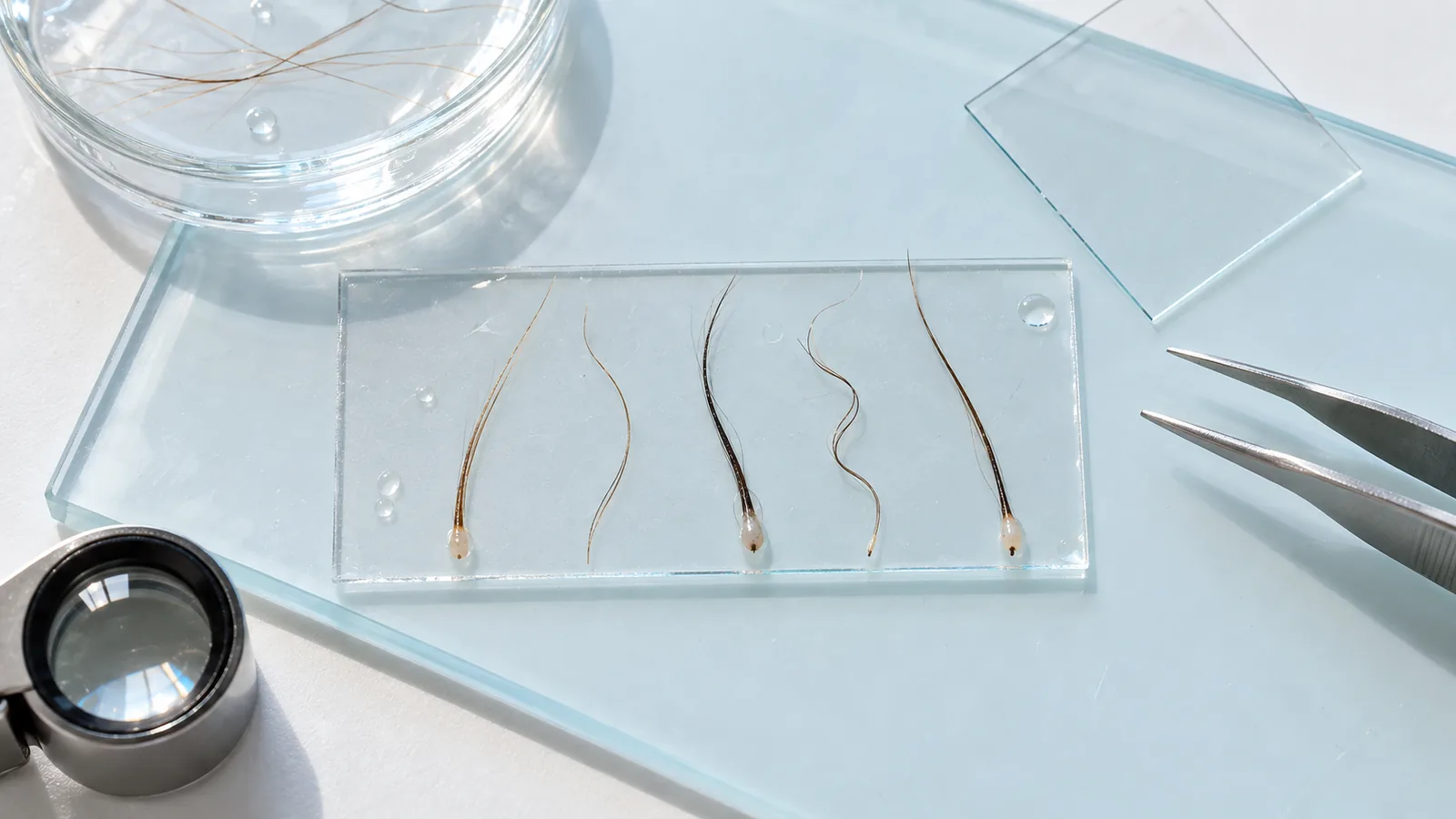
Hair loss on retatrutide is shedding that follows fast weight loss. It is temporary, and women notice it far more than men. The mechanism is telogen effluvium: a sharp drop in calories or body weight pushes a large share of hair follicles into their resting phase at once, and the hair falls out two to three months later. It is the same shedding that follows childbirth, surgery or a crash diet, and it grows back once weight settles.
Hair loss wasn’t among the side effects reported by 5% or more of participants in retatrutide’s Phase 2 trial. The clearest numbers by sex come from tirzepatide, whose Zepbound trials found hair loss in 7.1% of women against 0.5% of men, with 1.3% and 0% on placebo. The label ties it to weight reduction, and no one on tirzepatide stopped treatment because of it. Retatrutide’s top dose takes off more weight than tirzepatide’s, and women lose more than men on it, so women should expect at least the same pattern.
Protein matters most, since hair is built from it and appetite on retatrutide can fall below what the body needs. Low iron, common in women who menstruate, makes shedding worse. Does Tirzepatide Cause Hair Loss? goes through the timeline and what helps in more detail; it applies to retatrutide as well.

5. Birth control, periods and fertility
Retatrutide slows how fast the stomach empties, the same effect that put a birth control warning on tirzepatide. Zepbound’s label says it may make birth control pills less effective, and asks women on the pill to switch to a non-oral method or add a barrier method for four weeks after starting and four weeks after each dose increase. Lilly has run the matching study for retatrutide, a Phase 1 trial of a combined pill in 46 postmenopausal women that finished in July 2024, and its results haven’t been posted. Until they are, the tirzepatide rule is the working reference. On the trial schedule a new step lands every four weeks until 12mg, so the rule covers the first 20 weeks without a gap. IUDs, implants, the shot, patches and rings don’t depend on the stomach.
Periods and bleeding
Bleeding is one of the top searches women type after “retatrutide side effects”. An analysis of FDA adverse event reports from women aged 12 to 55, published in Obstetrics & Gynecology in July 2026, found signals for heavy bleeding, clots, bleeding between periods, infrequent periods and cycles without ovulation with semaglutide, and for bleeding between periods and clots with tirzepatide. Retatrutide isn’t approved, so it isn’t in that database yet. Reports like these can’t show the drug caused the change, since obesity disrupts cycles on its own. The authors pointed to three likely routes: weight-driven shifts in estrogen, a direct effect on the uterine lining and changes in clotting.
Fertility and pregnancy
Losing weight on drugs in this class often brings ovulation back for women whose cycles had become irregular or stopped, including many with PCOS. Add a pill that may absorb less during dose steps, and that is the story behind the “surprise pregnancy” reports around GLP-1 drugs. There is no pregnancy data for retatrutide. The approved relatives are clear on it: tirzepatide’s label says to stop when a pregnancy is recognized, and semaglutide’s says to stop at least two months before a planned one.
Is retatrutide safe for women?
By the trial evidence, yes, with the trade every drug in this class asks of women: more weight lost than men on the same dose, and more of the side effects that come with it. Across the Phase 3 program the side effects were mostly mild to moderate, clustered around dose increases and faded with time. On 4mg in TRIUMPH-1, fewer people quit over side effects than on placebo (4.1% against 4.9%). On 12mg, 11.3% did.
| Side effect | How often in trials | What is different for women |
|---|---|---|
| Nausea | 28.6–42.4% by dose, against 14.8% on placebo | Women report GLP-1 nausea and vomiting at 2.5 times the rate of men |
| Skin sensitivity | 5.1–12.5% by dose, against 0.9% on placebo | The skin looks normal, so it is easy to blame on a skincare product |
| Urinary tract infections | 7.5–8.8% by dose, against 5.3% on placebo | The infections occurred mostly in women |
| Hair loss | 7.1% of women against 0.5% of men on tirzepatide | Shedding follows weight loss, and women lose more on retatrutide |
| Birth control | Pills may absorb less while the stomach is slowed | Tirzepatide’s label asks for backup for four weeks after each dose step |
Retatrutide is not approved yet, and the longest answer is still coming: TRIUMPH-Outcomes is following about 10,000 adults for heart and kidney outcomes into 2029. Simms Research supplies retatrutide for laboratory research only.
Side effects that start in the vial
Every number above comes from trial-grade drug. Research-supply retatrutide adds a variable the trials never had: what is actually in the vial. A vial holding more peptide than its label says delivers a bigger dose than intended, and nausea follows dose. Bacterial endotoxin causes fever, chills and body aches that get blamed on the peptide. A vial that is really tirzepatide or semaglutide behaves like those drugs, not like retatrutide.
Simms Research posts its batch reports on its lab results page. The guide on how to read a peptide certificate of analysis shows where identity, purity, net content and endotoxin appear on a report, and what each should read.
Frequently asked questions
What are the worst side effects of retatrutide?
For most people, nausea and vomiting around dose increases, the side effects that most often made Phase 2 participants stop. Serious events were rare. In Phase 2 there was one case of pancreatitis and three gallbladder events among 267 people on retatrutide.
Does retatrutide mess with hormones?
Not sex hormones. Retatrutide mimics three gut and pancreas hormones (GIP, GLP-1 and glucagon) and has no direct action on estrogen, progesterone or testosterone. The changes women notice come from the weight loss: losing a large share of body fat shifts estrogen and can bring back regular ovulation.
How long do retatrutide side effects last?
Stomach side effects bunch up in the days after each dose step and settle within weeks at a steady dose. Most skin sensitivity resolved during treatment in the trials. Hair shedding starts two to three months into fast weight loss and grows back once weight settles. The rise in resting heart rate seen in Phase 2 topped out around week 24 and came down over the following months.
Does retatrutide cause headaches?
Headache wasn’t among the side effects reported by 5% or more of Phase 2 participants, and it isn’t one Lilly highlighted from the Phase 3 trials.
Is retatrutide safe for women over 50?
TRIUMPH-1 enrolled adults from 18 with no upper age limit. After menopause the question is muscle and bone. In a Phase 2 body-composition study, most of the weight lost was fat, with a lean share similar to other obesity drugs. Protein and resistance training protect the rest.
Can women with PCOS take retatrutide?
No retatrutide trial has focused on PCOS yet. Weight loss on drugs in this class tends to restore regular cycles and ovulation in women with PCOS, which makes the birth control point above matter from the first dose. The retatrutide dosage guide has the full trial schedule.