

Blog
How to Reconstitute Tirzepatide
How much bacteriostatic water each tirzepatide vial takes, from 10mg to 60mg, and why the right amount differs by size. Mixing steps, what a good vial looks like, and how long it keeps once mixed.

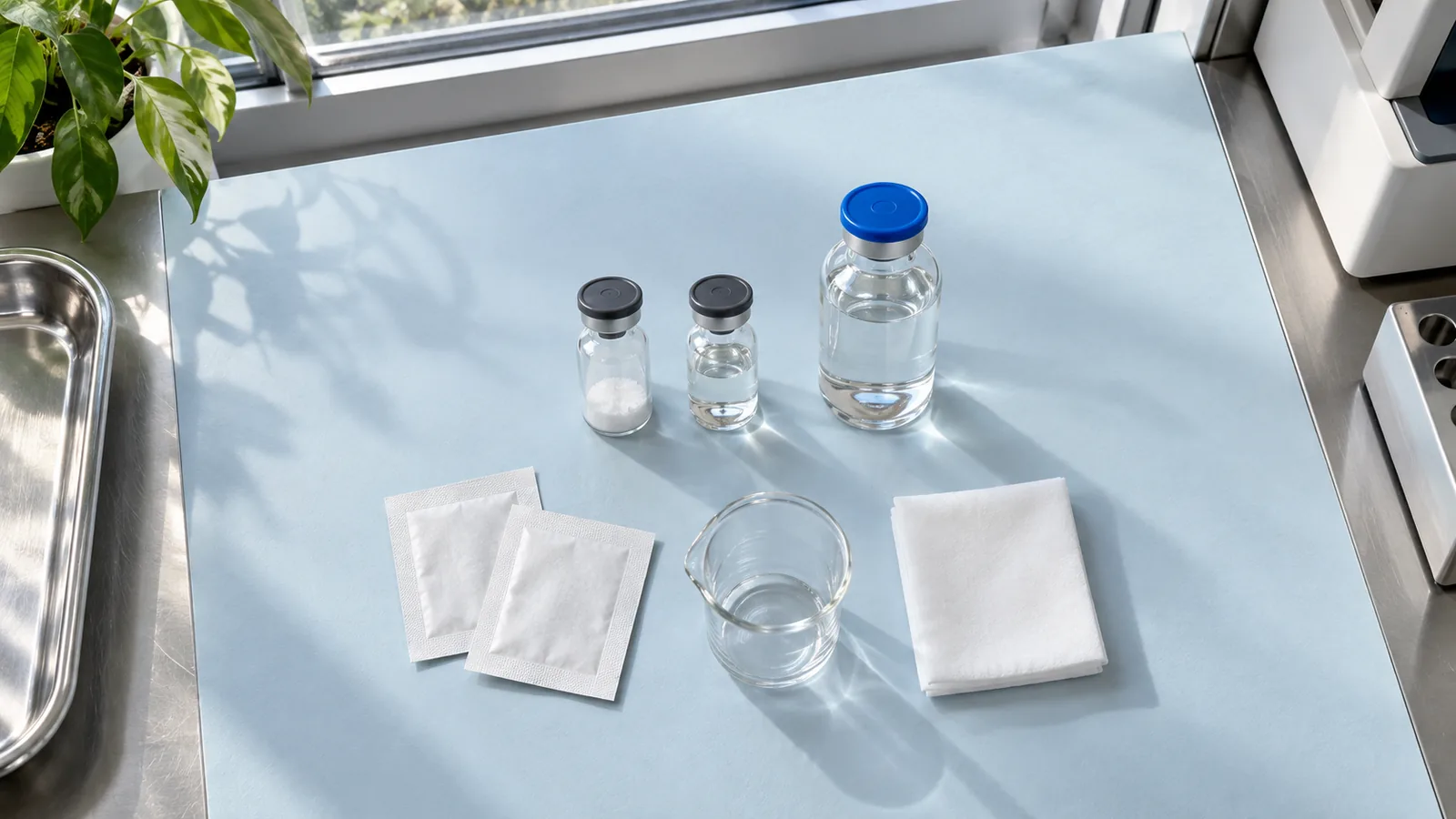
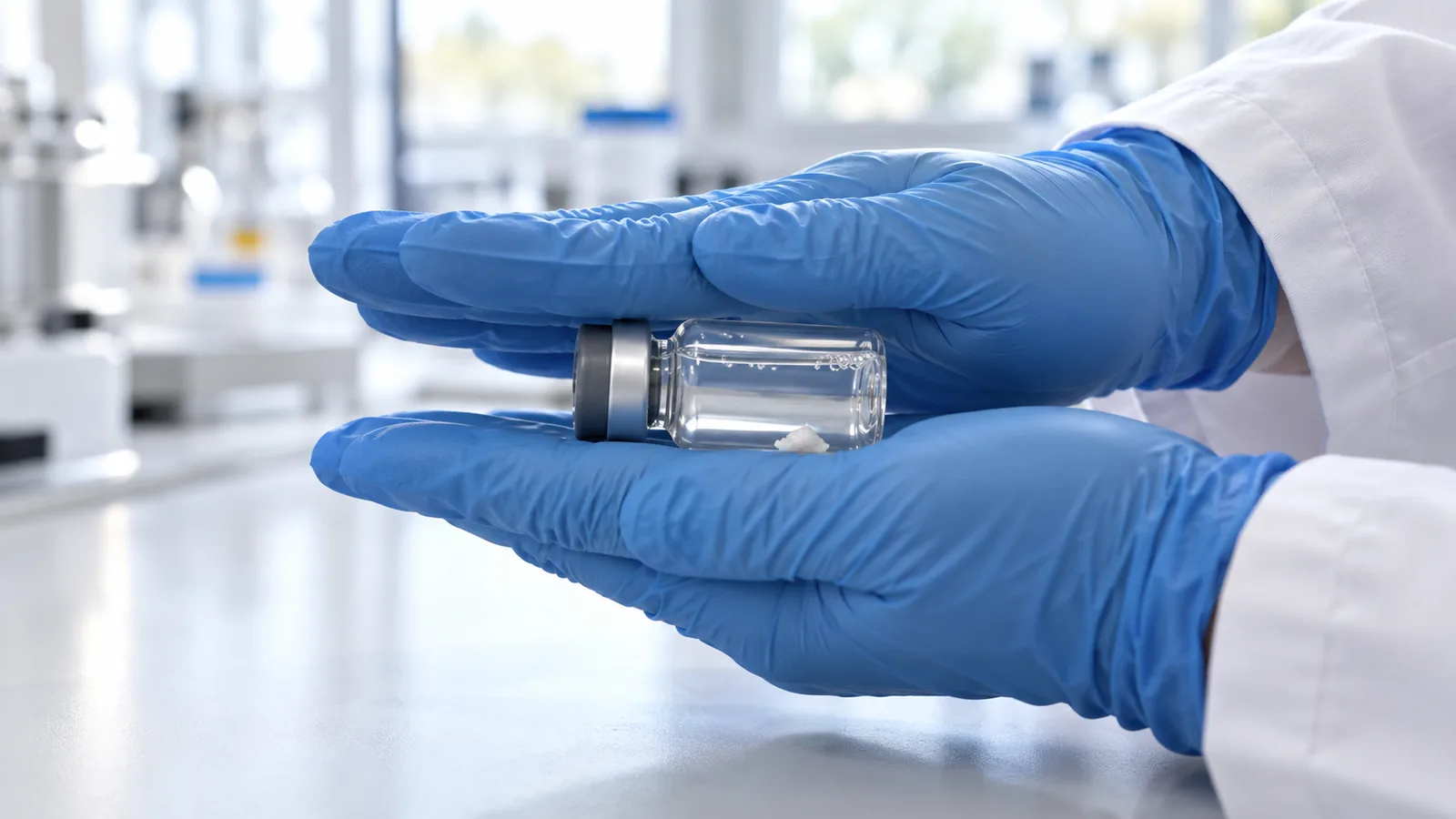
Tirzepatide for research ships as a small white freeze-dried cake that has to be dissolved before it can be measured. Turning it into a solution takes about five minutes and a handful of supplies. The part that deserves thought is the amount of water, because that volume quietly decides how many syringe units every dose will take for the life of the vial, whether the highest dose still fits in one draw, and how finely a small dose can be read.
Simms Research’s Tirzepatide (GLP-2) comes in four sizes, 10mg for $65, 20mg for $95, 30mg for $155 and 60mg for $186, and its bacteriostatic water, Research Water, is a 10mL vial for $20. The tirzepatide ladder climbs in equal 2.5mg steps from 2.5mg to 15mg a week, and each vial size lines up with part of it. That makes the right water a little different for each size, and it makes the common mistakes, from 3mL in every vial to a 60mg vial opened for a starting dose, predictable. The weekly schedule itself is laid out in the tirzepatide dosage guide.
How to mix tirzepatide with bacteriostatic water
The kit is short: the tirzepatide vial, a vial of bacteriostatic water, alcohol pads, and a U-100 insulin syringe to measure the water. A 1mL syringe is enough for every volume in this guide, since anything over 1mL is simply drawn in more than one fill.
| Step | What to do | Why it matters |
|---|---|---|
| 1. Warm up | Set the sealed tirzepatide vial on the bench for 10 to 15 minutes after it leaves the fridge. Research Water is stored at room temperature already. | The cake takes up water faster at room temperature than straight from 4°C. |
| 2. Swab | Flip off both caps and wipe each rubber stopper with an alcohol pad. Let them air-dry. | Every later dose goes through the same stopper. |
| 3. Measure | Draw the water volume for the vial size (next section) into a U-100 insulin syringe. | This one number fixes the units for every dose that follows. |
| 4. Add slowly | Insert the needle at an angle so its tip touches the glass, then press the plunger gently so the water slides down the inside of the vial. | A fast stream straight onto the powder foams it. |
| 5. Roll | Roll the vial between two palms, or tilt it in slow circles, until no white remains. | Shaking traps air, and foam hides whether the powder has gone in. |
| 6. Label and chill | Check the liquid is clear, mark the vial with its mg/mL figure and today’s date, and put it in the fridge. | The 28-day count starts the day the water goes in. |
Measuring the water in units
“How many units of bac water” is a question about exactly this step. Insulin syringes are printed in units, and 100 units is 1mL, so water is measured the same way a dose is: 1mL is one syringe filled to the 100 line, 2mL is two, and 2.4mL is two full syringes plus 40 units. Using the same syringe type for the water and the doses keeps every reading on one scale.
Each fill pushed into the sealed vial raises the pressure inside, and by the second or third the plunger resists. Before pulling the needle out, ease the plunger back a few units so some air leaves the vial with it; the next draw then comes out smoothly instead of spurting.
How much bac water for 10mg, 20mg, 30mg and 60mg tirzepatide
A mixed vial’s strength is its milligrams over the water’s millilitres, and a dose in units is that dose divided by the strength, times 100. No volume is wrong in itself. What separates a good one from a clumsy one is where the doses a vial will actually be used for fall on the syringe. Each Simms Research size matches one stretch of the ladder, so the pick below is made around that vial’s own dose first:
| Vial and price | Step it covers | Water | Strength | Its own dose in units | Other doses from the same mix |
|---|---|---|---|---|---|
| 10mg, $65 | 2.5mg, weeks 1–4 | 2mL | 5 mg/mL | 2.5mg = 50 units | 1.25mg = 25 units; 5mg = 100 units |
| 20mg, $95 | 5mg, weeks 5–8 | 2mL | 10 mg/mL | 5mg = 50 units | 2.5mg = 25 units; 10mg = 100 units |
| 30mg, $155 | 7.5mg, weeks 9–12 | 2.4mL | 12.5 mg/mL | 7.5mg = 60 units | 2.5, 5, 10 and 12.5mg = 20, 40, 80 and 100 units |
| 60mg, $186 | 10, 12.5 or 15mg, week 13 on | 2.4mL | 25 mg/mL | 40, 50 or 60 units | Each 2.5mg step adds exactly 10 units |
The two small vials take 2mL. In the 10mg vial that puts the 2.5mg starting dose at 50 units, a printed line on every insulin syringe from the 0.5mL size up, and it leaves room for a half dose at 25. The popular 1mL mix works too, but 2.5mg then becomes 25 units, an odd number that falls between the 2-unit lines of a 1mL syringe, so it needs a 0.3mL or 0.5mL syringe to read. In the 20mg vial, 2mL makes 10 mg/mL, the simplest strength to work out: units are simply milligrams times ten.
The two large vials take 2.4mL, for different reasons. The 30mg vial is most often mixed with 3mL, and that lands its own 7.5mg dose on 75 units, again between the lines. With 2mL it reaches a neat 50 units, but 5mg and 10mg turn into 33.3 and 66.7. At 2.4mL every step from 2.5mg to 12.5mg sits on an even line, so the vial still reads cleanly if the plan moves up or down a step.
The 60mg vial carries the three top doses, and 3mL is the volume most often suggested for it. That makes 20 mg/mL, where 10mg and 15mg come out at 50 and 75 units but 12.5mg needs 62.5, a half unit no syringe prints. 2.4mL gives 25 mg/mL, and the three doses become 40, 50 and 60 units, ten units for every 2.5mg. That strength isn’t unusually concentrated for tirzepatide: Lilly’s own single-dose pens deliver up to 15mg in 0.5mL, which is 30 mg/mL (Mounjaro prescribing information).
The large-volume habit runs the other way. Mixing every vial to 5 mg/mL, a convention some stores print, needs 6mL of water for a 30mg vial and 12mL for a 60mg vial, more than an entire 10mL water vial, and any dose above 5mg then takes more than one full syringe. Every volume in the table above is 2.4mL or less.
Matching the water to the batch certificate
Labels round. Both tirzepatide certificates Simms Research has posted are for 10mg vials: TZ198 measured 10.79mg, and the current batch, 2026-TZ295, averaged 10.57mg across three vials that individually held 10.14, 10.51 and 11.02mg. Mixed by the label with 2mL, a TZ295 vial runs at about 5.29 mg/mL, so every draw carries close to 6% more than its unit count suggests.
Working from the certificate instead, the measured milligrams over the target strength is the water to add. For 5 mg/mL that is 2.11mL, two full syringes and 11 units; for 10 mg/mL it is 1.06mL. Even then, the three tested vials would sit between 4.80 and 5.21 mg/mL, the natural spread of a batch that no care with the water removes. Until a 20mg, 30mg or 60mg batch is posted, those sizes are mixed by label. Each certificate can be opened from the tirzepatide lab results, and net content is one of the lines explained in the guide to reading a peptide certificate of analysis.
Does the water change when the dose goes up?
No. The water goes in once, and the strength it makes holds for the life of that vial. Moving from 2.5mg to 5mg on the same vial means drawing twice the units, not adding anything. The question comes up with almost every first vial, because peptide calculators ask for a dose before they hand back a water volume.
What the water does set is a ceiling. Since a full 1mL syringe is 100 units, the largest dose one draw can hold is the strength itself: 10mg at 10 mg/mL, 5mg at 5 mg/mL. Reading the table from left to right gives the water for any strength in any Simms Research vial:
| Strength | Units per 2.5mg step | Largest dose in one 1mL draw | 10mg vial | 20mg vial | 30mg vial | 60mg vial |
|---|---|---|---|---|---|---|
| 5 mg/mL | 50 | 5mg | 2mL | 4mL | 6mL | 12mL |
| 10 mg/mL | 25 | 10mg | 1mL | 2mL | 3mL | 6mL |
| 12.5 mg/mL | 20 | 12.5mg | 0.8mL | 1.6mL | 2.4mL | 4.8mL |
| 20 mg/mL | 12.5 | 20mg | 0.5mL | 1mL | 1.5mL | 3mL |
| 25 mg/mL | 10 | 25mg | 0.4mL | 0.8mL | 1.2mL | 2.4mL |
The second column is also the answer to “how many units is 2.5mg of tirzepatide”: 50, 25, 20, 12.5 or 10, depending only on the strength in the vial. Any units figure from a chart, a forum or a calculator is meaningless until it is paired with a strength, and the same two numbers work in reverse for any dose: units divided by 100, times the strength, gives milligrams.
Weaker mixes read more finely. A unit holds 0.05mg at 5 mg/mL and 0.25mg at 25 mg/mL, so a misread line on the barrel costs five times as much at the stronger mix. That is why the strong strengths in the bottom rows suit the top doses and the 60mg vial, while the starting dose is best measured from a weaker mix.
The one moment units do change is a change of vial. 5mg is 50 units from a 20mg vial mixed with 2mL and 40 units from a 30mg vial mixed with 2.4mL, so the strength written on each label is what keeps a figure from being carried to the wrong vial. For any combination not shown here, the Simms Research peptide calculator returns the strength and units.
Reconstituting a vial for a smaller or larger dose
Mixing a 30mg vial for a 2.5mg dose, or a 10mg vial for 7.5mg, means using a vial that doesn’t match its step on the ladder. The mixing is identical; the arithmetic for the vial’s lifespan is what changes. A mixed vial gets at most five weekly doses inside its 28 days, the mixing day and four more:
| Vial | Weekly dose | Water | Units per dose | Doses in the vial | Doses inside 28 days | Left on day 28 |
|---|---|---|---|---|---|---|
| 10mg | 5mg | 2mL | 100 | 2 | 2 | None |
| 10mg | 7.5mg | 1mL | 75 | 1, plus 2.5mg | 1 | 2.5mg |
| 20mg | 2.5mg | 2mL | 25 | 8 | 5 | 7.5mg |
| 30mg | 2.5mg | 2.4mL | 20 | 12 | 5 | 17.5mg |
| 30mg | 5mg | 2.4mL | 40 | 6 | 5 | 5mg |
| 60mg | 2.5mg | 2.4mL | 10 | 24 | 5 | 47.5mg |
| 60mg | 5mg | 2.4mL | 20 | 12 | 5 | 35mg |
A large vial at a low dose is the expensive direction. A 60mg vial opened for 2.5mg doses holds 24 of them, close to six months of weekly draws, yet only five fall inside the window and 47.5mg is still in the vial on day 28. The 10mg vial holds exactly four starting doses for $65, against $186 for the 60mg. When a big vial has to serve a small dose anyway, Do Peptides Need to Be Refrigerated? explains splitting a solution into portions and freezing them once.
A small vial at a high dose simply runs out sooner. The 10mg vial covers two weeks at 5mg, and at 7.5mg it holds one full dose with 2.5mg left over, which is why 7.5mg belongs to the 30mg vial. In that direction nothing is lost to the clock, but each new vial is another mix, and possibly another strength to write on the label.
What mixed tirzepatide should look like
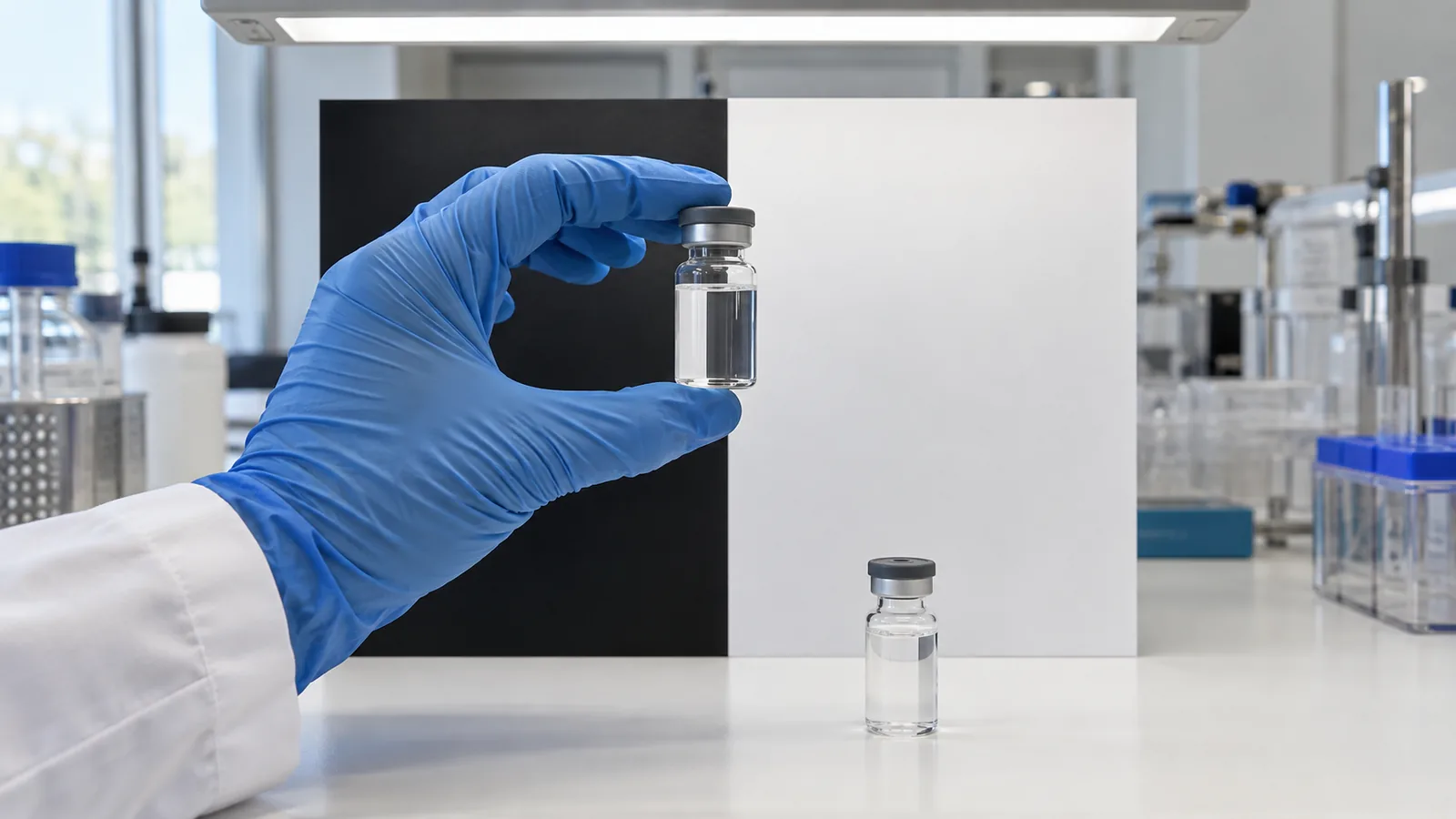
Before water, the vial holds a white cake, sometimes cracked or loose after shipping, which changes nothing about what is inside. Simms Research lists the form as a white lyophilized powder, and the TZ198 certificate records the same appearance. Tirzepatide is larger than most research peptides, 39 amino acids with a fatty-acid chain attached, and its cake can take a few minutes of rolling to disappear completely; the heavier cakes in the 30mg and 60mg vials take the longest.
Finished, it looks exactly like the water that went in: clear, colorless, with no haze and nothing resting on the bottom. Lilly sets the same test for its own tirzepatide solution, which it describes as clear and colorless to slightly yellow, and says not to use if particles or discoloration appear. Holding the vial against something dark and then something light shows both kinds of problem. The vial is ready to draw from the moment it passes; there is no waiting period.
| What you see | What it usually is | What to do |
|---|---|---|
| Foam or a layer of fine bubbles | Air whipped in by a hard shake or water pushed in too fast | Stand the vial upright in the fridge; the bubbles rise and clear on their own |
| A white ring around the neck of the vial or on the stopper’s underside | Dry powder the water never touched | Tilt the vial and roll it so the liquid washes over the ring |
| A few flecks after five minutes | Cake that is still wetting through | Rest it upright for 10 to 15 minutes, then roll again |
| Haze that is still there after a rest | Peptide that has not stayed in solution | Do not use the vial |
| Particles, strings or a yellow-brown tint | Contamination or breakdown | Do not use the vial |
So cloudiness is not normal for tirzepatide, with one short-lived exception: right after mixing, a mass of tiny bubbles can make the liquid look milky until they rise. If the haze is still there once the bubbles are gone and the vial has rested, the vial is replaced rather than used.
Sterile water, saline or bac water
Tirzepatide dissolves in any sterile water. What separates the options is what happens on the second, third and fifth visit to the same stopper. Bacteriostatic water is sterile water with 0.9% benzyl alcohol, a preservative that keeps bacteria carried in on a needle from multiplying, and it is the reason one mixed vial can be drawn from for four weeks. Simms Research’s Research Water is exactly that, stored at room temperature until opened and good for 28 days from the first puncture, so it gets a date written on it too.
Plain sterile water has no preservative and works as a one-time diluent, which suits a vial emptied the day it is mixed and nothing else. Lilly builds the same logic into its own multi-dose tirzepatide vials: they carry benzyl alcohol and phenol as preservatives, and the label still says to discard an opened vial 30 days after first use or once its four weekly doses are gone. A tirzepatide vial already made up with sterile water is best used up quickly, with bacteriostatic water going into the vial after it.
Saline raises a different worry than it needs to. Salt is no problem for tirzepatide: Lilly’s solution itself is made with sodium chloride and a phosphate buffer. The issue with ordinary 0.9% saline is the same as with sterile water, no preservative. Tap, bottled and distilled water are not sterile at all, and homemade bacteriostatic water has no way to be checked, so neither belongs in a vial that will be used for weeks.
How long reconstituted tirzepatide lasts
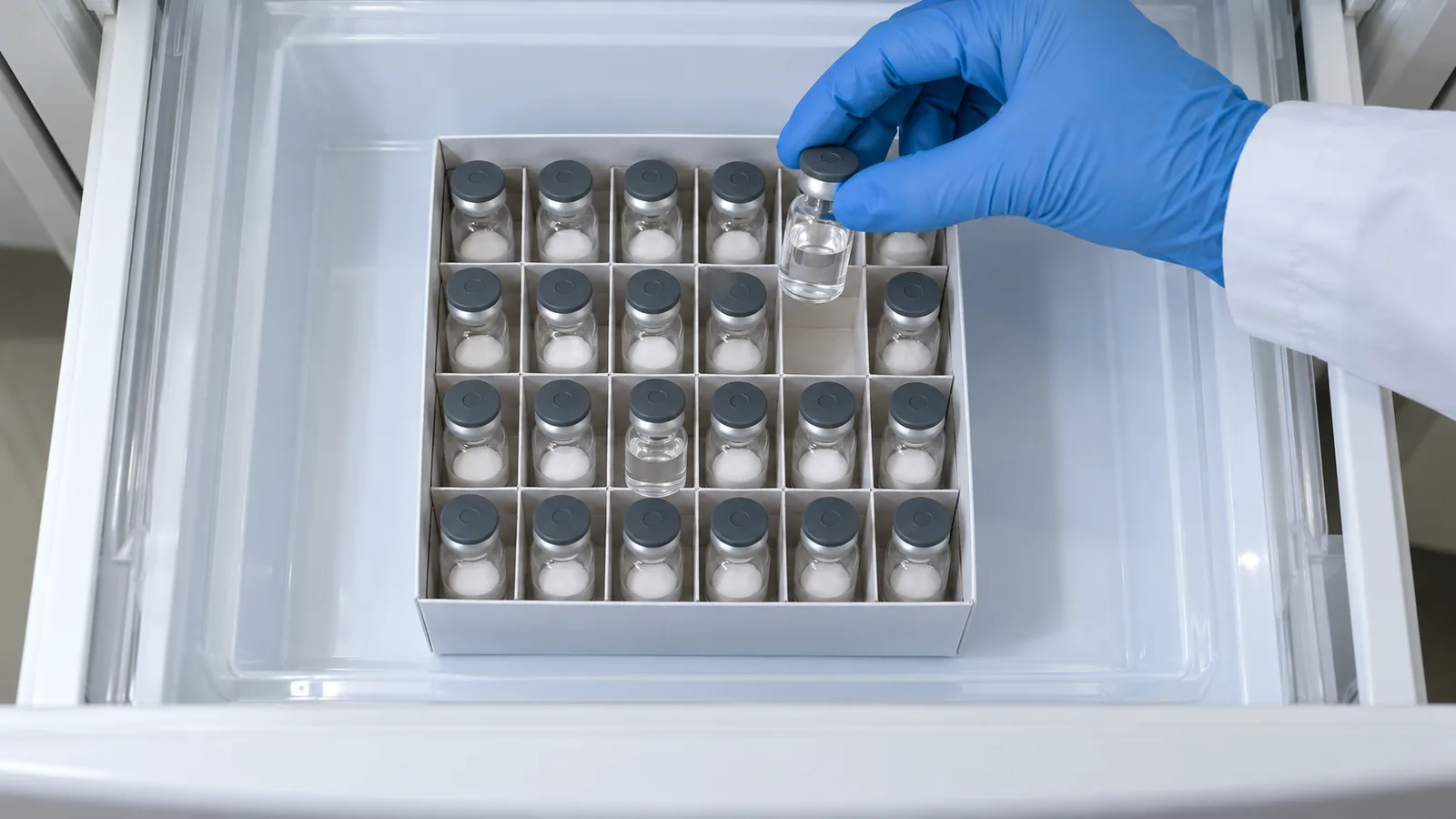
Simms Research gives mixed tirzepatide 28 days in the refrigerator at 2–8°C (36–46°F), dated from mixing day rather than delivery day. The powder is the durable form, which is why it travels without ice packs, so a vial waiting for its step stays sealed until that step begins and gets the full four weeks for its own doses. Light matters too: the product page says to protect tirzepatide from it, and Lilly keeps its own vials in the carton for the same reason.
| Item | Keep it | Clock |
|---|---|---|
| Sealed powder in transit | Ships without ice; the dry cake tolerates room temperature for weeks | Nothing starts |
| Sealed powder waiting for its step | Fridge at 2–8°C (36–46°F), dry and dark; −20°C for long stretches | Nothing starts until water goes in |
| Mixed vial | Fridge at 2–8°C, in its box or a closed drawer | 28 days from the mixing date |
| Opened Research Water | Room temperature, 20–25°C (68–77°F) | 28 days after its stopper is first pierced |
| Mixed vial that froze | Not kept | Replace it |
Freezing is the line between the two forms. Dry tirzepatide keeps well at −20°C, while a mixed vial that has frozen is finished; Lilly’s label makes the same call for its solution, with no use after freezing. Short spells out of the fridge are a different matter, and Do Peptides Need to Be Refrigerated? covers how a mixed vial left on the counter for a few hours or overnight fares.
The 28 days is a limit on the open vial, not a moment when the peptide stops working, and researchers who find doses still in the vial on day 28 usually mixed a bigger vial than their dose needed. The table in the section above shows how much each size leaves behind, and the answer is almost always a smaller vial next time rather than a longer window.
Frequently asked questions
How many units is 10mg of tirzepatide?
100 units at 10 mg/mL, 80 at 12.5 mg/mL, 50 at 20 mg/mL and 40 at 25 mg/mL. At 5 mg/mL it would be 200 units, two full 1mL syringes, which is why 10mg comes from a stronger mix.
How many mL is 5mg of tirzepatide?
1mL at 5 mg/mL, 0.5mL at 10 mg/mL, 0.4mL at 12.5 mg/mL and 0.2mL at 25 mg/mL.
How many mL is 50 units of tirzepatide?
0.5mL, on any U-100 syringe, and 100 units is always 1mL. The milligrams inside depend on the mix: 50 units is 2.5mg at 5 mg/mL, 5mg at 10 mg/mL and 12.5mg at 25 mg/mL.
How long does it take to reconstitute tirzepatide?
About five minutes from swab to label. The cake usually clears within a few minutes of rolling; a stubborn one goes in after 10 to 15 minutes upright and another roll.
Do you reconstitute tirzepatide the same as semaglutide?
The technique and the water are the same. The volumes are not, because semaglutide’s ladder runs from 0.25mg to 2.4mg while tirzepatide’s runs from 2.5mg to 15mg, so tirzepatide vials are mixed to stronger solutions to keep each dose inside one syringe.
How much bac water for a 15mg, 40mg or 50mg tirzepatide vial?
Simms Research sells 10mg to 60mg, but the rule carries over: the vial’s milligrams divided by the strength wanted. At 12.5 mg/mL that is 1.2mL, 3.2mL and 4mL; at 25 mg/mL, 0.6mL, 1.6mL and 2mL. A 5mg vial is simplest with 1mL, which puts 2.5mg at 50 units.
Can tirzepatide be mixed with B12 or retatrutide in one vial?
Each is better in its own vial. B12 is deep red and would hide the clarity check, and no testing has been published on tirzepatide and retatrutide sharing a vial. Separate vials keep each strength, dose and 28-day clock independent. How the two compounds differ is covered in retatrutide vs tirzepatide, and the retatrutide side of the bench work in the guide to reconstituting retatrutide.
Is tirzepatide approved?
Lilly’s tirzepatide is approved as Mounjaro and Zepbound. The tirzepatide Simms Research supplies is for laboratory research only.