

Blog
Compounded Tirzepatide vs Research Tirzepatide: Same Molecule, Different Vial (2026)

For two years, compounded tirzepatide was how a great many people got tirzepatide at all. Mounjaro and then Zepbound couldn’t be made fast enough, the FDA put the drug on its shortage list, and while it stayed there pharmacies were free to make their own. Online weight-loss programs sold those vials for a few hundred dollars a month, a fraction of the brand’s price.
Then the shortage ended. The FDA confirmed it over on December 19, 2024, the last grace period ran out in March 2025, and what a pharmacy may make now is far narrower: a version written for one patient, for a reason the brand product can’t meet. The other tirzepatide on the market never depended on a shortage. It is the freeze-dried powder sold for laboratory research, priced by the milligram with the batch’s test results in view.
Simms Research sells it as Tirzepatide (GLP-2), in vials from 10mg to 60mg starting at $65. Its current batch tested 99.777% pure, with 10.57mg measured in a vial labeled 10mg.
Is compounded tirzepatide still available?
Yes, on a prescription, though not the way it was sold through 2023 and 2024. The open period is over, and what remains is a narrow path that runs through a prescriber and a licensed pharmacy.
The open period began in December 2022, when Mounjaro went on the FDA’s shortage list. Zepbound followed a few months after its approval in November 2023. A drug in shortage can be copied by pharmacies and by the larger outsourcing facilities that supply clinics, and both did so at scale, with telehealth programs selling the result as a monthly plan.
The FDA first called the shortage resolved on October 2, 2024. A group of outsourcing facilities challenged the decision in court, the agency took it back for a second look, and on December 19, 2024 it confirmed the shortage was over. Pharmacies had until February 18, 2025 to stop making copies and outsourcing facilities until March 19, and on May 7, 2025 a federal court in Texas upheld the FDA’s call.
Compounded tirzepatide still exists after all of that, sold mostly through online programs that bundle a video visit with the prescription. The difference is what each vial is supposed to be: a medicine for one named patient, made because something about the brand doesn’t fit them.
What compounding pharmacies can still make
A tirzepatide that differs from Zepbound or Mounjaro in a way one patient needs, recorded by the prescriber. The usual examples are a dose that falls between the strengths Lilly sells, or a formula without an inactive ingredient the patient reacts to. Price is not one of the reasons: a cheaper copy of a drug that is back in supply doesn’t qualify.
That leaves the work with state-licensed pharmacies filling prescriptions one at a time. The outsourcing facilities that made large batches for clinics are close to shut out. On April 30, 2026 the FDA proposed keeping tirzepatide, semaglutide and liraglutide off the list of ingredients those facilities may compound from bulk powder, after finding no clinical need for it; the proposal leaves the pharmacy route as it is.
The online programs answered by personalizing. Their tirzepatide now tends to arrive with something added, vitamin B6 or B12, niacinamide or the amino acid glycine, or in dose steps of its own. Lilly sued four telehealth companies and two compounding pharmacies in April 2025, calling these versions mass-made copies sold as personalized, and in one complaint it counted five formula changes in eight months. Several of those cases were still moving through the courts this fall.
Is compounded tirzepatide banned in 2026?
No. It has been narrowed, not banned. A licensed pharmacy can still fill a prescription for compounded tirzepatide when the prescriber gives a patient-specific reason, and a patient can still buy it through an online program that works with such a pharmacy. What ended in 2025 was the open copying of the shortage years.
What research tirzepatide is
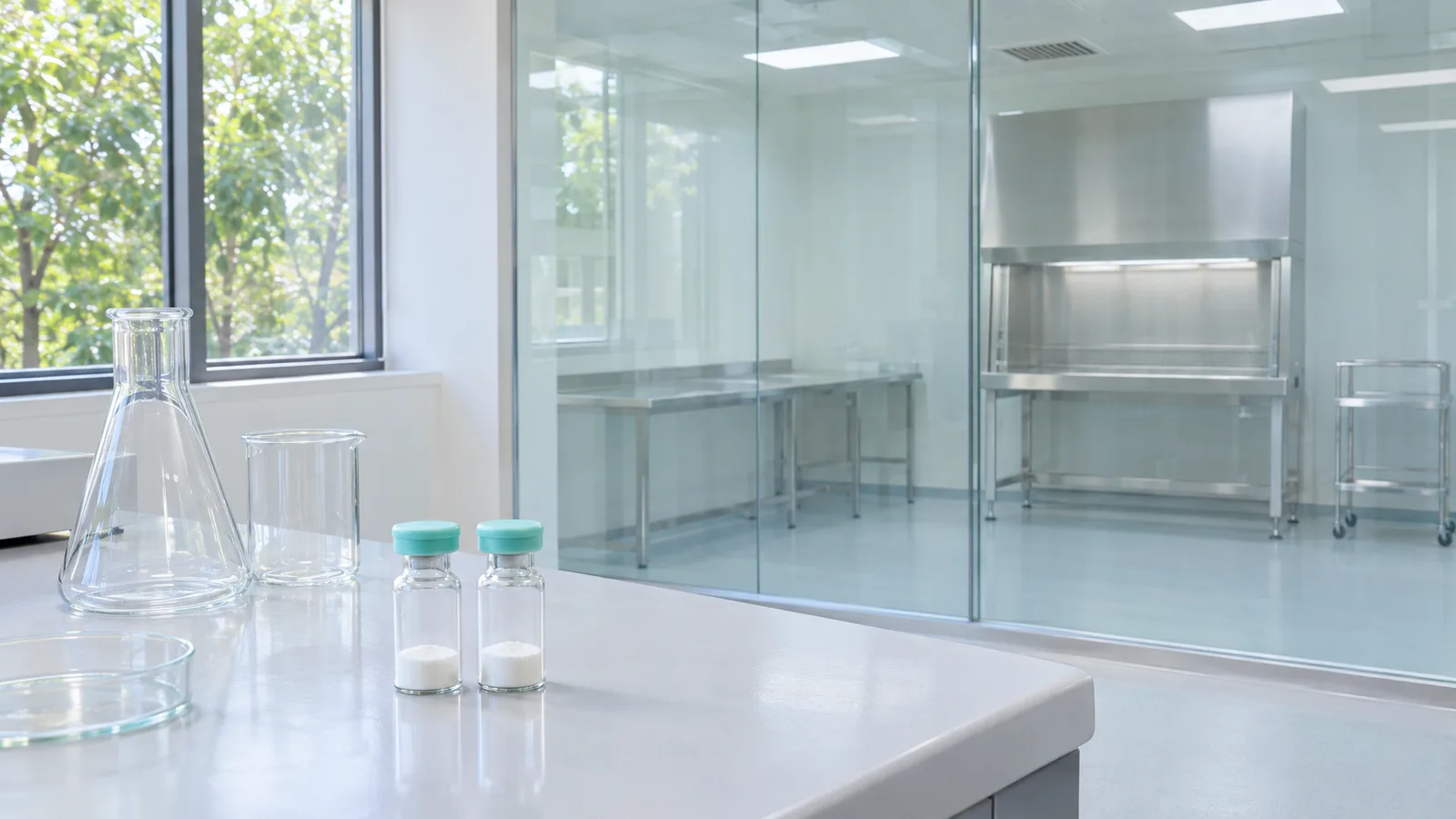
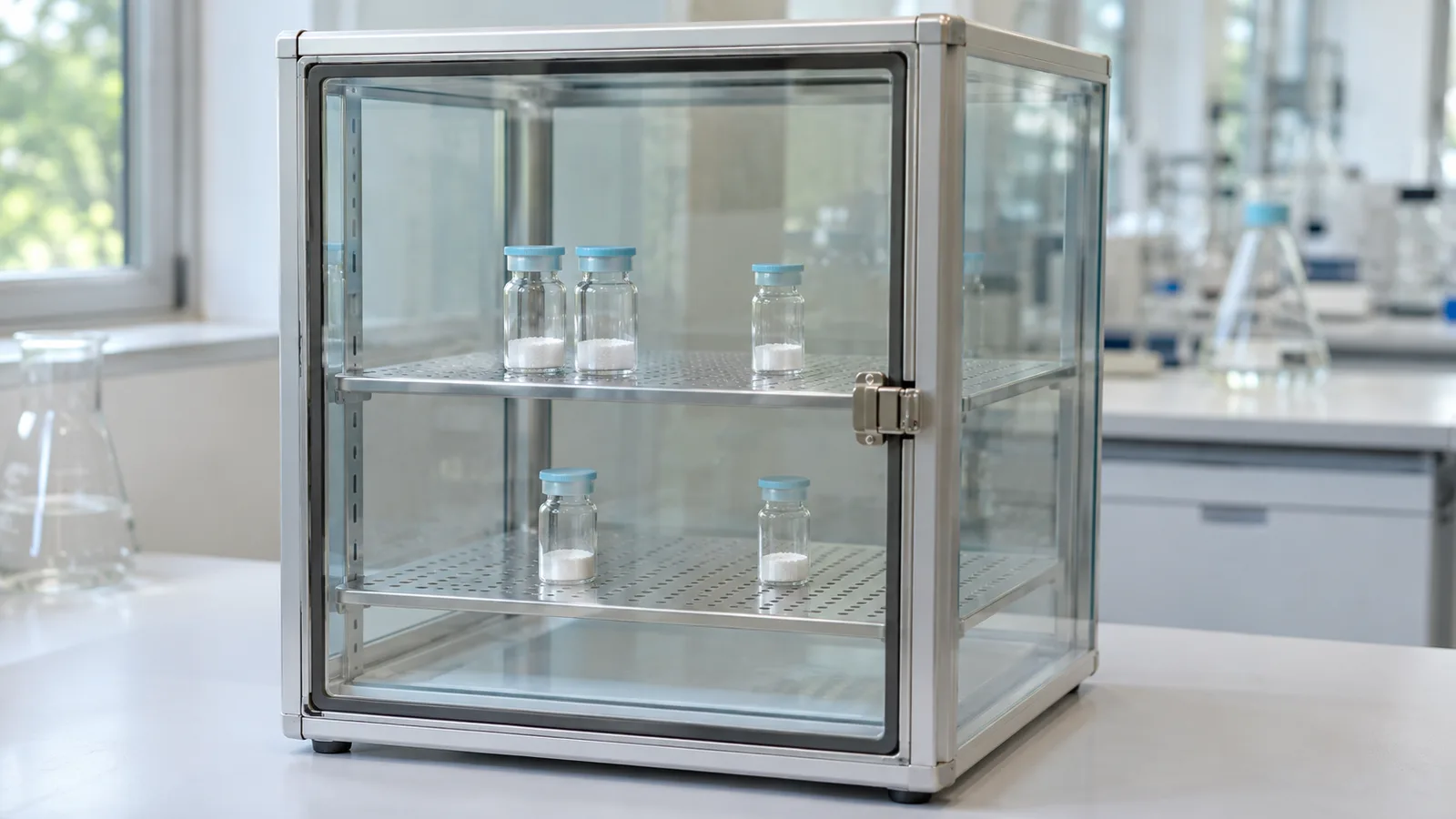
The same 39-amino-acid molecule, made as a dry powder and sold as lab material rather than as a medicine. It comes in sealed glass vials, usually 10mg to 60mg, freeze-dried into a small white cake. There is no prescription, no pharmacist and no dose on the label.
What comes with the vial instead is a certificate of analysis: which compound the batch is, how pure it is and how much of it each vial holds. Research suppliers sell it under its own name or a shop code built on its two receptors. Simms Research lists it as Tirzepatide (GLP-2), the compound first and the shorthand after, and sells it to adults 21 and over for research and laboratory use.
The powder is mixed by the buyer with bacteriostatic water, sold at Simms Research as Research Water in a 10mL vial for $20. How to Reconstitute Tirzepatide at Home gives the amount of water for every vial size, and How Long Does Tirzepatide Last in the Fridge? covers the vial before and after mixing.
From a compounded vial to a research vial
The milligrams carry over and the syringe units don’t. A compounded vial arrives already in solution at a strength the pharmacy chose, so its label dose is written in units for that strength alone. A research vial’s strength depends on how much water goes in, which moves the same milligram amount to a different mark on the syringe. The tirzepatide calculator turns milligrams into units for any vial size and water amount.
Tirzepatide peptide vs compound: what is in each vial
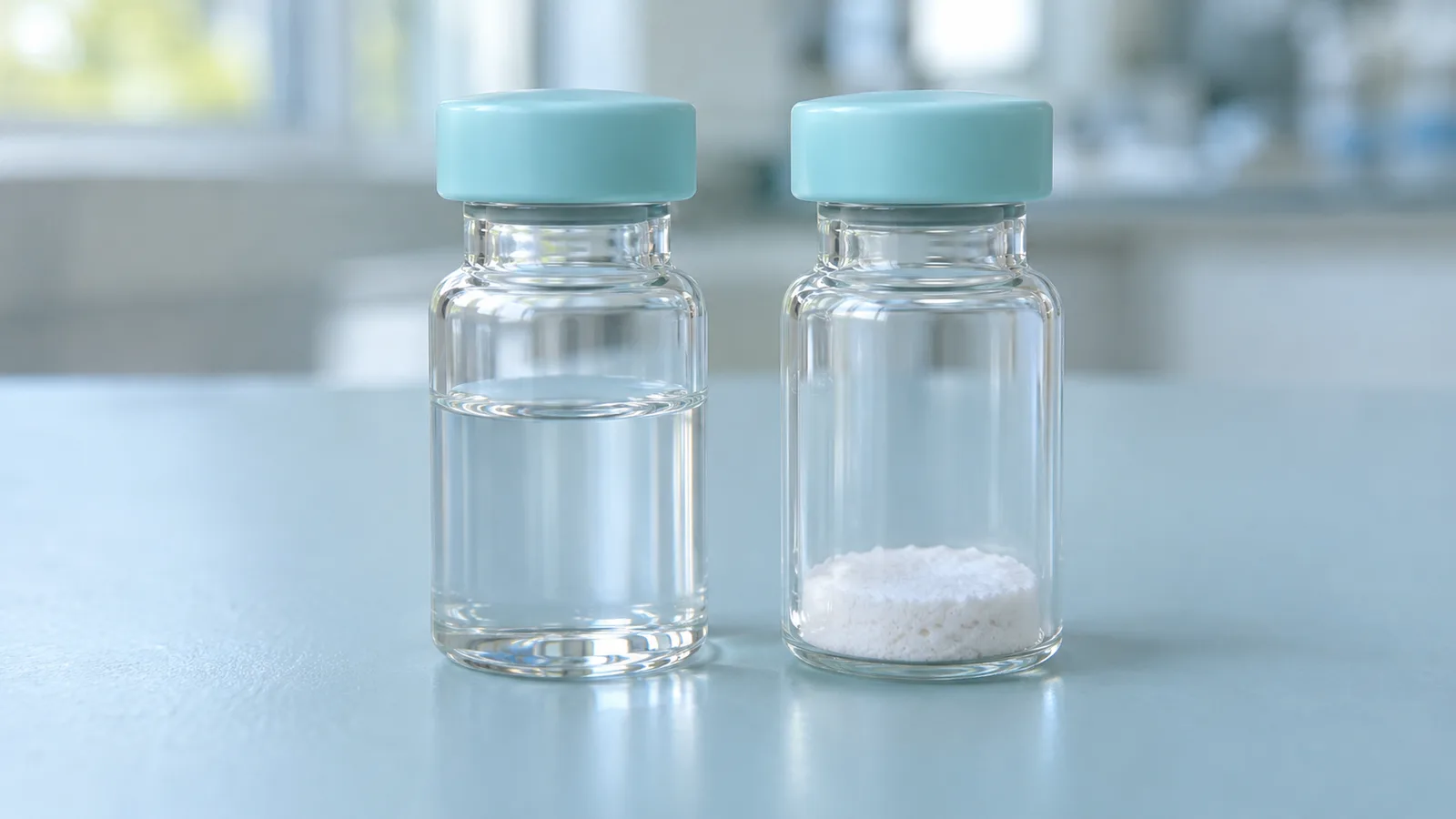
Often the same raw material, finished two different ways. Lilly makes tirzepatide only for its own pens and vials and sells none in bulk, so every compounded vial and every research vial starts from tirzepatide built by other peptide manufacturers.
The paths split after that. A pharmacy dissolves the powder into a liquid, often adds one of the vitamins or glycine, fills a multi-dose vial and gives it a use-by date of its own. The patient gets a pharmacy label with a strength and a dose; the batch’s potency and sterility results rarely reach the patient.
A research vial is freeze-dried with nothing added and sealed dry, and the batch goes to a lab before it is sold. At Simms Research the result is posted before anyone orders. An independent ISO-certified lab tested three vials of the current batch on July 16, 2026: 99.777% purity by RP-HPLC, identity confirmed by LC-MS, 10.57mg measured against a 10mg label, endotoxins within limit, heavy metals negative and no microbial growth. The certificate is under tirzepatide lab results, and How to Read a Peptide COA explains each field on it.
Is compounded tirzepatide as good as Zepbound?
The molecule can be; the product has never been tested as one. Lilly’s SURMOUNT trials measured Lilly’s own product. No compounded version has a trial behind it, and no trial has paired tirzepatide with the added vitamins. A compounded vial is as good as the amount of tirzepatide it really holds, which is the one number a research certificate states outright.
Compounded vs research tirzepatide side by side
Set next to Zepbound, the brand both get measured against, the three differ on nearly every point except the molecule. The research column is Simms Research’s Tirzepatide (GLP-2).
| Zepbound (Lilly) | Compounded | Research | |
|---|---|---|---|
| Made by | Lilly | A compounding pharmacy | A research peptide supplier |
| Form | Pen or single-dose vials | Liquid, multi-dose vial | Freeze-dried powder |
| Prescription | Yes | Yes, for one patient | No; sold for research |
| Added ingredients | None beyond the label | Often B6, B12, niacinamide or glycine | None |
| Proof of contents | FDA approval | Pharmacy label | Published batch report |
| Strengths | 2.5 to 15mg doses | Set by the prescription | 10, 20, 30 and 60mg vials |
| Price | $299 to $449 per four weeks | About $150 to $400 a month | $65 to $186 a vial |
| Status in 2026 | Approved | Narrowed since 2025 | Sold for lab research |
Compounded tirzepatide cost vs research tirzepatide cost
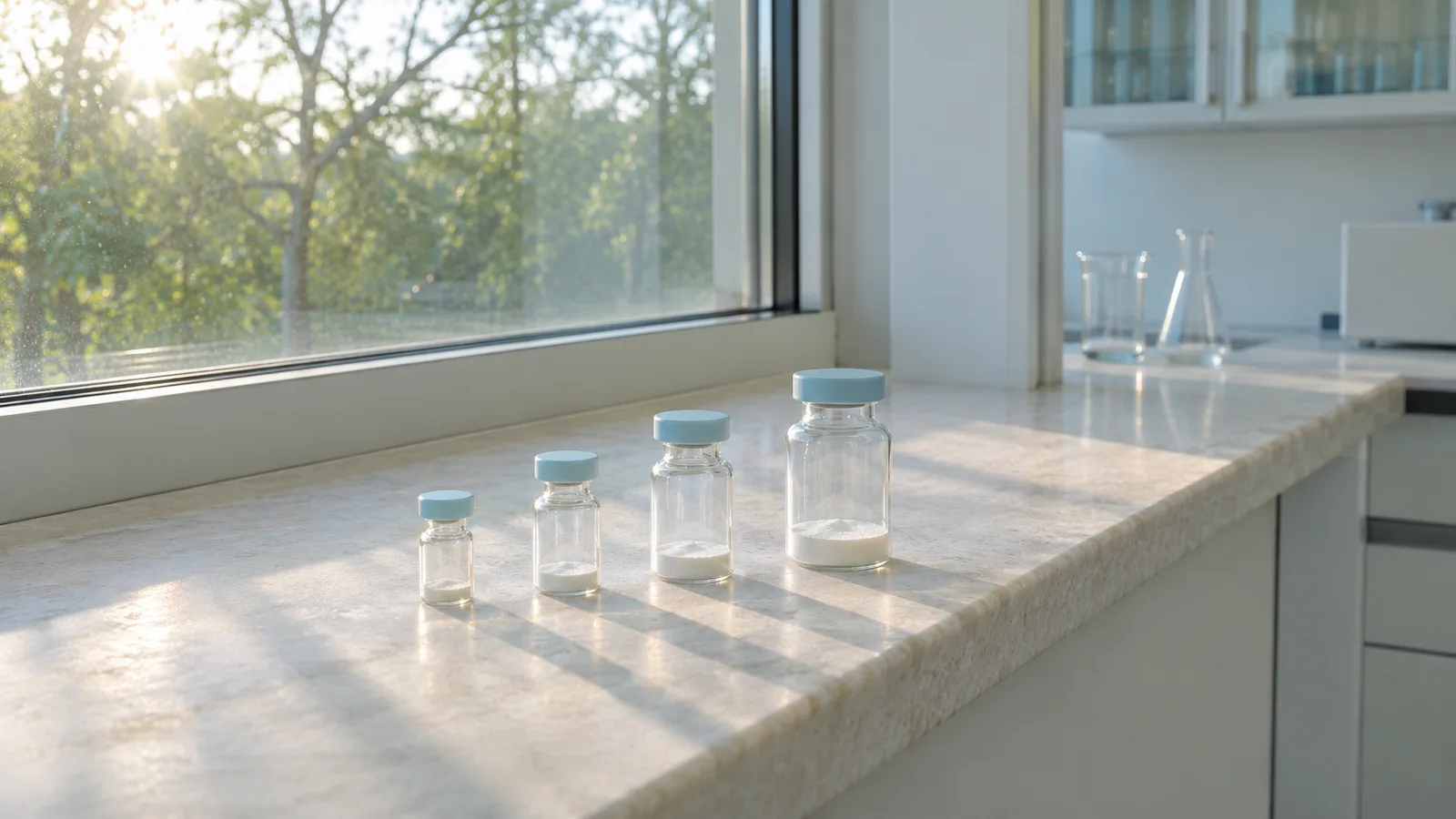
Research tirzepatide costs the least per milligram by a wide margin: $3.10 a milligram in Simms Research’s 60mg vial and $6.50 in the 10mg, with the 20mg and 30mg vials in between.
Compounded programs charge by the month, usually with the prescriber’s visit and shipping folded in, and most of them this fall sat somewhere between $150 and $400, often climbing as the dose goes up. Zepbound bought straight from Lilly without insurance costs $299 for four weeks on the 2.5mg strength, $399 on 5mg and $449 on any higher one, with the full price ladder in retatrutide vs Zepbound; Mounjaro sells for $499 a month self-pay.
Counted in four-week stretches at the doses the trials used, the research powder comes to $95 at 5mg a week, one 20mg vial, and $186 at 15mg a week, one 60mg vial. Zepbound’s price for the same two stretches is $399 and $449. The tirzepatide dosage chart prices every step of the climb vial by vial.
The comparison isn’t one for one. The research price covers the compound alone; the water, the syringes and the mixing are the buyer’s, and no clinician comes with it. The compounded price buys a visit, a prescription and a vial that arrives already mixed.
Where retatrutide fits
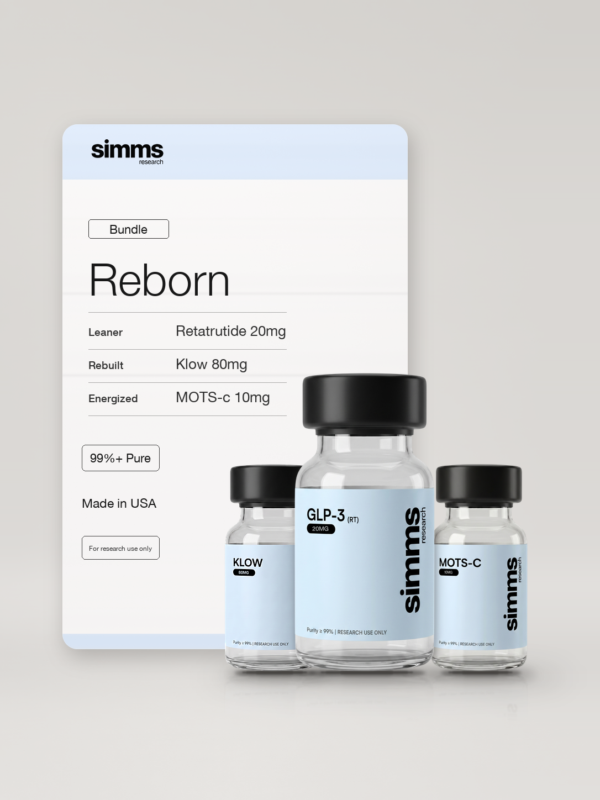
For retatrutide the comparison has only one side. Lilly’s triple agonist, the step past tirzepatide in its pipeline, belongs to no approved drug, so no pharmacy can compound it, shortage or no shortage, and Lilly doesn’t plan to file it with the FDA before early 2027. Outside Lilly’s own trials it exists only as research powder, and Simms Research sells it as Retatrutide (GLP-3), from $84 for a 10mg vial.
What Is Retatrutide? covers the compound itself, and Retatrutide vs Tirzepatide puts the two molecules next to each other. For the buying side, Is Retatrutide Legal to Buy? sets out what applies to research orders, and Retatrutide Near Me goes through clinics, pharmacies and trials.
Compounded or research tirzepatide: which one fits
They answer different needs. Compounded tirzepatide is a prescription medicine: a clinician, a pharmacy and a monthly price, and since 2025 a product that has to be written for one patient’s reason. It costs more per milligram, arrives mixed, and the pharmacy label is the proof of what’s inside.
Research tirzepatide is the molecule as lab material: sold by the milligram without a prescription, mixed by the buyer, with the batch’s test results public before the order. Simms Research’s Tirzepatide (GLP-2) is sold in 10, 20, 30 and 60mg vials at $65, $95, $155 and $186. Orders placed before 5PM Eastern leave Florida the same day by UPS Standard, due three to five business days after dispatch, or by FedEx 2-Day Express, which costs nothing over $200. The Free Delivery Guarantee replaces a box that is lost, stolen after the delivery scan or damaged on the way.
Frequently asked questions
Is compounded tirzepatide FDA approved?
No compounded drug is. The FDA approves Lilly’s Zepbound and Mounjaro; compounding pharmacies are licensed by their state boards, and the FDA oversees the ingredients they buy.
Is tirzepatide still on the FDA shortage list?
No. It came off on December 19, 2024 and hasn’t gone back on, which is why compounders can no longer make straight copies of it.
Is research tirzepatide the same as Mounjaro?
It’s the same molecule when the vial holds what the label says. Tirzepatide is one fixed chain of 39 amino acids with a fatty-acid tail, whoever makes it, and mass spectrometry confirms that identity on the Simms Research certificate. What differs is form and approval: Mounjaro is a finished, approved injection, and research tirzepatide is a powder sold for laboratory work.
Is Simms Research legit?
Its tirzepatide batch report, from an independent ISO-certified lab, is public before anyone orders, and orders ship from Florida with tracking. Support takes calls on 855-592-8507 during weekday hours, 9AM to 5PM Eastern, and email at support@simmsresearch.com, usually replying within a business day.
Do any links here pay a commission?
None do, and the page has no discount code; each price quoted is Simms Research’s regular one.