

Blog
Ozempic Face: Why GLP-1s Hollow the Face and How to Prevent Loose Skin

Three or four months into a GLP-1, the weight is finally moving, and a different problem turns up in photos. The cheeks have flattened, the eyes sit deeper, the lines beside the mouth have dug in and there is a little slack under the jaw. People call it Ozempic face, and it shows up just as often on Wegovy, Mounjaro, Zepbound and the research GLP-1s.
For three years the standard answer was that it is only the weight. The newest data are less tidy. Across more than 23,000 matched pairs of women with diabetes and high blood pressure, those on a GLP-1 drug had upper eyelid surgery at 2.2 times the rate of those who were not, while women who lost weight without one showed no clear rise (Almeida, Research Square preprint, 2026).
The weight is still the main driver, and the change follows the size of the loss. What stays in your hands is the pace, the raw material the skin repairs with, and the timing of any treatment.
What is Ozempic face?
A hollow, older-looking face after a large weight loss on a GLP-1 drug: sunken temples, grooves under the eyes, flatter cheeks, deeper folds from nose to mouth and loose skin along the jaw. The body below it usually looks fitter than it has for a long time, which is what makes the face so jarring.
It is a nickname, not a diagnosis, and it caught on in early 2023 under the brand most people knew. Mounjaro face, Wegovy face and GLP-1 face mean the same thing, and plastic surgeons had seen the look for decades after bariatric surgery. What changed is how many people now lose a fifth of their weight in a little over a year.
What causes Ozempic face: the weight or the drug?
Mostly the weight. Facial fat sits in distinct compartments, a shallow layer beneath the skin and a deeper one resting on bone, and the shallow layer empties first. When a Vanderbilt group compared head scans taken before and after 20 people started a GLP-1, the fat under the skin of the midface had shrunk more than the deep fat, and only the shallow loss kept pace with the kilograms (Sharma, Otolaryngology–Head and Neck Surgery, 2025).
Skin is slower to adjust. Biopsies from 33 people taken before weight-loss surgery and again a year later showed thinner outer skin, disordered collagen and broken-up elastic fibers (Joudatt, Obesity Surgery, 2023). A 2024 comparison of 80 biopsies found collagen just as depleted after large losses without surgery (Hany, Obesity Surgery, 2024). Skin stretched for years over fuller pads loses its spring and hangs where the fat used to be.
Does the drug itself age the skin?
It may add a little on top. Belly fat taken from GLP-1 users held about four times fewer of the stem cells that rebuild fat and support the skin above it than fat from untreated people, while the collagen-making fibroblasts were unchanged (Firsowicz, Dermatologic Surgery, 2026). The eyelid surgery numbers above point the same way. Both are early: ten tissue samples, and a records study not yet peer-reviewed.
A 2026 review of 40 human studies still tied the worst skin outcomes to older age, long years of obesity, fast loss, too little fluid and too little protein (Barone, Aesthetic Plastic Surgery, 2026). The drugs help skin in one way too: steadier blood sugar means less of the sugar damage that stiffens collagen (Bommareddy, Journal of Clinical and Aesthetic Dermatology, 2026).

How much weight loss causes Ozempic face?
There is no single cutoff; it scales with the loss. On the scans, the midface lost close to 7% of its volume for every 10 kg (22 lb) that came off. Among over 1,200 patients on prescription weight-loss drugs surveyed in 2026, half of those down less than 10% disliked some change in their face, skin, hair or strength, and past 20% it was nine in ten (Santiago Mangual, International Journal of Women’s Dermatology, 2026).
So the drug and the dose matter most:
| Drug and dose | Sold as | Trial | Average weight lost | Weeks |
|---|---|---|---|---|
| Semaglutide 1mg | Ozempic | STEP 2 (type 2 diabetes) | 7.0% | 68 |
| Liraglutide 3mg | Saxenda | SCALE | 8.0% | 56 |
| Semaglutide 2.4mg | Wegovy | STEP 1 | 14.9% | 68 |
| Tirzepatide 15mg | Zepbound, Mounjaro | SURMOUNT-1 | 20.9% | 72 |
| Retatrutide 12mg | Not yet approved | TRIUMPH-1 | 25.0% | 80 |
Ozempic itself, at its diabetes dose, takes off the least (Davies, The Lancet, 2021), so the face that named the problem is often the mildest version. Diabetes slows the loss on these drugs: 9.6% on Wegovy’s dose in STEP 2, against 14.9% without diabetes (Wilding, New England Journal of Medicine, 2021). At least half the people on tirzepatide’s two highest doses lost a fifth of their weight or more (Jastreboff, New England Journal of Medicine, 2022).
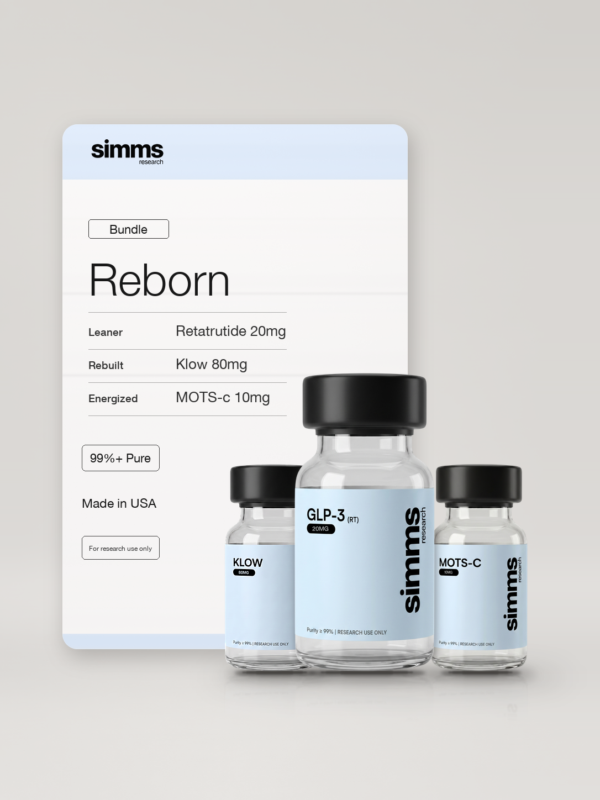
Retatrutide goes furthest of all. Reta Peptide Face sizes its numbers against the face, and What Is Retatrutide? covers the compound itself. Both newer molecules are also sold as research powder, as Tirzepatide (GLP-2) and Retatrutide (GLP-3) at Simms Research.
Ozempic face before and after: the timeline
Rarely in the first month, when most people have lost only a few percent. Weight on these drugs drops fastest over the first six months and flattens somewhere between one year and eighteen months, and the face follows the same curve, so most of the change shows between months three and twelve. A face that looks unchanged at week four can look very different at week thirty.
How to prevent Ozempic face
Not completely. Fat leaves the face with everywhere else, and no cream keeps it there. What can be controlled is how fast it goes and what the skin has to work with.
Climb the doses slowly
An international panel of aesthetic doctors defined medication-driven weight loss by how much of a person’s BMI goes in six months or less (Nikolis, Journal of Cosmetic Dermatology, 2025), and fast loss is on the review’s list of risks. Holding a dose step lower while the scale is still moving trades a few weeks for a gentler curve.
Eat for the skin and the muscle under it
Appetite drops so far that protein and fluids run short first, and both are on the same list. Protein goes on the plate first, water through the day, and resistance training keeps the muscle that holds the body’s shape; the guide to muscle loss on GLP-1s covers how much and how often.
Start on the skin early
Daily sunscreen and a retinoid remain the best-tested habits for aging skin. In a 2026 study, 29 people losing weight fast, most of them on GLP-1 or GLP-1/GIP drugs, used a multi-ingredient volumizing cream for 12 weeks: skin and the fat beneath it measured 20.1% thicker on ultrasound, elasticity rose 23.2% and wrinkle severity fell 20.7% (Nguyen, Journal of Cosmetic Dermatology, 2026). It had no comparison group, but it was run in exactly this group of people.
Some clinics go a step further and start a collagen stimulator while the weight is still coming off. In a series of four GLP-1 users given a diluted calcium-based stimulator in the lower face, cheek volume rose 9.8% even as they lost an average of 24 lb (Durairaj, Aesthetic Surgery Journal Open Forum, 2025).
Peptides for Ozempic face: GHK-Cu, Glow and Klow
GHK-Cu is the peptide with human skin data, and every result comes from a cream. In 12-week facial and eye-area trials, women with aging skin who used a GHK-Cu cream ended up with firmer, thicker, denser skin and fewer fine lines (Pickart and Margolina, International Journal of Molecular Sciences, 2018). Nobody has yet tested it on skin loosened by GLP-1 weight loss.
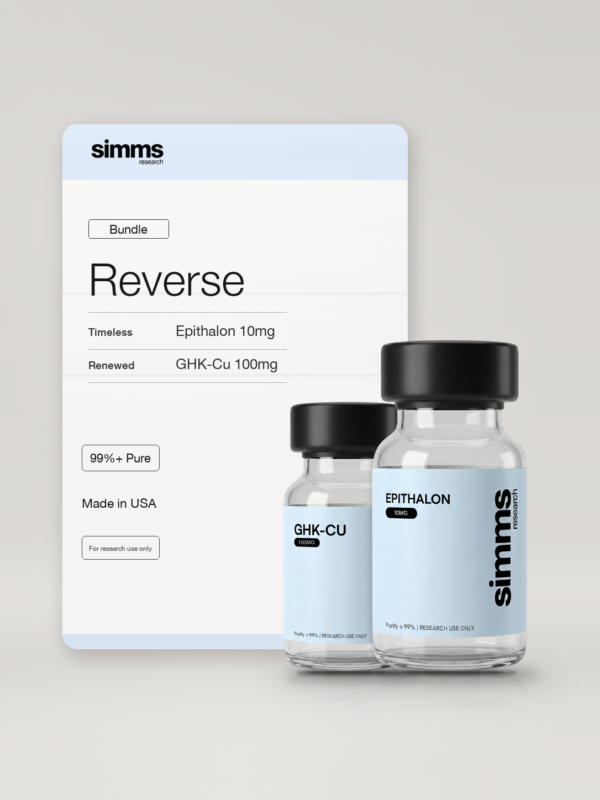
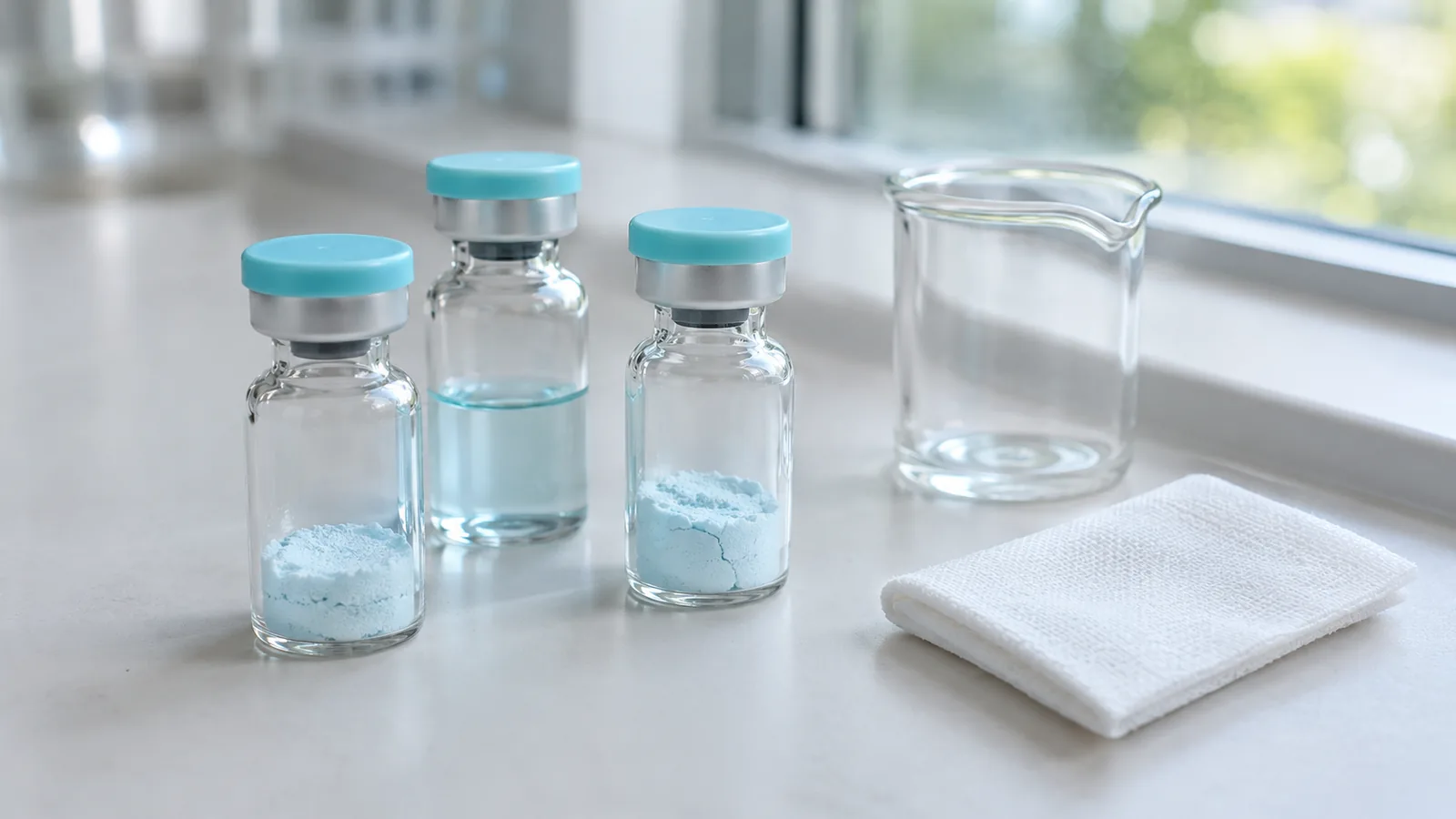
Research buyers run it two ways: diluted for the skin, or injected daily, often inside the blends Glow (GHK-Cu with BPC-157 and TB-500) and Klow (the same three plus KPV). The other peptides in the blends have no skin-laxity data of their own. The GHK-Cu dosage chart lays out amounts, Injectable Copper Peptides for Skin Care weighs the two routes, and Glow vs Klow covers the blends.
GHK-Cu from Simms Research comes as research powder: $48 for 50mg, $76 for 100mg. The most recent batch, tested by an independent ISO-certified lab on July 16, 2026, averaged 52.05mg across three 50mg vials at 99.819% purity, and the full report sits on the GHK-Cu lab results page. Glow runs $96 for 70mg and Klow $122 for 80mg.
Does Ozempic face go away?
Not by itself once the weight holds. The face fills back in only if fat returns, and skin that has lost collagen and elastic fiber does not rebuild them unprompted.
Does Ozempic face go away when you stop taking it?
Partly, and only as the weight comes back. A year after people in STEP 1 stopped semaglutide, they had regained about two-thirds of what they lost (Wilding, Diabetes, Obesity and Metabolism, 2022). Returning fat refills the face with the rest of the body, though nobody has measured whether it lifts loose skin back to where it was. Getting the old face back that way means trading the weight for it.
Does Ozempic face go away with time?
It stops getting worse when the weight stops falling, and that is most of what time does. The biopsy changes were still there a year after surgery, which is why clinics judge what to treat only once weight has been steady for a while.
How to fix Ozempic face
By replacing volume and tightening skin as separate jobs, once the weight has held. Most guidance still comes from clinicians who treat many GLP-1 users (Moradi, Aesthetic Surgery Journal Open Forum, 2026), but the first studies are in.
Fillers and collagen stimulators come first for volume. Forty-one GLP-1 users given poly-L-lactic acid over two or three sessions plus a hyaluronic acid midface filler had fuller cheeks, a cleaner jawline and better-hydrated skin through nine months after the last session, with no treatment-related problems (Lorenc, Aesthetic Surgery Journal, 2026). Hyaluronic acid works the day it goes in; collagen stimulators build over months.
Radiofrequency delivered under the skin targets laxity. In 24 patients with Ozempic face, 19 women and 5 men aged 27 to 65, most rated their result 8 out of 10 or better after at least a year, and the only side effect was redness that passed (Catalfamo, Journal of Clinical Medicine, 2025). Microneedling, lasers and focused ultrasound suit milder looseness.
Surgery handles the rest: a face and neck lift for heavy skin, fat grafting to restore volume with a person’s own fat, and eyelid surgery for hooded upper lids. The biggest worry GLP-1 patients bring to these clinics is looking as if they have put the weight back on (Nikolis, Journal of Cosmetic Dermatology, 2025), so the best results are quiet ones.
How to fix Ozempic face naturally
Without needles, the tools are the prevention ones: protein, strength work, sunscreen, a retinoid, a cream with data behind it and a stable weight. None of them puts back fat that has gone.
Why GLP-1s hollow the face, and what works
Because they take off more weight than any drug before them, and the face gives up its fat with the rest. The shallow pads at the temples, cheeks and eyes empty first, and skin stretched over them for years loses collagen and spring faster than it can tighten. The drugs may add a small effect of their own, but the change tracks the loss: least on Ozempic’s diabetes dose, most on tirzepatide and retatrutide.
A slower dose climb, protein, fluids, strength work and early skin care hold loose skin back as far as anything can; fillers, collagen stimulators, tightening devices or surgery handle what remains once the weight holds.
Frequently asked questions
Does Mounjaro cause Ozempic face?
Yes, in the same way. Mounjaro and Zepbound are both tirzepatide, and its larger average loss makes the change more common on them than on Ozempic, not less.
Does Ozempic face happen to men?
Yes. Five of the 24 radiofrequency patients above were men, and among weight-loss surgery patients, men over 40 showed the biggest rise in how old surgeons judged them to look a year later (Valente, Plastic and Reconstructive Surgery, 2018).
Can a GLP-1 cause other skin or hair changes?
Hair often thins a few months into a big loss, and Does Tirzepatide Cause Hair Loss? explains the timing and how long it lasts. In the same survey, about a quarter reported worse skin quality, mostly dryness and new fine lines, especially past a fifth of body weight.
Is Simms Research legit?
The record is public. Each posted batch report lists purity, measured content and contaminant screens from an independent ISO-certified lab. Orders placed before 5PM Eastern on a business day leave Florida that day, and the Free Delivery Guarantee replaces anything lost in transit, stolen after delivery or damaged on arrival, at no charge. Support is reachable by phone at 855-592-8507 or by email at support@simmsresearch.com, between 9AM and 5PM Eastern, Monday through Friday.