

Blog
Retatrutide vs Zepbound: Weight Loss, Sleep Apnea and Cost (2026)


Zepbound is where most people start. It is Eli Lilly’s tirzepatide sold for weight loss, approved in November 2023, and the one many buyers already know. Retatrutide is the shot Lilly built to follow it: same company, same weekly injection, one more hormone receptor.
The two have not met in a finished trial. What exists is a pair of obesity programs run the same way, SURMOUNT for Zepbound and TRIUMPH for retatrutide, sleep apnea results from both, and a price gap between a drug in pharmacies and one still waiting on the FDA. On the measure Zepbound’s own label prints, retatrutide’s top dose took off about four points more.
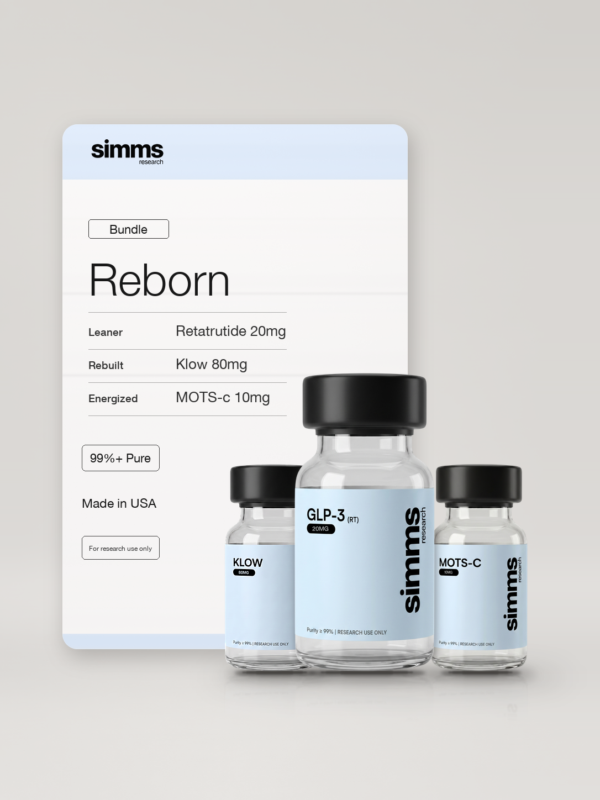
Simms Research carries the research version, Retatrutide (GLP-3), in vials from 10mg to 60mg, and its current batch measured more powder than the label promises.
Is retatrutide the same as Zepbound?
No. Zepbound is tirzepatide, which works on two receptors, GIP and GLP-1. Retatrutide is a separate molecule with a third target on top of those two: glucagon’s receptor, the one that pushes the liver to burn fat and lifts the energy the body spends. They get mixed up because both are Lilly peptides built on the gut hormone GIP and given once a week.
Zepbound is also a brand rather than a compound. The same tirzepatide is sold as Mounjaro for type 2 diabetes, a matchup of its own in retatrutide vs Mounjaro. Zepbound holds the weight-loss approval and, since December 20, 2024, a second one for moderate-to-severe obstructive sleep apnea in adults with obesity. Retatrutide has no brand name and no approval anywhere; Lilly plans to file with the FDA early in 2027, and When Will Retatrutide Be FDA Approved? maps the road from there. Retatrutide vs Tirzepatide goes receptor by receptor, and What Is Retatrutide? covers the compound on its own.
Retatrutide vs Zepbound weight loss
Retatrutide comes out ahead: its 12mg dose averaged 25.0% weight loss over 80 weeks, and Zepbound 15mg averaged 20.9% over 72. Both are intention-to-treat figures, counting everyone randomized, including people who missed doses or quit. That is the measure on Zepbound’s label, so it is the fair line to hold retatrutide against.
In SURMOUNT-1, 2,539 adults with obesity took Zepbound 5mg, 10mg or 15mg a week for 72 weeks and lost 15.0%, 19.5% and 20.9%, while the placebo group lost 3.1% (Jastreboff, New England Journal of Medicine, 2022). In TRIUMPH-1, 2,339 adults without diabetes took retatrutide 4mg, 9mg or 12mg for 80 weeks and lost 17.6%, 23.7% and 25.0%, with placebo at 3.9% (Jastreboff, New England Journal of Medicine, 2026).
Net of placebo, that is 21.0 points for retatrutide 12mg and 17.8 for Zepbound 15mg. Retatrutide 9mg, one step below its top, finished nearly three points past Zepbound’s highest dose, and 4mg beat Zepbound 5mg. Counting only people who kept taking it lifts both, to 28.3% and 22.5%, without changing the order.
Zepbound has already won a head-to-head of its own: 20.2% at 72 weeks against 13.7% for Wegovy in SURMOUNT-5 (Aronne, New England Journal of Medicine, 2025). Retatrutide’s turn against Zepbound’s molecule, TRIUMPH-5, hasn’t reported, so every comparison is still trial against trial.
Retatrutide vs Zepbound results over two and three years
Zepbound has the longer record. People with prediabetes in SURMOUNT-1 stayed on for 176 weeks, and the 15mg group was still 19.7% lighter at three years (Jastreboff, New England Journal of Medicine, 2025). Retatrutide’s longest data runs two years: in a 532-person TRIUMPH-1 extension for people starting at a BMI of 35 or more, those still on 12mg averaged 30.3% at 104 weeks.
Keeping it off is where Zepbound has an answer and retatrutide doesn’t yet. In SURMOUNT-4, people who lost 20.9% over 36 weeks and were then moved to placebo regained 14.0% of their weight within a year, while those who stayed on lost another 5.5% (Aronne, JAMA, 2024). Retatrutide’s maintenance trial, TRIUMPH-6, is still running, and Can You Stop Retatrutide Once You Start? covers what is known about stopping it.

Retatrutide vs Zepbound for sleep apnea
Zepbound is the approved treatment; retatrutide cleared more breathing events. Its results were presented on November 15, 2026, nearly two years after Zepbound became the first medicine the FDA approved for obstructive sleep apnea.
That approval rests on SURMOUNT-OSA, two 52-week trials in 469 adults with obesity and moderate-to-severe apnea, each on the highest Zepbound dose they tolerated, 10mg or 15mg. Among people not using a CPAP machine, the apnea-hypopnea index (how many times an hour breathing stops or turns shallow in sleep) fell by 25.3 from a starting 51.5, against 5.3 on placebo. Weight fell 17.7%, and 42.2% ended with apnea mild enough, and daytime sleepiness low enough, to count as resolved, against 15.9% on placebo. Among people already on CPAP the drop was 29.3 events an hour against 5.5 (Malhotra, New England Journal of Medicine, 2024).
Retatrutide’s data comes from 243 people with moderate-to-severe apnea inside TRIUMPH-1, who started worse off, at 58.6 events an hour, and were treated for 80 weeks. Counting everyone, 9mg removed 34.3 events an hour and 12mg 32.1, with placebo at 9.6. Among those who kept taking it, the best result was 36.1 fewer, a 60.6% drop.
Net of placebo the margin is slimmer than for weight: about 25 events an hour for retatrutide 9mg against 20 for Zepbound, over a trial 28 weeks longer. Both work on apnea largely through the weight they remove, so the drug that removes more also clears more.
Retatrutide vs Zepbound side effects
The same stomach side effects on both, more of them on retatrutide’s top dose, plus one Zepbound almost never causes. Nausea, diarrhea, constipation and vomiting lead for each, mostly mild to moderate and mostly in the months the dose is climbing.
The plainest yardstick is how many people quit. In SURMOUNT-1, 6.2% stopped Zepbound 15mg over side effects, against 2.6% on placebo; in TRIUMPH-1, 11.3% stopped retatrutide 12mg, against 4.9%. Retatrutide also brings dysesthesia, an altered sense of touch where the skin prickles or stings at contact: 12.5% at 12mg, against under 1% on Zepbound, mostly mild and fading while people carried on. Each drug takes off mostly fat, covered for retatrutide in muscle loss on retatrutide. Rates by dose sit in the guide to retatrutide side effects, and in the tirzepatide side effects guide for Zepbound.
Retatrutide vs Zepbound dosage
Both climb in four-week stages. Zepbound opens at 2.5mg and tops out at 15mg; retatrutide’s Phase 3 ladder opened at 2mg and ended at 12mg.
Zepbound’s label starts at 2.5mg for four weeks, then adds 2.5mg at a time, at least four weeks apart, to a dose of 5mg, 10mg or 15mg for weight, or 10mg or 15mg for sleep apnea. TRIUMPH participants went 2mg first, then 4, 6 and 9, and finally 12mg. The retatrutide dosage chart sets it out week by week, and the retatrutide calculator turns any dose into syringe units.
Milligrams don’t translate between them, since the two bind their targets with different force; 1mg of retatrutide says nothing about 15mg of Zepbound. By results, Zepbound’s top dose (20.9%) sits between retatrutide 4mg (17.6%) and 9mg (23.7%).
Retatrutide vs Zepbound cost
Self-pay Zepbound costs $299 to $449 for four weeks through Lilly. Retatrutide has no pharmacy price; as research powder the same four weeks runs $84 to $243.
With a prescription, Lilly sells Zepbound’s multi-dose KwikPen, or four single-dose vials, at $299 a month for 2.5mg, $399 for 5mg and $449 from 7.5mg up. The $449 holds only while each refill comes within 45 days of the last delivery; after that the month reverts to $499 for 7.5mg and $699 for 10mg to 15mg. The single-dose pens go through insurance: as little as $25 a month where a plan covers them, as low as $499 with Lilly’s savings card where it doesn’t, and no more than $50 for Medicare patients who qualify for the Medicare GLP-1 Bridge.
Retatrutide isn’t approved, so no plan covers it and no copay card exists. Simms Research sells it for laboratory research only. Retatrutide (GLP-3) costs $259 for a 60mg vial, the lowest per milligram at $4.32, and $84 for the smallest, 10mg, at $8.40, with the 20mg and 30mg sizes at $129 and $159. Against Zepbound’s four-week steps, using the vial that fits each retatrutide step:
| Weeks | Zepbound dose | Zepbound, self-pay | Retatrutide dose | Retatrutide, research |
|---|---|---|---|---|
| 1 to 4 | 2.5mg | $299 | 2mg | $84 |
| 5 to 8 | 5mg | $399 | 4mg | $129 |
| 9 to 12 | 7.5mg | $449 | 6mg | $159 |
| 13 to 16 | 10mg | $449 | 9mg | $243 |
| 17 to 20 | 12.5mg | $449 | 12mg | $207 |
| 21 onward | 15mg | $449 | 12mg | $207 |
The first 16 weeks come to $1,596 on self-pay Zepbound with every refill on time, and $615 in retatrutide vials. At the top, one 60mg vial covers five weeks of 12mg, so four weeks cost $207 against $449. Zepbound arrives as a finished liquid, while research powder also needs bacteriostatic water and syringes or a pen, which retatrutide cost per month totals dose by dose.
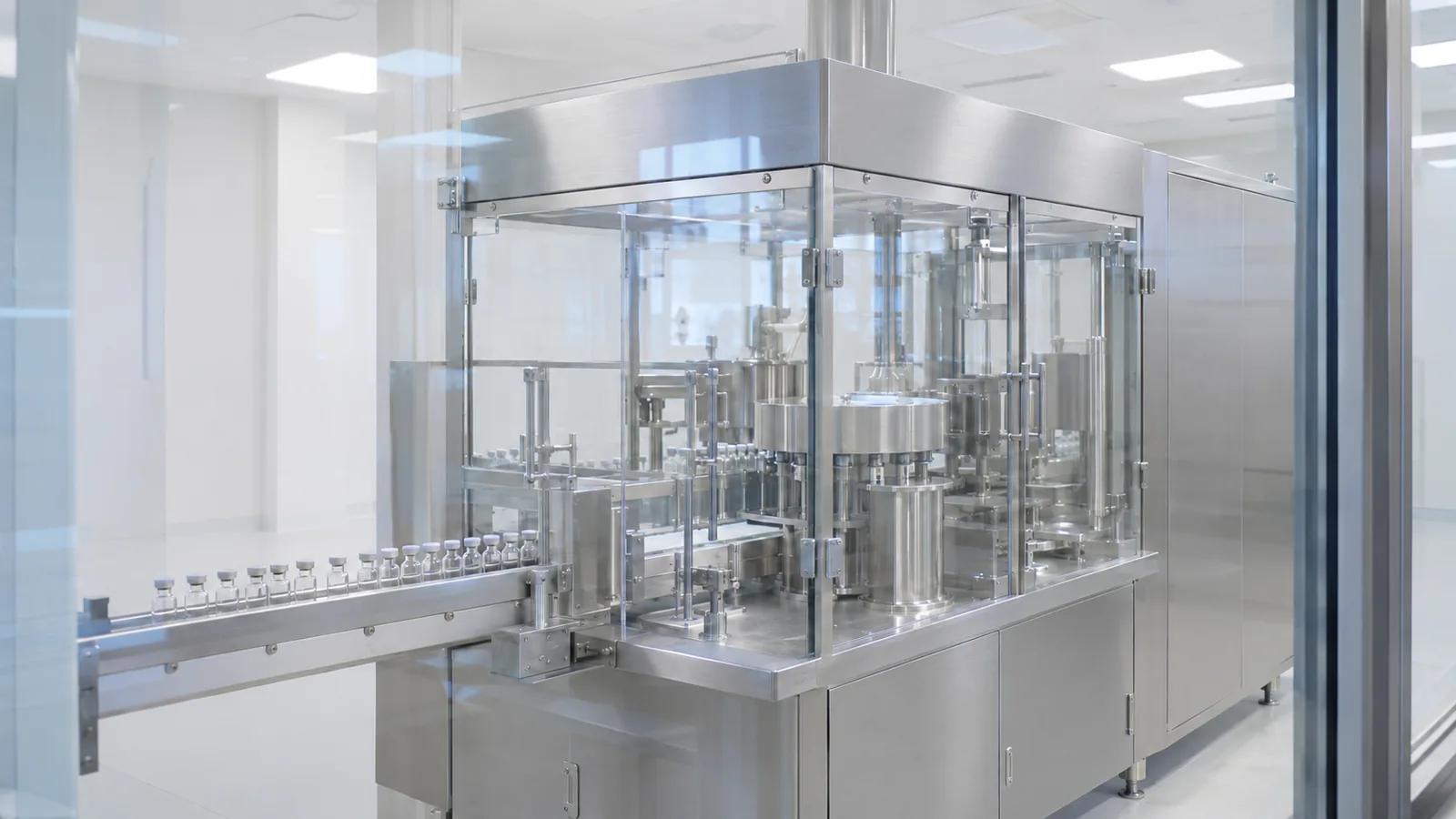
Zepbound pens and vials vs retatrutide powder
Zepbound comes ready to inject, in three forms that each carry all six strengths. Retatrutide comes as powder that is mixed first.
The original single-dose pen is an autoinjector with a hidden needle: one press, one weekly dose, then it is thrown away. Single-dose vials followed on August 27, 2024, drawn up with a syringe and sold through Lilly’s self-pay pharmacy. The newest, approved on February 23, 2026, is a KwikPen holding four weekly doses, a month per pen, at the same self-pay price as four vials.
Retatrutide’s finished form arrives with approval. For research it is a white freeze-dried cake in a sealed vial, dissolved in Research Water, Simms Research’s bacteriostatic water; How to Reconstitute Retatrutide has the volume for every vial size. It is then drawn with an insulin syringe or loaded into a reusable Peptide Injection Pen, which the retatrutide pen guide covers cartridge by cartridge.
A Zepbound pen holds what its label says because Lilly makes it under FDA oversight. Research powder is only as good as its certificate. The batch Simms Research ships now was reported by an independent ISO-certified lab on July 16, 2026: purity 99.611%, the molecule confirmed by LC-MS, a pass on endotoxins, no heavy metals and nothing grown in the microbial test. Three vials labelled 10mg held 10.68mg each on average. Every field is in the retatrutide lab results.
Retatrutide vs Zepbound: which is better?
For weight loss, retatrutide: 25.0% against 20.9% on the measure Zepbound’s label uses, a 9mg dose that beat Zepbound’s best, and 30.3% at two years for people who stayed on it. It cleared more sleep apnea events too, by a smaller margin.
Zepbound’s case is everything that comes with approval: prescribed since 2023, a sleep apnea indication, three years of trial data, fewer people quitting over side effects and almost none of the skin sensitivity seen on retatrutide 12mg. It also costs $299 to $449 a month with a prescription. Retatrutide can’t be prescribed outside a trial or early access until Lilly’s filing clears, and as research powder from Simms Research it costs less at every step. Tirzepatide (GLP-2), the compound inside Zepbound, sits on the same shelf for anyone researching both.
Frequently asked questions
Has retatrutide been tested against Zepbound?
Not yet. TRIUMPH-5 puts about 800 adults with obesity on retatrutide or tirzepatide for 80 weeks, blinded, and its main results were due to finish in November 2026.
Can you switch from Zepbound to retatrutide?
No trial has tested it. TRIUMPH excluded anyone who had used a weight-loss drug in the prior 90 days and began every participant on the lowest step, and since Zepbound 15mg outperformed retatrutide 4mg, appetite can return for a few weeks during the climb. Starting dose and timing are in switching from tirzepatide to retatrutide, and the one prescription route before approval is retatrutide early access.
Can you take retatrutide and Zepbound together?
No trial has combined them. Both act on the GIP and GLP-1 receptors, so the pair would hit the same two targets twice.
Is Simms Research legit?
Yes, on facts anyone can check. Its retatrutide certificate from an independent ISO-certified lab is public, orders in by 5PM Eastern leave Florida the same business day, and under the Free Delivery Guarantee a box that goes missing, is stolen after delivery or arrives damaged is replaced or refunded. Support is at support@simmsresearch.com and 855-592-8507, weekdays between 9AM and 5PM Eastern.
Is there a discount code on this page?
No. Nothing here carries a code or an affiliate link, and every Simms Research price above is a regular one.