

Blog
How to Use a Peptide Injection Pen: Load, Prime and Set the Units

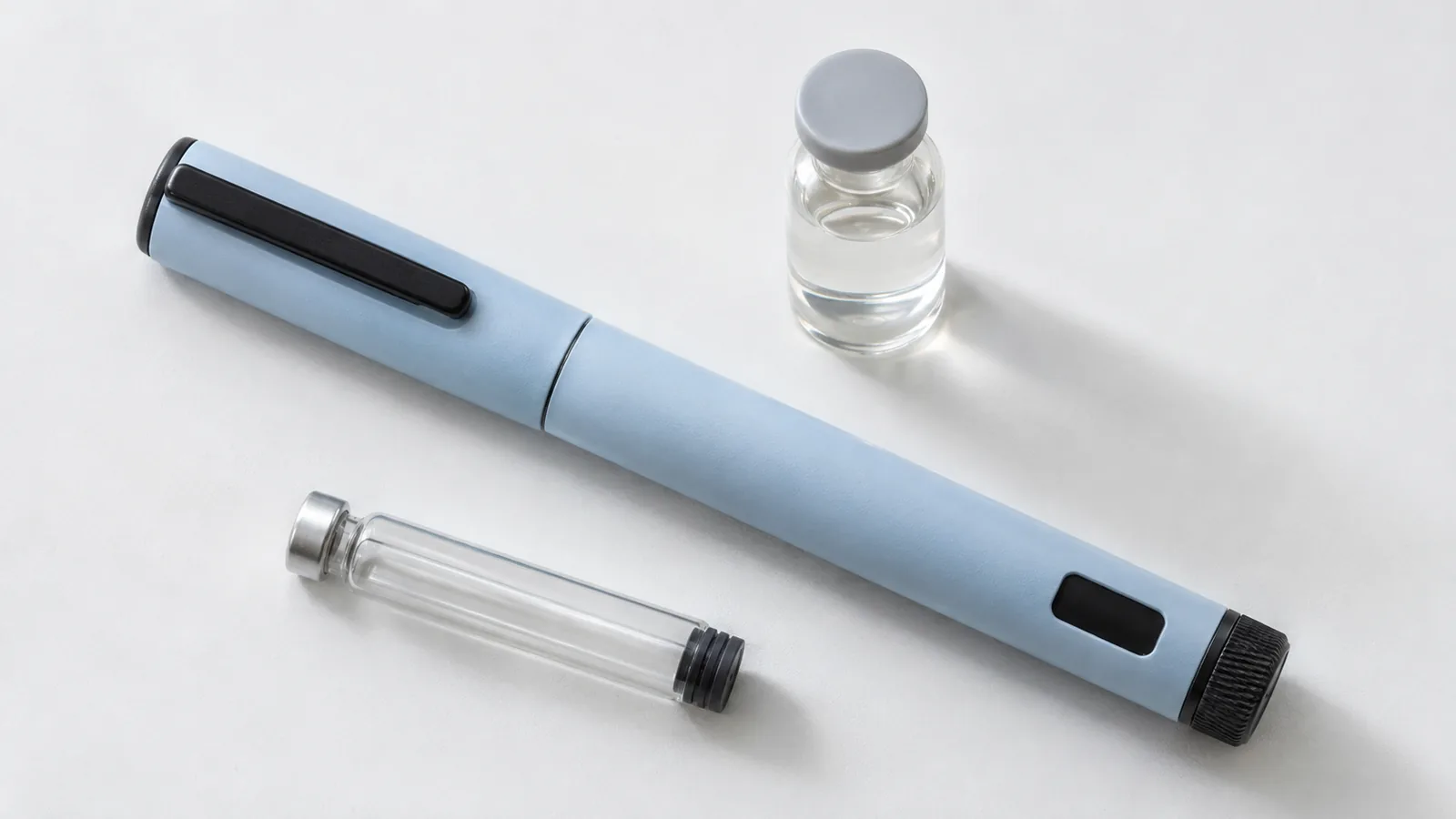
Most buyers come to a pen after weeks of drawing each dose from a vial: needle through the stopper, plunger eased back to a line, bubble flicked out, every time. A pen turns that into one fill and a dial.
The catch is that pens were built around insulin cartridges that arrive full. A peptide pen starts with an empty one, so what decides whether each dose is right happens before the first click: getting the liquid in, the air out and the tip primed. A full cartridge holds 300 units, and one click is one unit.
Simms Research sells its Peptide Injection Pen at $97, or $119 as a Starter Kit with five cartridges, 50 pen tips and a case. At the water amounts Simms Research publishes for its own vials, 25 of its 30 vial sizes fit in a single cartridge.
What is a peptide pen?
A reusable pen injector that holds a 3mL glass cartridge of mixed peptide and measures each dose with a dial. Each click of the dial is one unit, and pressing the knob drives a threaded rod against the cartridge’s rubber plunger by exactly that much. The metal pen lasts; cartridges and tips get used up.
The name also covers pre-filled pens, which arrive loaded and are thrown away empty. The reusable kind, often sold as a V2 pen, is filled by the buyer. The peptide injection pen at Simms Research is reusable: 300 units to a cartridge, 1 to 60 units per dose in steps of 0.01mL, and standard screw-on pen needles.
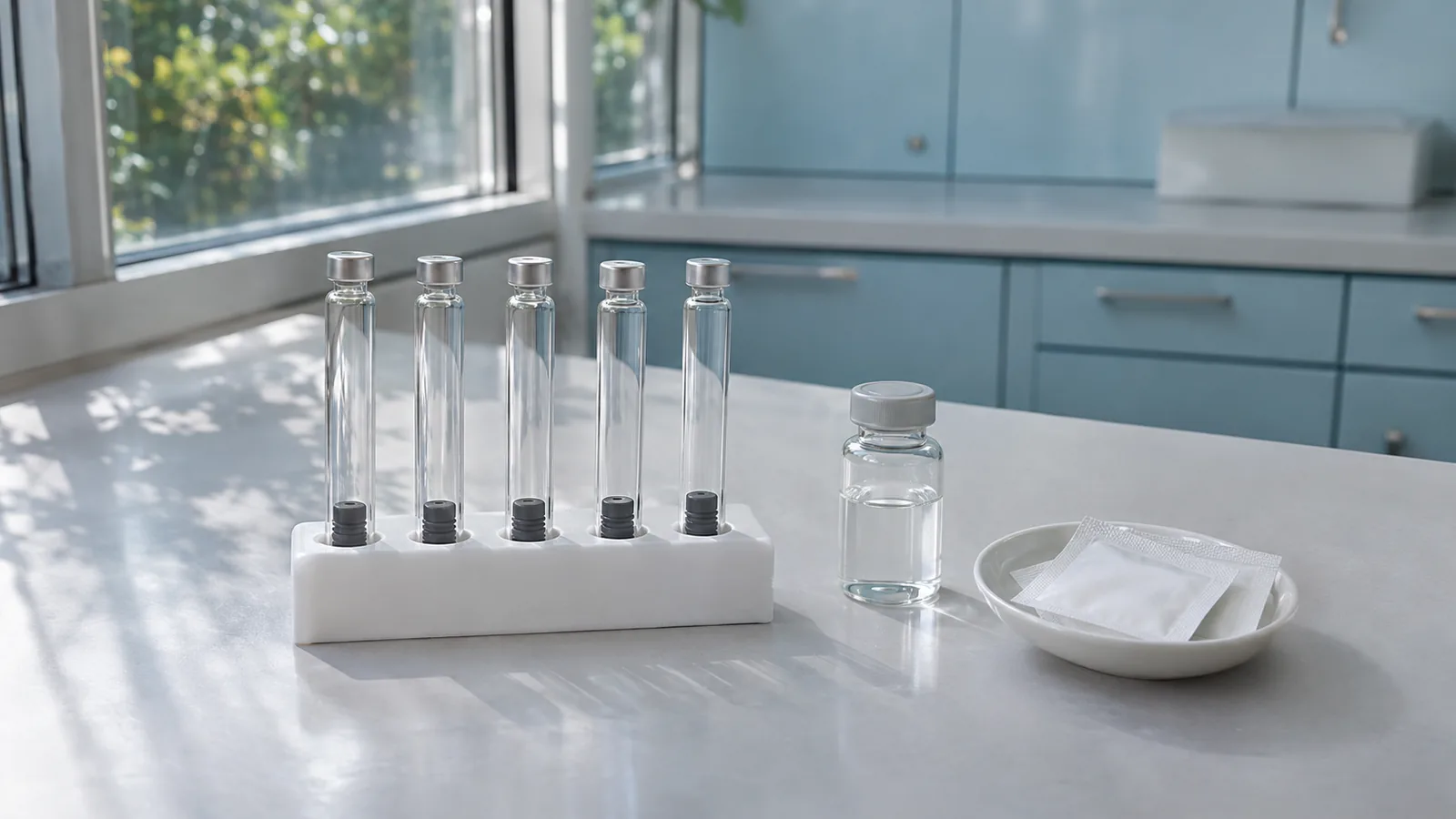
How to fill a peptide pen cartridge
From the mixed vial into a syringe, then through the cartridge’s rubber seal, with a second needle in the seal letting the air out. An empty cartridge is a glass tube with a rubber plunger at one end and a metal-capped seal at the other, full of air that needs a way out as the liquid comes in.
First mix the vial with bac water at its usual amount and wait until it is fully clear. Wipe the vial stopper and the cartridge’s rubber seal with alcohol and let both dry. Then draw the whole vial into the syringe, so the cartridge seal is punctured only once.
Push a second thin needle through the edge of the cartridge seal as the vent. Hold the cartridge cap end up, put the filling needle through the centre of the seal, angle it at the glass and press slowly. Stop just under the seal, take the vent needle out first and the filling needle second, and write the mixing date on the case or on tape around the holder.
A bare needle or an insulin syringe with its plunger removed works as the vent; some buyers instead draw a little air out of the cartridge first. A small bubble left under the seal is normal and leaves in the first purge. Mixing and water amounts are in How to Reconstitute Peptides, and a vial that won’t clear is the subject of Cloudy Peptide After Reconstitution.
A cartridge takes one mix: topped up with a newer vial, it is finished on the older vial’s date.
How much fits in a 3mL cartridge
One whole vial, for almost everything Simms Research sells: its published water amounts run from 1mL to 3mL for 25 of its 30 vial sizes. A 1mL mix fills a third of the cartridge (100 units), 2mL fills two-thirds, and 2.4mL and 2.5mL mixes leave a little room at the top.
The 3mL mixes, retatrutide 30mg and 60mg among them, fill the cartridge to the seal, so the last tenths go in slowly; they also leave the least air to purge. The five larger mixes are split across cartridges at one sitting, all carrying the vial’s date: BPC-157 20mg (4mL), GHK-Cu 100mg and NAD+ 500mg (5mL each) and glutathione 1,500mg (6mL) take two cartridges, and NAD+ 1,000mg (10mL) takes four.
How to load a peptide pen
Rod back, cartridge in, holder on, new tip on. With the cap off, the cartridge holder at the front separates from the metal body. Inside the body is the threaded rod that pushes the plunger. After a cartridge is used up, the rod stands out by the length of every dose it delivered, and it goes back in, turned or pressed depending on the pen, until it sits flush. A rod left part-way out meets the plunger early and squirts liquid out as the holder goes on.
The cartridge goes into the holder metal cap first, so the plunger faces the rod, and the holder is tightened back onto the body until it stops. Then a new tip: paper off, screwed on straight, outer cap kept for later, thin inner cap thrown away.
How to prime a peptide pen
Twice over: once per cartridge, to clear the air left from filling, and before every dose, to clear the air in the new tip.
The first purge after filling
Point the tip straight up, tap the holder so the bubble rises to the seal, and dial a large number. With a lot of air in the cartridge that can be the full 60; with a small bubble, 10 or 20. Press, and repeat until liquid appears at the tip, dialing smaller as the air shrinks and ending at 1 or 2 units so that only a drop of peptide is spent. A partly filled cartridge needs more presses, which costs time, not peptide.
The 2-unit prime before every dose
Every new tip holds a little air, and a dose given through it delivers that air in place of the first units of peptide. So each time: tip up, dial 2, press, and look for a drop at the point. Simms Research’s own instructions for its pen are exactly that, a 2-unit shot until a drop appears. No drop means another 2 units. A tip that stays dry after a few tries is usually blocked, and a fresh one fixes it.
Peptide pen units and clicks
One click is one unit, and one unit is 0.01mL: the same scale as a U-100 insulin syringe, where 100 units make 1mL. A dose of 25 units on a syringe is 25 clicks on the pen, and the window shows 25. A full cartridge is 300 units, and the pen delivers up to 60 of them per press.
How many clicks on a peptide pen?
As many as the dose is in units, and that number depends on how strong the mix is, not on the pen. The same milligram dose is 10 clicks in one mix and 20 in a mix with twice the water. The peptide calculator gives the units for any vial and water amount, and the full conversion tables, milligrams and micrograms to units, are in Peptide Syringe Units Chart: Convert mg and mcg to U-100 Units.
Dialing too far is harmless: the knob turns back, and nothing leaves the cartridge until it is pressed. A dose over 60 units is two presses, 60 and then the rest, the way the retatrutide dosage chart splits its larger doses.
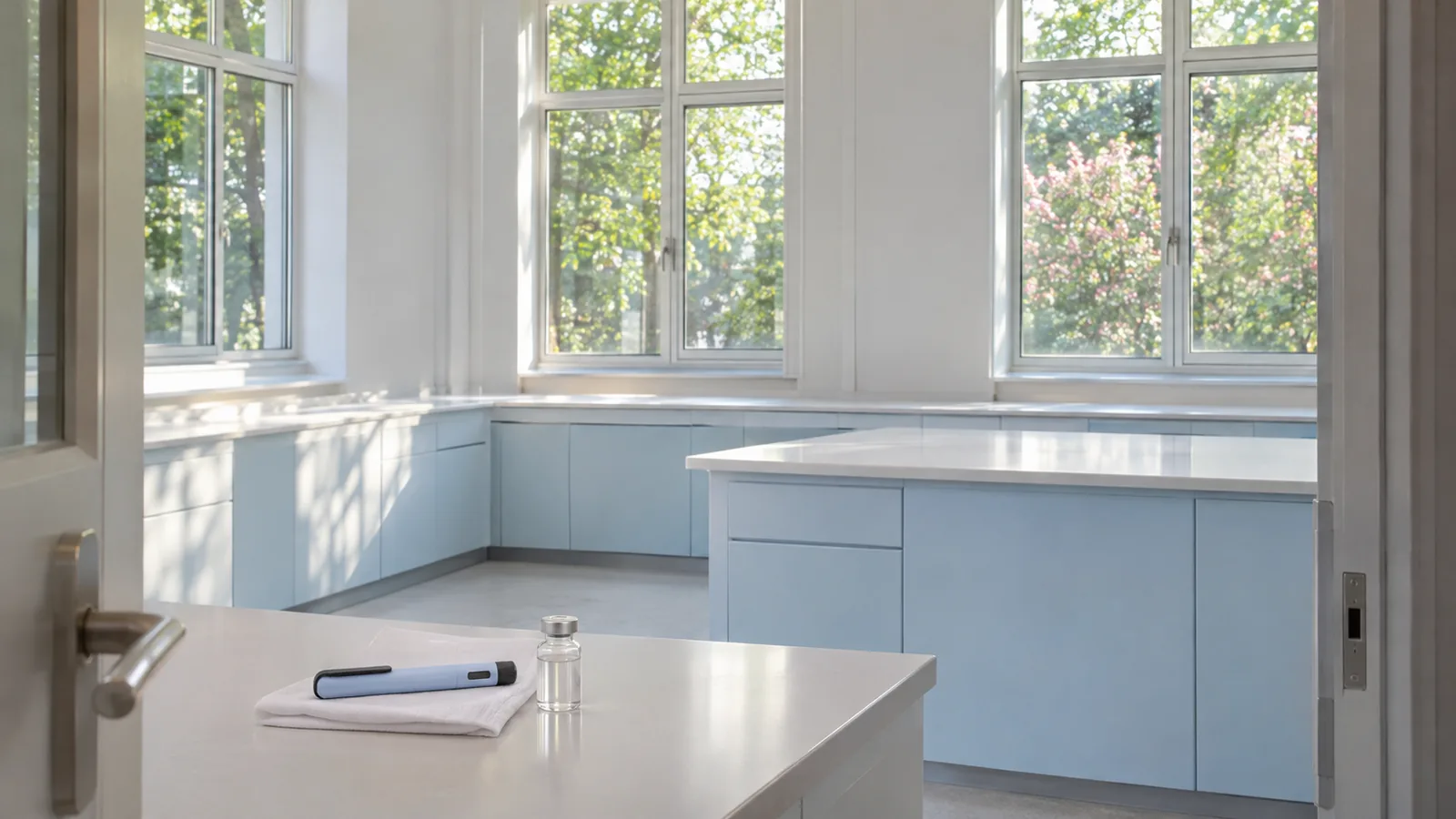
How to use a peptide pen for each dose
Fridge to fridge in about a minute. A look at the cartridge first: the liquid should be as clear as on the day it was mixed. Then a new tip, its 2-unit prime and the dose dialed.
The knob goes all the way down, until the window reads 0, and stays down for a slow count to ten before the tip comes out. Insulin pen makers ask for 5 to 10 seconds; a drop at the point afterwards means the tip came out too soon. The outer cap goes back over the tip, the tip unscrews inside it into a sharps container, the pen cap goes on and the pen returns to the fridge.
A knob that stops short of 0 means the cartridge ran out mid-dose, and the number left in the window is what didn’t go in. A fresh cartridge, purged, with a new tip and its 2-unit prime, delivers that number to finish the dose.
Peptide pen needles
Standard screw-on pen needles, the same type made for insulin pens, and a new one for every dose. They are sold by gauge and length: gauge is the thickness, with higher numbers thinner, and the usual range for pens is 29G to 32G in lengths of 4mm to 8mm. The international insulin-injection recommendations name the shortest pen needle, 4mm, as the first choice for every adult (Frid, Mayo Clinic Proceedings, 2016).
A tip is used once. After one pass it is no longer sterile, and its point is blunter than it looks. Left on the pen between doses, it also leaves an open channel into the cartridge, letting air in and peptide out, which is why Simms Research’s storage instructions for its pen say cap on, tip off.
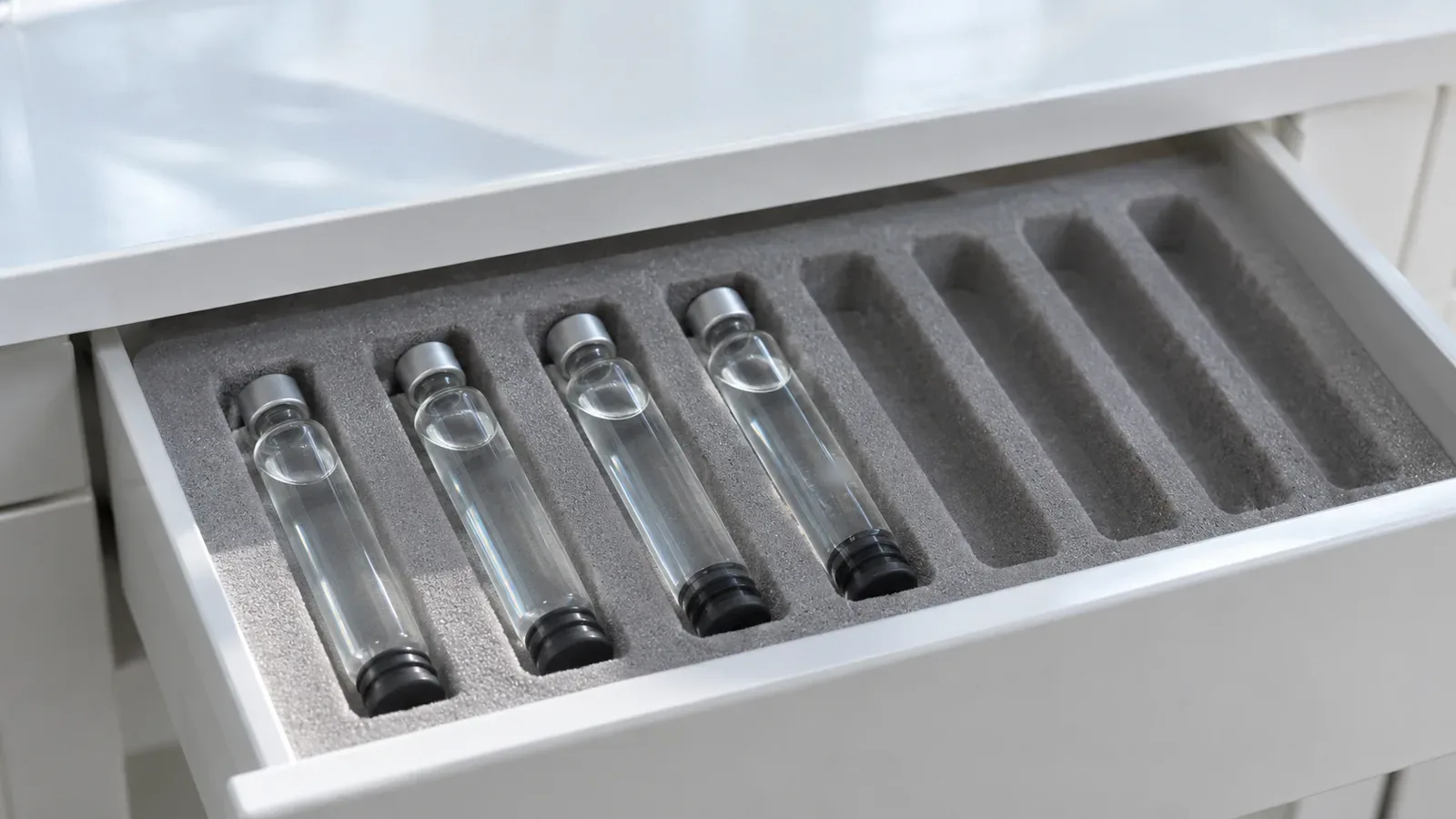
How long does a peptide pen cartridge last?
28 days in the fridge or 300 units, whichever runs out first. Simms Research’s instructions for a loaded cartridge are 2 to 8°C (36 to 46°F) and use within 28 days, the same 28 days its guides give a mixed vial, so the count starts at mixing, not loading. The units side depends on the dose, with 2 units spent on the first purge and 2 more on the prime before every dose:
| Dose | Doses from a full cartridge | At one dose a day |
|---|---|---|
| 5 units | 42 | 28 days; the date ends it first |
| 10 units | 24 | 24 days |
| 20 units | 13 | 13 days |
| 30 units | 9 | 9 days |
| 40 units | 7 | 7 days |
| 60 units | 4 | 4 days |
A weekly schedule fits five doses into the 28 days, on days 0, 7, 14, 21 and 28, so the date ends a weekly cartridge first unless each dose is close to 60 units. For weekly use the vial size, not the pen, decides how much is left over, which is why the retatrutide dosage chart matches each vial size to one four-week step of the dose ladder.
How long does a peptide pen last in the fridge?
As long as the cartridge in it. The loaded pen lives in the fridge, capped with the tip off, and comes out only for a dose; empty, it keeps at room temperature, dry and away from heat. Storing mixed peptide is covered in Do Peptides Need to Be Refrigerated?, and days away from home in Traveling With Peptides.
Peptide pen kit: what else you need
A pen kit covers the pen and its consumables; the peptide side comes separately. Simms Research’s Starter Kit is the pen, five empty 3mL cartridges, 50 pen tips and a hard case for $119, against $97 for the pen alone with its cap. At one dose a day the 50 tips run out first, after about seven weeks; at one dose a week the five cartridges do, after about 20 weeks at 28 days each.
Beyond the kit: the vial, bac water to mix it, such as Research Water at $20 a 10mL vial with 0.9% benzyl alcohol as its preservative, a syringe for the transfer plus a second needle to vent, alcohol pads and a sharps container. Which syringe to use is covered in What Size Syringe for Peptides? Insulin Syringes, Needles and Units Explained.
Frequently asked questions
Is a peptide pen better than a syringe?
For many doses from one mix, yes: the dial replaces drawing to a line and chasing bubbles, and the pen is ready in seconds. A syringe stays simpler for a single dose, for doses over 60 units every time, or for a compound used only now and then.
Can any peptide go in a peptide pen?
Any mixed peptide that is fully clear. The pen measures volume and doesn’t care what the liquid is, so blends such as Klow or Glow load like any other vial, and Simms Research’s own page names retatrutide and tirzepatide for daily and weekly use. One cartridge holds one mix, so a second compound means a second cartridge.
Is Simms Research legit?
The checkable parts: 17 compounds have batch reports on its lab results pages, tested by an independent ISO-certified lab; an order in by 5 PM Eastern on a business day leaves Florida that day; 855-592-8507 is answered Monday to Friday, 9 AM to 5 PM Eastern; and a parcel lost, stolen after a delivery scan or damaged in transit is replaced under its Free Delivery Guarantee.
Is there a code or an affiliate link on this page?
Neither. No link here earns anyone a commission, and every price quoted is the regular one.