

Blog
Copper Uglies: What the GHK-Cu Purge Is and What It Is Not
Copper uglies are the dull, rough patch some people get from strong or frequent copper peptides, and the fix is usually a lower strength and fewer applications.

Copper peptides spent 2026 moving from a niche serum to the middle of the skincare shelf, and research vials of GHK-Cu followed them into home routines. A phrase came with them: copper uglies. It names the stretch, a week or three in, when skin that was meant to look firmer looks duller, rougher or looser instead.
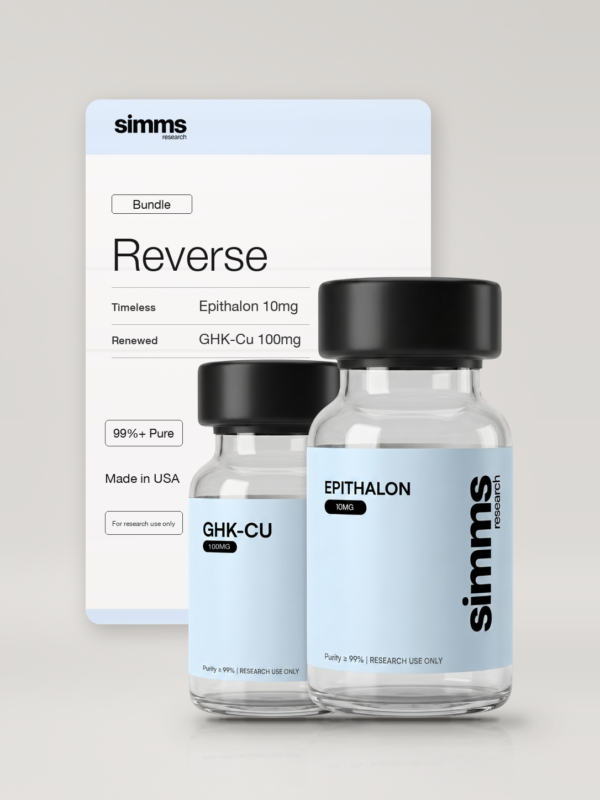
The phrase sounds like folklore, but the biology under it is on record. GHK-Cu switches on the enzymes that clear old collagen alongside the work of building new (Siméon, Life Sciences, 2000). What the record doesn’t back is the idea that the rough patch is a purge to push through. Most of the time it is a strength and frequency problem with a short fix. Simms Research sells GHK-Cu as a research powder in 50mg and 100mg vials, the form many people now mix into their own serums, which puts the strength, and the fix, in the researcher’s hands.
What are copper uglies?
Copper uglies is the nickname for a temporary dip in how skin looks after starting a copper peptide, almost always GHK-Cu. It is skincare slang, the copper cousin of the retinol uglies, not a diagnosis. The description barely changes from one account to the next: a flat, grey or tired tone, a rough or crepey texture, fine lines that suddenly read deeper, skin that seems a little looser or more hollow, and now and then small bumps.
Two things set it apart from a reaction. It builds slowly, over days to weeks rather than hours, and it doesn’t burn, swell or spread past where the product went. The routine behind it is nearly always the same too: a strong copper product, used every day, often stacked with vitamin C, acids or a retinoid. The name has since spread to people injecting GHK-Cu, which works by a different lever and has its own section below.
Why copper peptides can make skin look worse first
Because GHK-Cu remodels skin rather than simply adding to it. In cultures of the skin’s collagen-making cells, GHK-Cu raised MMP-2, one of the enzymes that breaks collagen down; copper on its own did the same, and the peptide without copper did not. The same cells also released more TIMP-1 and TIMP-2, the inhibitors that rein those enzymes in (Siméon, Life Sciences, 2000). The longest-running research group on the molecule describes it the same way: GHK stimulates both the synthesis and the breakdown of collagen (Pickart, BioMed Research International, 2015).
A 2016 study filled in the balance. MMP-1 and MMP-2 rose at the lowest concentration tested, TIMP-1 rose at every concentration, and the rise in inhibitors relative to enzymes tracked the gain in collagen and elastin (Badenhorst, Journal of Aging Science, 2016). So the clearing and the building run together, and the copper uglies are what skin looks like when the clearing gets ahead.
Copper also lingers. When a 0.68% copper tripeptide solution sat on donor human skin in the lab for 48 hours, about 97 micrograms of copper per square centimetre stayed behind in the tissue as a reserve, on top of what passed through (Hostynek, Inflammation Research, 2011). A morning and evening application lands on skin still holding the last one.
Copper uglies vs a purge
They are different things, and GHK-Cu rarely causes a true purge. Purging belongs to actives that speed up shedding at the surface, such as retinoids and glycolic or salicylic acid. They push clogs that were already forming to the surface sooner, so the spots show up where that skin usually breaks out and fade as the turnover settles. GHK-Cu doesn’t exfoliate, which leaves most “GHK-Cu purge” complaints as one of four other things:
| What it is | What it looks like | When it starts | What ends it |
|---|---|---|---|
| Copper uglies | Dull, rough, crepey or looser-looking skin; lines read deeper; little or no sting | After one to three weeks of strong, frequent use | Lower strength, fewer applications |
| A true purge | Small spots in the usual breakout areas | First weeks of a retinoid or an acid | Time; it clears as turnover settles |
| Irritation from the base or a stacked active | Sting, tightness or redness right after applying | Within days | A plainer base, or dropping the stacked active |
| Allergic reaction | Itchy rash or swelling, spreading past where the product went | Hours to two days, with every use | Stopping the product |
| A mix that has turned | Solution gone green, brown or cloudy | Any time it is used | A fresh mix or a fresh vial |
True copper allergy sits at the far end of that list. In tests of how strongly metals set off the immune cells behind contact allergy, nickel and cobalt were potent and copper was weak (Rachmawati, Contact Dermatitis, 2013).
How long do copper uglies last?
Two to four weeks once the routine is cut back. That is about one renewal of the skin’s surface layer, which turns over roughly monthly in adults and more slowly with age. Pushing on at full strength keeps the clearing side ahead, which is why easing off comes before anything else.
Collagen runs on a longer clock. The controlled GHK-Cu studies measured visible change at eight to twelve weeks (Badenhorst, Journal of Aging Science, 2016; Pickart, BioMed Research International, 2015), so a rough patch in weeks one to three arrives before any new collagen could show. It isn’t a sign the product is working, and it isn’t a sign it has failed. Skin that hasn’t settled after a month at a lower strength, or that turned within a day or two of starting, belongs to another row of the table above.
Do copper peptides cause breakouts?
GHK-Cu itself isn’t known to. The molecule is studied for its anti-inflammatory actions (Pickart, International Journal of Molecular Sciences, 2018), and acne doesn’t appear in its cosmetic safety record. New spots after starting copper usually trace to what it rides in or alongside: a rich balm or oil-heavy cream on skin that clogs easily, or an acid or retinoid started the same month, whose purge then gets blamed on the copper.
The fix follows the cause. A light water or gel base takes the first off the table, and starting one active at a time settles the second. Is copper peptide good for acne? It isn’t an acne treatment. The interest rests on that calming effect in cell studies, and it is best judged on skin that isn’t fighting three new products at once.
Copper uglies from GHK-Cu injections
Same name, different lever. An injection skips the surface, so the cream base, the stacked acids and the strength on the skin drop out of the picture. What is left is the daily amount, how often it goes in, and the vial. Injected GHK-Cu reaches skin from the inside and everywhere at once, and the human studies so far are small ones built on facial creams (Najafi, Archives of Internal Medicine Research, 2026).
So when someone injecting talks about copper uglies, the first thing to look at is the amount against the usual research range in the GHK-Cu dosage chart. A sting or a red spot where it goes in is a separate, local matter that more water fixes, covered in Why GHK-Cu stings, and the fix.
Copper uglies on Klow and Glow
GHK-Cu is 50mg of the 80mg in Klow and 50mg of the 70mg in Glow, so most of every blend dose is copper peptide: five-eighths of a Klow dose, five-sevenths of a Glow dose. Adding a blend on top of plain GHK-Cu doubles the copper side without meaning to, while switching from plain GHK-Cu to a blend at the same milligrams lowers it a little. The Klow dosage chart and GHK-Cu vs Glow break each blend down by peptide.
Is your copper peptide the problem?
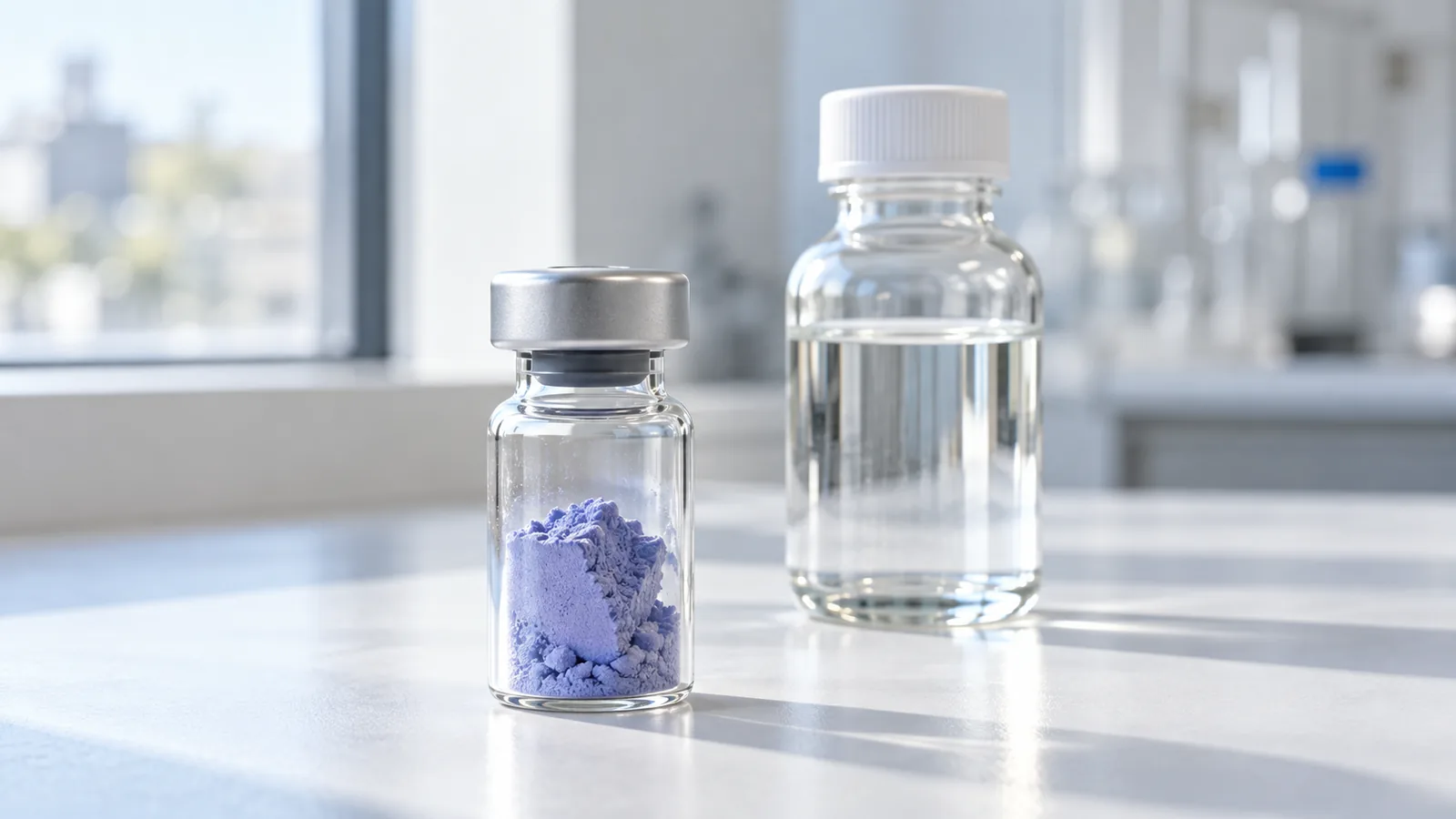
Sometimes, and it can be checked three ways: strength, colour and the lab report. Many retail serums don’t print their GHK-Cu percentage, and plenty pair it with vitamin C, exfoliating acids or EDTA, which pull the copper out of the peptide; How to Reconstitute GHK-Cu lists the clashes. A research vial hides nothing, because its strength is whatever water goes in. The usual slip is putting the injection mix on the face: a 50mg vial with 2.5mL holds 20mg per mL, a 2% solution, twice a 1% serum and nearly three times the 0.68% in the skin study above. The topical strength table has the water for gentler strengths.
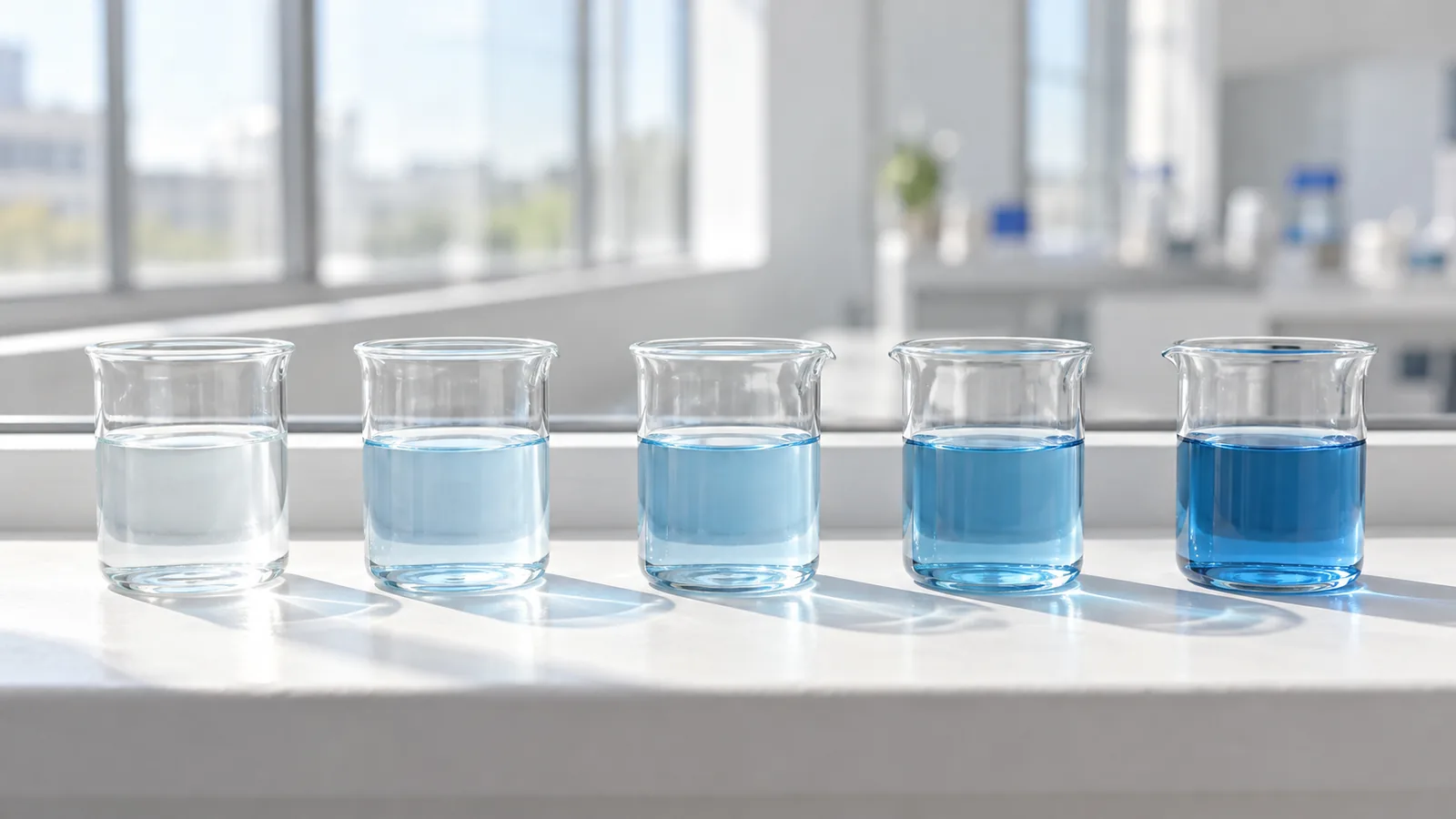
Colour comes next. A good mix stays a clear blue. One that has gone green, brown or hazy has lost its copper complex and goes in the bin, not on skin, and powder sold as GHK-Cu that looks white carries little copper at all.
The certificate settles the rest. Simms Research’s latest GHK-Cu batch was tested by an independent ISO-certified lab across three separate vials in July 2026: 52.05mg on average in a 50mg vial, 99.819% pure, identity confirmed by mass spectrometry, an endotoxin pass, heavy metals negative and no microbial growth. The full report is on the GHK-Cu lab results page. A report like that rules out the wrong compound, a short fill and contamination, which leaves strength and frequency as the levers.
How to get past copper uglies
Cut the strength, cut how often, and strip everything else back for a month. On skin that means two or three applications a week at 1% or below, no vitamin C, acid or retinoid on the same nights, and a plain moisturiser in between. For injections it means the low end of the range, or every other day, for the same month. Then add back one step at a time, a week apart, and settle one step short of where the dullness began.
Frequency alone isn’t the villain. In the 2016 trial, women applied GHK-Cu twice a day for eight weeks in a carrier built to get it into the skin, and wrinkle volume fell 55.8% against the plain serum (Badenhorst, Journal of Aging Science, 2016). The aim is a strength and rhythm the skin can work with, not giving up on copper.
What the GHK-Cu purge is, and what it is not
The GHK-Cu purge is real as a short setback and wrong as a name. What people are describing is the copper uglies: the clearing side of GHK-Cu running ahead of the rebuilding when the copper is too strong, too frequent or stacked with other actives, and it settles within weeks of easing off. It is not a classic purge, not proof the product is working, not lasting damage and not copper overload: even 2mg of GHK-Cu carries about a thirtieth of the daily upper limit for copper. An allergy, a harsh base and a mix gone bad can look similar, and each has its own tell.
For anyone mixing their own, Simms Research’s 100mg GHK-Cu vial at $76 makes 10mL of a 1% solution, about $7.60 per mL, and the 50mg vial is $48. The rest of the range is in the shop.
Frequently asked questions
Are copper uglies permanent?
No. They fade within weeks of lowering the strength or frequency, as the skin’s surface layer renews.
Can copper peptides ruin your skin?
Not in the way “copper peptides ruined my skin” suggests. The setback is temporary, and its usual causes, a strong mix used daily, a heavy base or an acid in the same routine, are all reversible.
What do copper uglies look like in pictures?
A flatter tone, rougher texture and lines that read deeper, more than redness or spots. A before-and-after only means something when both shots share the same light and distance, and the trials judged results at eight to twelve weeks, not week two.
Should I stop GHK-Cu if I get copper uglies?
Ease off rather than stop: lower the strength or frequency and give it two to four weeks. Itching, swelling or a spreading rash is a reason to stop outright.
Is there a discount code on this page?
No. This page has no discount code and no affiliate link.
Is Simms Research legit?
Simms Research posts batch reports from an independent ISO-certified lab on its lab results pages, ships orders placed before 5 PM Eastern the same day (Sundays and holidays aside), replaces or refunds lost, stolen and damaged parcels under its Free Delivery Guarantee, and answers support at 855-592-8507, Monday to Friday.