

Blog
KPV Peptide Benefits: What It Does for the Gut, Skin and Inflammation
What KPV peptide is and what the research shows it does for the gut, inflammation, skin, eyes and mouth, what it does not do, how fast it works and how strong each benefit is.

Most buyers meet KPV on someone else’s label. It turns up in gut stacks, in skin serums and as the fourth peptide in Klow, usually described in a line about inflammation, and it is fair to wonder how much three amino acids can actually do.
Quite a lot, in the lab. KPV started out in 1984 as the piece of a hormone that brings down a fever, and in the four decades since it has calmed colitis in mice, closed scraped corneas in rabbits and killed methicillin-resistant staph in a dish. What it has never had is a registered human trial, so every benefit below comes from cells and animals, and the strength of each one differs a great deal.
Simms Research sells KPV as a 10mg vial for $62, with its latest batch certificate from an independent ISO-certified lab posted beside it.
What is KPV peptide?
A tripeptide: lysine, proline and valine, the last three of the 13 amino acids in alpha-MSH (alpha-melanocyte-stimulating hormone). At 342 g/mol it weighs about a quarter of what BPC-157 does, and it comes as a white freeze-dried powder.
Its history explains its reputation. Alpha-MSH, made in the pituitary and the skin, does two jobs: it darkens skin and it damps down inflammation. A Dallas lab found that the hormone’s last three amino acids, given alone, still lowered fever in rabbits (Richards, Peptides, 1984), and five years later that the same tripeptide shrank inflamed mouse ears in step with the dose, set against saline and a large dose of corticosteroid (Hiltz, FASEB Journal, 1989). The pigment job sits in the middle of the hormone, which KPV doesn’t carry, so the fragment kept the calming effect and left skin color alone.
What does KPV peptide do?
It turns down the inflammatory signal from inside the cell. KPV works without the melanocortin receptors its parent hormone relies on: it cut white-cell flooding in mice whose MC1R receptor was broken, and it raised none of the cyclic AMP those receptors produce (Getting, Journal of Pharmacology and Experimental Therapeutics, 2003). In human airway cells it traveled into the nucleus and held back p65, the part of NF-κB that switches on inflammatory genes, which lowered IL-8 and eotaxin, two signals that summon immune cells (Land, International Journal of Physiology, Pathophysiology and Pharmacology, 2012). In the gut it gets in through PepT1, a transporter that inflamed bowel tissue makes more of.
KPV peptide for gut health
This is KPV’s strongest ground: a run of colitis studies in mice and rats, by mouth, by gel and in nanoparticles, with consistent results.
The founding work put KPV in the drinking water of mice with two chemically induced kinds of colitis and found less disease and fewer inflammatory cytokines in the colon, with KPV active at nanomolar concentrations in human gut cells (Dalmasso, Gastroenterology, 2008). A German group added a third model, colitis driven by transferred T cells, where treated mice recovered and regained weight (Kannengiesser, Inflammatory Bowel Diseases, 2008).
Later teams worked on getting more of it to the right place. Nanoparticles coated in hyaluronic acid, which steers them into colon lining cells and macrophages, were given by mouth in a gel; they sped up healing of the gut lining, lowered TNF-α and did no harm to intestinal cells (Xiao, Molecular Therapy, 2017). A gel that clings only to inflamed lining, holding KPV against the colon wall of rats, restored the epithelial barrier and raised the share of beneficial gut bacteria (Zhao, Acta Biomaterialia, 2022).
These studies measured inflamed colon tissue, not bloating or day-to-day digestion. How KPV divides the gut work with BPC-157, which rebuilds the lining rather than calming it, is the subject of KPV vs BPC-157.
KPV peptide for inflammation
KPV blocks inflammation that runs on cytokines, and the early work shows precisely which kind. In mice, ear inflammation set off by IL-1β, IL-6 or TNF-α was held back by a close KPV analog, while inflammation from three other triggers, LTB4, PAF and IL-8, went untouched (Hiltz, Cytokine, 1992). The same lab had already seen it ease paw swelling and contact allergy in mice (Hiltz, Peptides, 1990).
IL-1β keeps coming up as the main target. In mice with crystal-induced peritonitis, KPV cut the flood of white cells into the abdomen, and the authors traced its effect to blocking IL-1β rather than to any melanocortin receptor (Getting, Journal of Pharmacology and Experimental Therapeutics, 2003). In rats it blunted the pain sensitivity that IL-1β causes, working through kappa-opioid receptors (Poole, British Journal of Pharmacology, 1992).
A single injection, 1mg/kg given 30 minutes after a controlled brain injury in mice, left a smaller damaged area, fewer dying neurons and quieter microglia, the brain’s resident immune cells (Schaible, PLoS One, 2013).
KPV peptide for arthritis
This is the thinnest claim on the list. Arthritis protection in animals was shown with full alpha-MSH, and in a 2020 study of cartilage cells under bacterial attack the protection came from the receptor-binding melanocortins in the panel rather than from KPV (Can, European Journal of Pharmacology, 2020). KPV’s case for joints rests on its action against IL-1β, and it has no arthritis study in animals of its own yet.
KPV peptide benefits for skin
Promising, and mostly at the cell level. Human keratinocytes, the main cells of the outer skin, respond to KPV at concentrations as low as 10-15 molar (Elliott, Journal of Investigative Dermatology, 2004). Exposed to PM10 fine dust, keratinocytes treated with KPV survived in greater numbers, released less IL-1β and avoided the caspase-1 route to inflammatory cell death, and a 3D skin model showed the same protection (Sung, Tissue and Cell, 2025).
Wounds are the step closer to a body. A layered film dressing that released KPV over the first three days, followed by a growth factor, sped the repair of full-thickness wounds in diabetic mice (Zhao, International Journal of Biological Macromolecules, 2022). Acne, eczema and psoriasis are where most of the questions go, but no KPV study covers them; the nearest evidence is the contact-allergy work in mice.
KPV cream and topical KPV
On intact skin, very little gets through. Applied to human skin in a diffusion cell, KPV crossed in amounts too small to detect; after microneedling it reached 4.4µg per square centimeter an hour, and an electric current on top raised that 35-fold (Pawar, Journal of Pharmaceutical Sciences, 2017). A cream mostly works on the surface, and on broken skin, which is where the wound studies placed it.
KPV for eyes, mouth ulcers and infection
Eyes. Rabbits had the whole surface layer of both corneas scraped away, then took KPV drops four times a day. By hour 60 all eight treated corneas had grown back over and none of the saline ones had, and blocking nitric oxide production cancelled the effect (Bonfiglio, Experimental Eye Research, 2006).
Mouth ulcers. In rats with chemotherapy-induced mouth ulcers, a KPV gel that stayed on the gums for seven hours lowered IL-1β and TNF-α, raised the anti-inflammatory IL-10 and got the animals eating and putting weight back on sooner (Shao, Biomaterials Science, 2021).
Infection. Anti-inflammatory drugs can blunt the defense against germs. KPV does the opposite: it held back Staphylococcus aureus and Candida albicans, and human neutrophils killed more of both in its presence (Cutuli, Journal of Leukocyte Biology, 2000). At micromolar levels it killed over 90% of methicillin-sensitive and methicillin-resistant S. aureus (Singh, Antimicrobial Agents and Chemotherapy, 2011).
Does KPV help with weight loss?
Not the way appetite drugs do, though the newest work links it to fat storage. In maturing fat cells, KPV cut stored fat by about 55% and triglyceride by about 38%, and mice on a high-fat diet given KPV by mouth put on less weight and white fat, with lighter livers and lower cholesterol (An, Tissue and Cell, 2026). The same lab saw less fat build up in liver cells (Lee, Cytotechnology, 2026) and in the macrophages that become artery-plaque foam cells (Bai, Tissue and Cell, 2026).
Appetite stays where it was: on its own, KPV left food intake unchanged (Uehara, European Journal of Pharmacology, 1992). Weight research centers on Retatrutide (GLP-3) and Tirzepatide (GLP-2); KPV’s metabolic findings are one lab’s, two of them in cells.
What KPV does not do
It doesn’t tan, build muscle, raise growth hormone or rebuild tissue. Color comes from the middle of alpha-MSH, the stretch Melanotan II copies, and KPV lacks it. Tendon and ligament repair is the territory of BPC-157 and TB-500.
Allergy is the less obvious gap. Alpha-MSH calms basophils, the blood cells that release histamine in allergic flares, through its MC1R receptor, and KPV did not (Böhm, Journal of Allergy and Clinical Immunology, 2012), so claims for mast-cell and allergy conditions lean on the parent hormone. KPV is also the weaker fever-reducer of the two: rabbits needed milligram doses of it where alpha-MSH works in far smaller ones.
Does KPV cause cancer?
No study suggests it, and the one cancer study points the other way. In mice prone to colitis-driven colon tumors, KPV prevented tumor formation, an effect that vanished in mice lacking the PepT1 transporter (Viennois, Cellular and Molecular Gastroenterology and Hepatology, 2016).
How long does KPV take to work?
Hours to days in the animal work. The brain-injury mice got one dose within 30 minutes of injury, the wound film had released its KPV within three days, and the scraped corneas were measured every 12 hours and had resurfaced by day three. The dosing schedules that research protocols run, and for how many weeks, are in the KPV peptide dosage chart.
KPV peptide side effects
None of note in the research so far. KPV is a piece of a hormone the body already makes, and the cell studies found it harmless to gut, liver and immune cells at the concentrations that worked (Xiao, Molecular Therapy, 2017; Lee, Cytotechnology, 2026; Bai, Tissue and Cell, 2026). The liver result runs the right way: fat build-up went down and the cells were unharmed.
Unlike a steroid, it sharpens rather than dulls the immune system’s germ-killing, and it leaves pigment and appetite alone. With no human trial on record, there are no side-effect rates to quote either way.
KPV benefits ranked by the evidence
Colon inflammation leads by a wide margin; most of the rest rests on a single study or on cells:
| Benefit | Studied in | Strength |
|---|---|---|
| Colitis and gut inflammation | Mice and rats, by mouth, gel and nanoparticle | Strongest |
| Cytokine-driven inflammation and fever | Mice, rats and rabbits | Strong |
| Corneal healing | Rabbits | One study |
| Mouth ulcers | Rats | One study |
| Brain injury | Mice | One study |
| Skin cells and wounds | Human skin cells, diabetic mice | Early |
| Staph and Candida | Lab cultures | Early |
| Fat storage | Cells, high-fat-diet mice | Early, one lab |
| Arthritis | No KPV study | None yet |
| Allergy and mast cells | Human basophils | Not supported |
So KPV suits research where inflammation is the problem: the colon first, then the skin, the eye surface and the mouth. It is the wrong tool for weight, muscle, growth hormone, tanning or tendon repair.
KPV peptide benefits for women and men
They are the same. No KPV study splits its results by sex, and KPV doesn’t act on sex hormones, so the gut and skin findings apply equally.
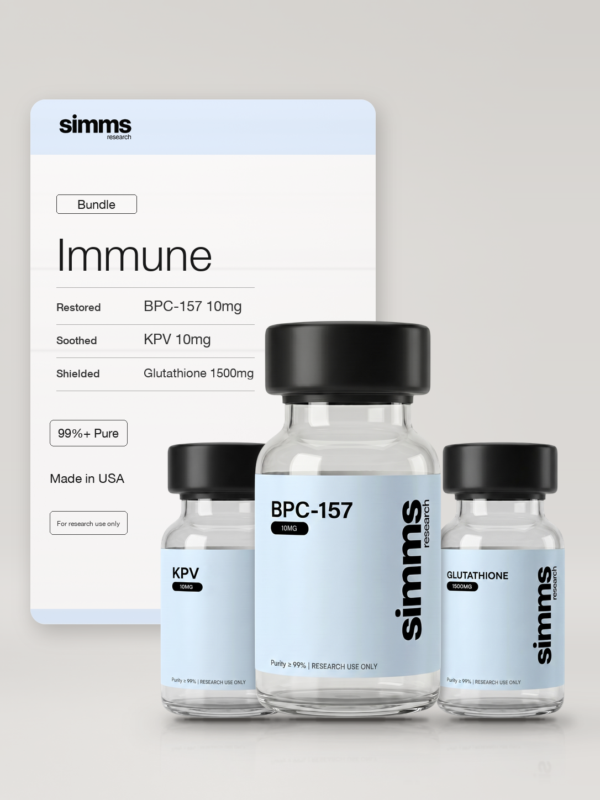
Simms Research’s KPV is a 10mg vial for $62. The July 2026 batch averaged 10.78mg against the 10mg label at 99.53% purity across three vials, with every figure on the KPV lab results page. The Immune Bundle ($162) pairs it with BPC-157 and glutathione.
Frequently asked questions
Is KPV in Klow?
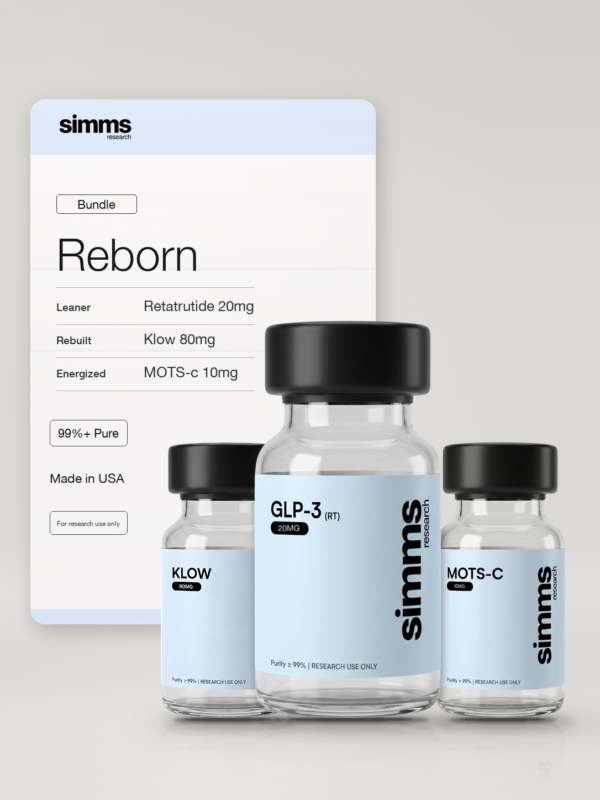
Yes. The Klow Peptide Blend ($122) holds 10mg of KPV with 50mg of GHK-Cu and 10mg each of BPC-157 and TB-500, and the July 2026 certificate measured the KPV share at 10.32mg. KPV is the one peptide Klow adds over Glow, as the Glow vs Klow comparison explains; units for the blend are in the Klow dosage chart.
Is KPV FDA approved?
No. It isn’t approved as a medicine, and Simms Research sells it for laboratory research only.
Is Simms Research legit?
Every claim can be checked. Batch certificates from an independent ISO-certified lab are posted for KPV, Klow and most of the catalog (how to read a peptide COA explains them). Orders placed before 5PM Eastern ship the same day, every order carries the Free Delivery Guarantee against loss, theft and damage, and support answers at 855-592-8507 or support@simmsresearch.com, Monday to Friday, 9AM to 5PM Eastern.
Is there a discount code on this page?
No. This page carries no code and no affiliate link, and the prices quoted are regular ones. Everything else Simms Research stocks is in the full catalog.