

Blog
KPV Peptide Dosage Calculator and Chart: 10mg Vial Protocol (2026)
KPV dosage for a 10mg vial: the daily range in units with 2mL of bac water, how often and for how many weeks, and how much KPV a GHK-Cu blend like Klow carries.

KPV is three amino acids, lysine, proline and valine, the last three links of alpha-MSH, a hormone the body makes in the pituitary and the skin. It is studied for calming inflammation, ships as a small white freeze-dried cake, and is measured in micrograms: one 10mg vial holds anywhere from 20 to 50 research draws.
Simms Research sells KPV as a 10mg vial for $62, and the same peptide is the fourth ingredient in the Klow Peptide Blend. What KPV does in the lab, and why it is the one peptide separating Klow from Glow, is laid out in the Glow vs Klow comparison.
KPV peptide dosage calculator
Pick the water and the dose, and the calculator gives the units to draw on a U-100 insulin syringe. It opens on a 10mg vial with 2mL and a 500mcg dose: 10 units.
KPV peptide dosage chart
Research protocols draw 200 to 500mcg of KPV a day. Mixed with 2mL of bac water, a 10mg vial puts 50mcg in every unit on a U-100 insulin syringe, so the whole range spans 4 to 10 units:
| KPV per draw | Units on a U-100 syringe | Draws in a 10mg vial |
|---|---|---|
| 200mcg | 4 units | 50 |
| 250mcg | 5 units | 40 |
| 300mcg | 6 units | 33 |
| 400mcg | 8 units | 25 |
| 500mcg | 10 units | 20 |
Most protocols open at 200 to 250mcg for the first week and settle at 500mcg, a 10-unit draw. Draws this small are easiest to read on a 0.3mL (30-unit) syringe, where every line is one unit. No human trial has set a KPV dose; 200 to 500mcg is the range KPV protocols share, and it is the same range the Klow guides hold the blend’s KPV against. For any other vial size or amount of water, the peptide calculator works out the units.
How much bac water for KPV 10mg
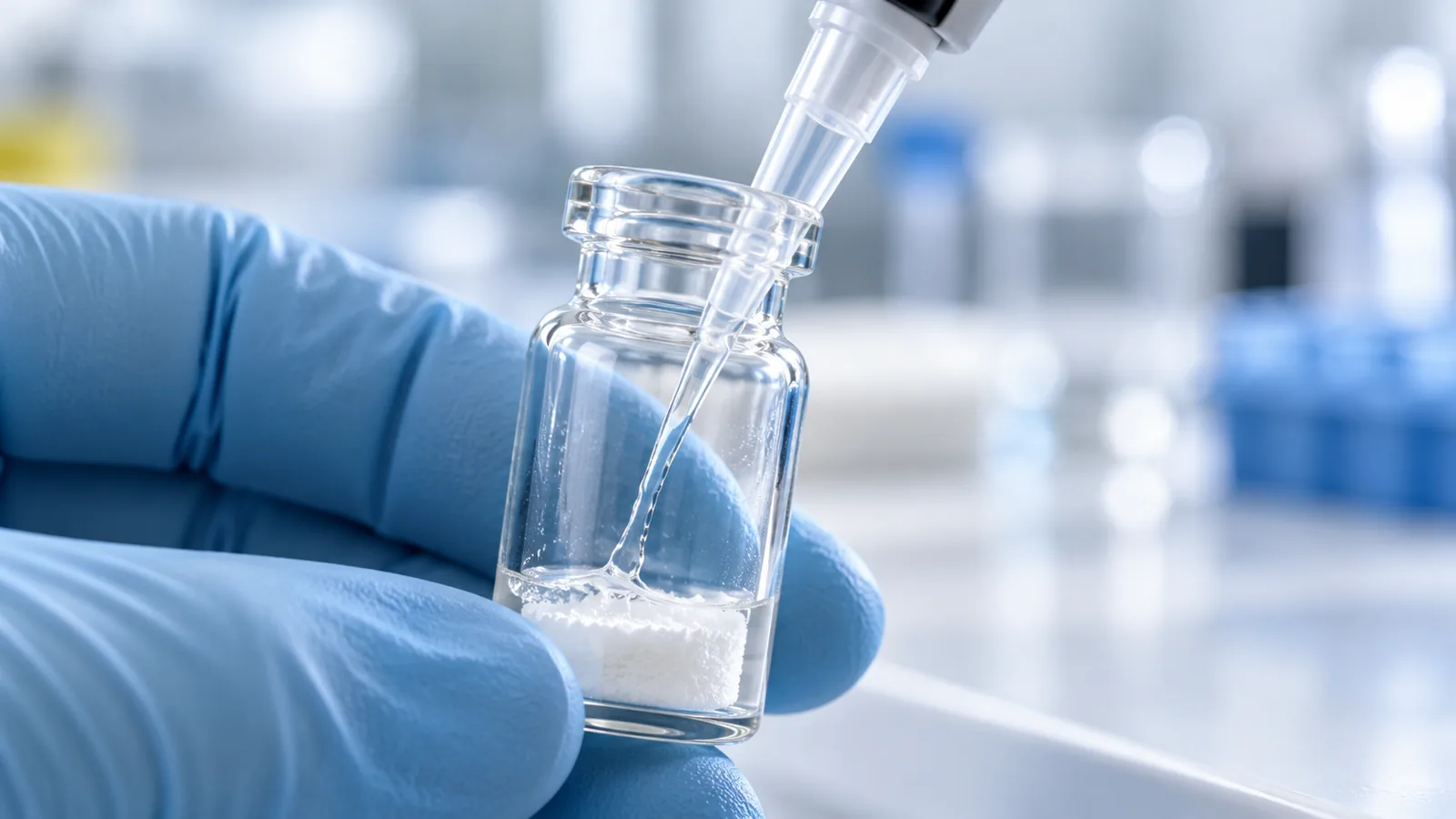
2mL. That puts 5mg in every mL, so 10 units is 500mcg, the top of the daily range, and each single unit is 50mcg. The chart above is written for this mix and needs no arithmetic.
Aim the stream at the vial wall so the water slides down to the cake instead of striking it, then swirl gently rather than shake. KPV is a small peptide and dissolves within a minute or two. Mixed, it looks exactly like the water that went in: clear and colorless, with nothing floating and nothing settled on the bottom. Label the vial with the mixing date and keep it refrigerated. The same steps for every vial are in how to reconstitute peptides.
One 10mL vial of Simms Research’s Research Water ($20), bac water preserved with 0.9% benzyl alcohol, mixes five 10mg KPV vials at 2mL each. The bac water guide explains why it, and not plain sterile water, suits a vial that is drawn from for four weeks.
KPV dosage per day
Once a day, 200 to 500mcg. KPV protocols run it daily. The animal work behind it kept the peptide present all the time, with mice in the colitis studies given KPV in their drinking water, and research protocols keep the same steady rhythm instead of the large, spaced-out doses TB-500 is often run on.
Some protocols split the day’s amount into two draws, morning and evening, with the total unchanged: 250mcg twice a day is 5 units each time from the 2mL mix. Others take weekends off and run five days on, two off, which lets a 500mcg draw last one vial the full four weeks.
KPV cycle length and dosage per week
1.4 to 3.5mg a week, with four to eight weeks per block and a break of about the same length before the next block. The weekly figure is the daily draw times the days it is taken:
| Schedule | Draw from a 2mL mix | KPV per week | 10mg vials per 4 weeks |
|---|---|---|---|
| 200mcg every day | 4 units | 1.4mg | 1 |
| 250mcg every day | 5 units | 1.75mg | 1 |
| 500mcg five days a week | 10 units | 2.5mg | 1 |
| 500mcg every day | 10 units | 3.5mg | 2 (one lasts 20 days) |
Mixed KPV lasts 28 days refrigerated, so at the bottom of the range the calendar, not the peptide, ends each vial, and a new four weeks starts with a fresh one. An eight-week block therefore takes two vials at up to 350mcg a day, or 500mcg on a five-day week, and three vials at 500mcg every day.
The animal studies behind KPV are shorter still: the colitis work in mice and the corneal-healing study in rabbits read its effects within days to a few weeks, so a four-week block already outlasts most of the published research.
KPV peptide: morning or night
Either. KPV isn’t tied to sleep, to meals or to a hormone pulse the way growth hormone peptides are, so any fixed time works as long as it stays the same from day to day. Most protocols put the draw in the morning, and split schedules simply add the second half in the evening.
Timing only matters when KPV is taken by mouth. Gut-focused protocols that use it orally take it on an empty stomach, about 30 minutes before food. The gut takes KPV up through PepT1, the transporter that absorbs the small peptides left from digested protein and that an inflamed colon switches on (Dalmasso, Gastroenterology, 2008).
GHK-Cu and KPV blend dosage
Dose the blend by its GHK-Cu, not by its KPV. A blend built on 50mg of GHK-Cu and 10mg of KPV holds one part KPV to five of copper peptide, so the 1 to 2mg of GHK-Cu that research protocols draw each day brings 200 to 400mcg of KPV with it. That lands inside KPV’s own range without a second calculation.
| GHK-Cu per day | KPV in the same draw |
|---|---|
| 1mg | 200mcg |
| 1.5mg | 300mcg |
| 2mg | 400mcg |
That share holds in a two-peptide GHK-Cu and KPV vial built 50mg to 10mg and in Simms Research’s Klow Peptide Blend, an 80mg vial for $122 that adds 10mg each of BPC-157 and TB-500 to the pair. The units for a Klow draw depend on the water, and the Klow dosage chart maps them at every common volume; the GHK-Cu dosage guide explains where the 1 to 2mg range for GHK-Cu comes from.
The one thing a blend can’t do is reach the top of KPV’s range. 500mcg of KPV would come with 2.5mg of GHK-Cu, beyond the copper peptide’s own ceiling, so a blend tops out at 400mcg. Research that wants KPV at 500mcg, or started, paused and adjusted on its own, runs it from the plain 10mg vial, either instead of the blend or beside it. Whether Klow’s KPV earns its place over Glow is the question the Glow vs Klow comparison answers.
What the KPV batch reports show
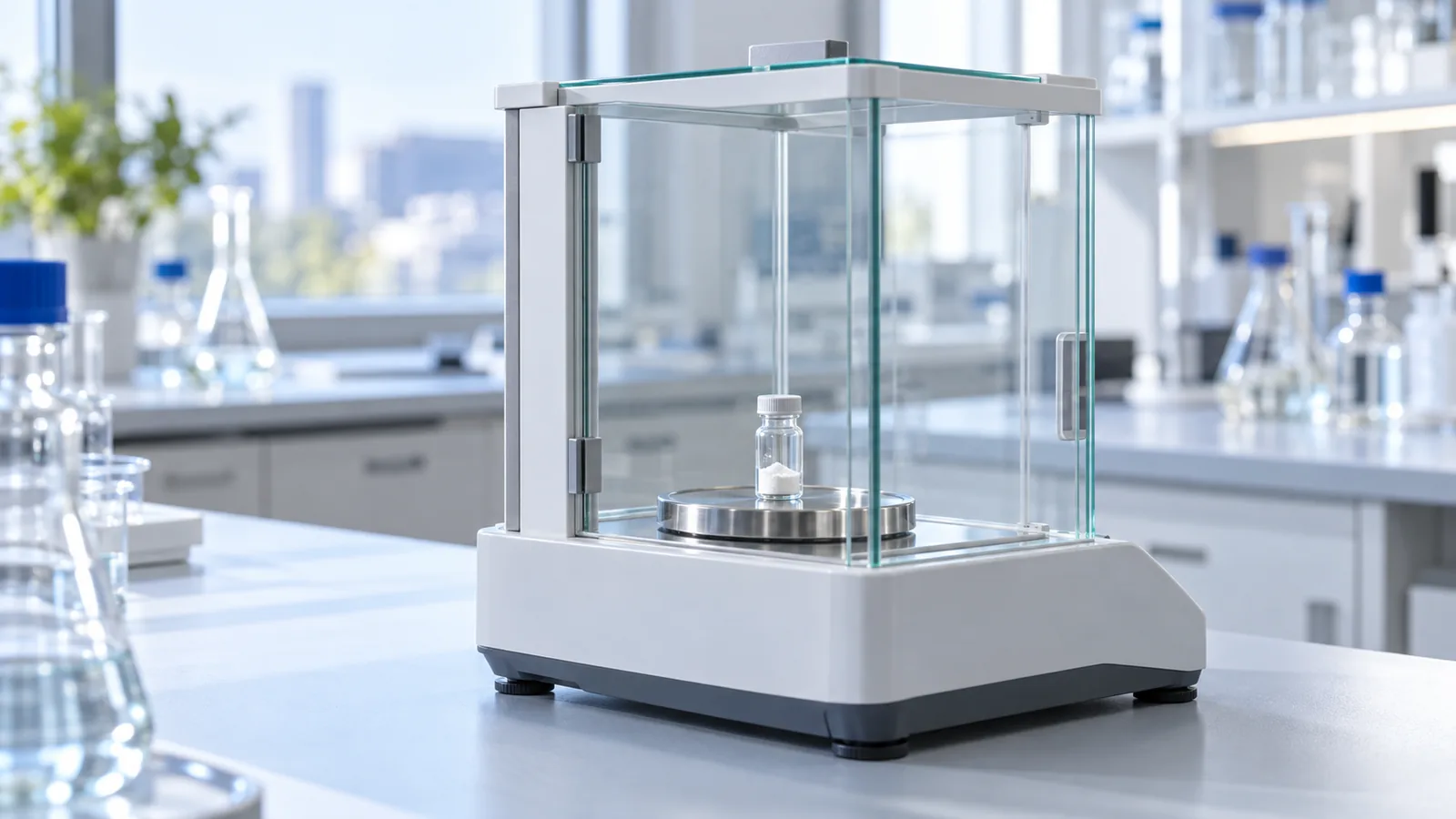
More KPV than the label, in both batches Simms Research has published. The current batch, tested in July 2026, was weighed vial by vial across three vials:
| Vial | KPV measured | Purity |
|---|---|---|
| Vial 1 | 10.34mg | 99.53% |
| Vial 2 | 11.12mg | 99.48% |
| Vial 3 | 10.87mg | 99.58% |
| Average | 10.78mg | 99.53% |
Purity was measured by RP-HPLC and the identity confirmed by LC-MS. The same batch passed its endotoxin screen, came back negative for arsenic, cadmium, lead and mercury, and showed no growth on the sterility test. The first batch, tested in August 2025, measured 11.65mg at 99.61% purity, before the contaminant screens were added to the panel.
For the chart, that means each unit holds slightly more than the label math says: at 10.78mg in 2mL, a 10-unit draw carries about 540mcg rather than 500mcg. Typing the certificate’s figure into the calculator’s vial field, in place of 10mg, gives units for the vial actually on the bench. Both certificates open in full on the KPV lab results page, and the COA reading guide walks through every field.
Frequently asked questions
What is the starting dose of KPV?
200 to 250mcg a day, 4 to 5 units from the 2mL mix of a 10mg vial. Protocols hold it there for about a week, then move to the working amount, most often 500mcg.
What is the maximum dose of KPV?
500mcg a day is the top of the range research protocols draw from a vial. Protocols that give KPV by mouth for gut research run higher, 500mcg to 1mg a day.
How many units is 500mcg of KPV?
10 units when the 10mg vial takes 2mL. Charts written for other amounts of water put it at 15 units with 3mL and 25 units with 5mL.
Can KPV be taken orally?
In research, yes: the mouse colitis studies gave it in drinking water, and it is sold as capsules as well as freeze-dried vials. Oral protocols take it on an empty stomach, usually once or twice a day.
How long does KPV take to work?
In the animal research, days. Mice with chemically induced colitis that were given KPV regained weight sooner than untreated mice, and KPV-treated rabbit corneas had fully resurfaced by 60 hours (Bonfiglio, Experimental Eye Research, 2006). No human study has measured a timeline.
Do women use a different KPV dose?
No. KPV protocols give everyone one fixed amount, with no scaling for sex or body weight.
Can KPV be taken with BPC-157?
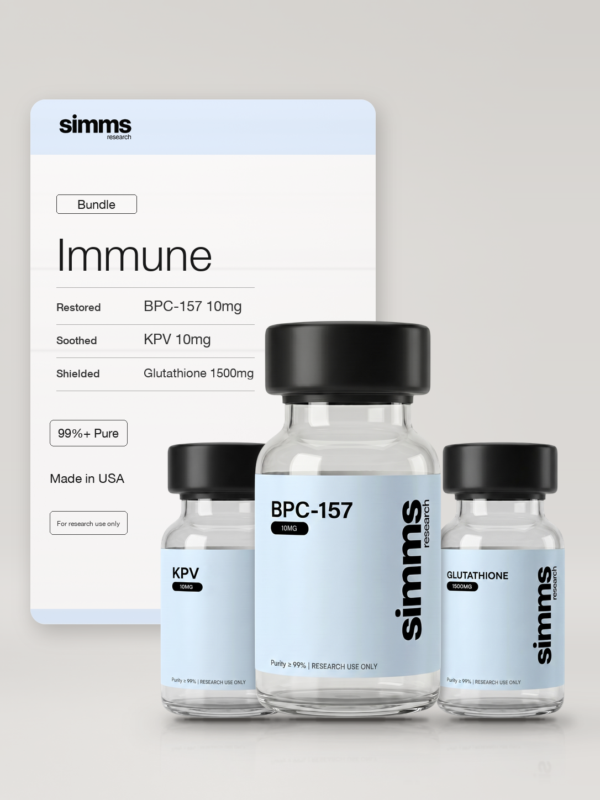
Yes, and the pair is one of the most common stacks: KPV aimed at the inflammatory signal, BPC-157 at repairing the gut lining. In separate vials each keeps its own dose: KPV at 200 to 500mcg, and BPC-157 at 250 to 500mcg, the figure the Wolverine stack dosage guide works from. Simms Research’s Immune Bundle puts the two side by side with glutathione, and Klow carries both at fixed shares.
How long does mixed KPV last?
28 days in the fridge at 2–8°C (36–46°F). Sealed powder handles room temperature for weeks, so it travels without cold packing; the peptide refrigeration guide covers both stages.
Does KPV cause tanning?
No. The pigment signal in alpha-MSH comes from the middle of the hormone, the stretch the Melanotan peptides copy. KPV is only the last three amino acids and leaves skin colour alone (Brzoska, Endocrine Reviews, 2008).
Is KPV approved?
Not as a drug. Simms Research supplies KPV for laboratory research only.