

Blog
Bac Water for Peptides: What Is It and Where to Buy
Bac water is sterile water with 0.9% benzyl alcohol, the diluent the research market borrowed from the multi-dose kits drug makers sell. What separates it from sterile, distilled and deionized water, how long a bottle lasts, where researchers actually get it and what to check on the bottle.

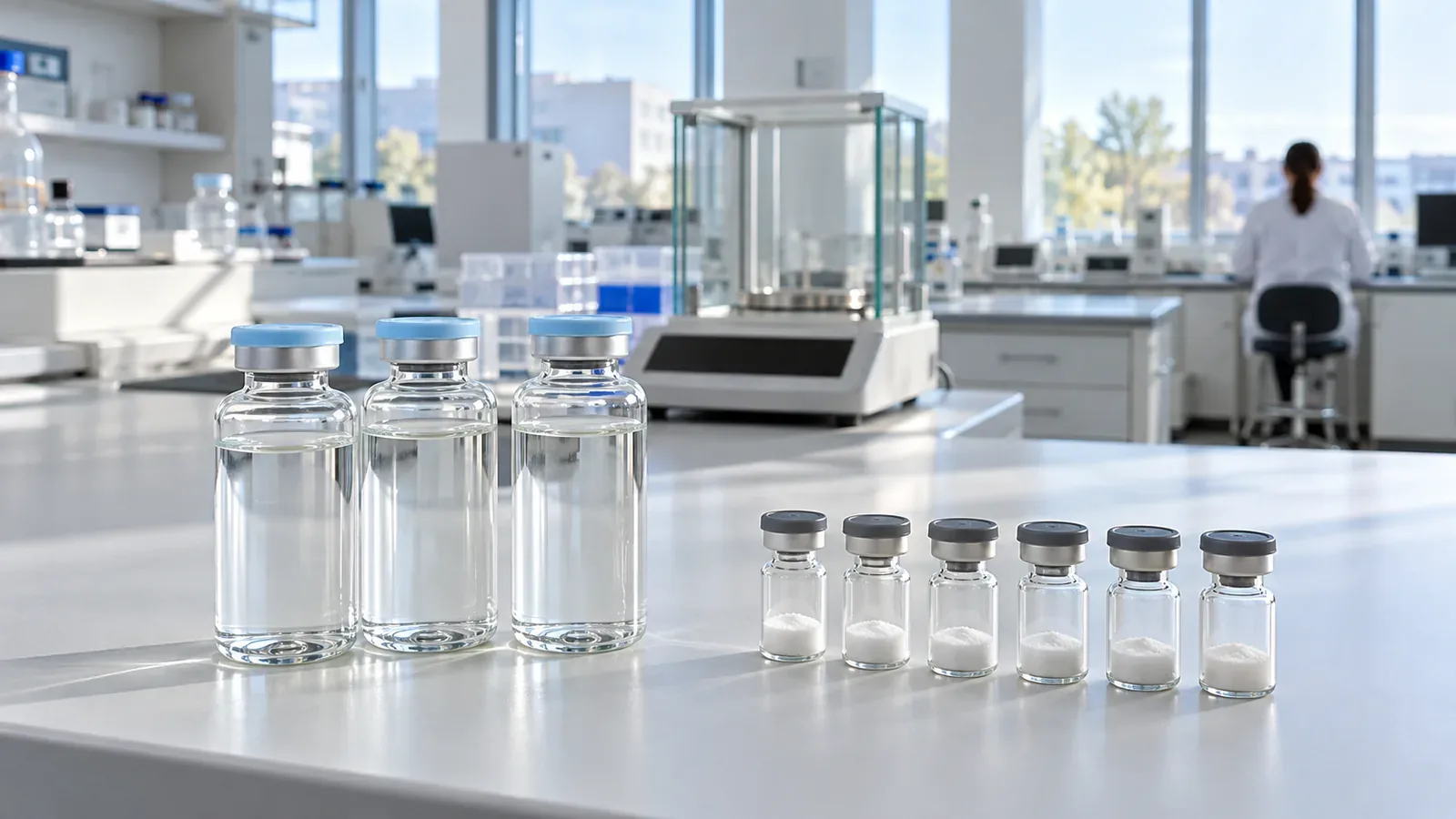
Every research peptide on the market arrives as a dry white cake, and every one of them needs water before it can be measured. That water is usually the cheapest line on the order and the one bought with the least thought, which is how a vial of filtered water from a marketplace listing ends up in a peptide vial meant to be drawn from for a month. In a product photo the two look identical. The difference sits in what the label lists, how the bottle is sealed and where it came from.
What is bac water?
Bac water is short for bacteriostatic water: sterile water carrying 0.9% benzyl alcohol, which works out to 9mg of benzyl alcohol in every milliliter. Pharmacies sell it as Bacteriostatic Water for Injection, USP, and the standard behind that name starts from Water for Injection, the highly purified, nonpyrogenic water drug makers build their products on, adds the preservative and sterilizes it in a sealed container.
The benzyl alcohol is the whole point, and it doesn’t sterilize anything. Bacteriostatic means it stops bacteria from multiplying rather than killing them outright, and that is exactly what a vial drawn from over weeks needs: each pass through the stopper can carry in a few organisms, and the preservative keeps them from ever becoming a population. Plain sterile water starts out just as clean, with nothing to hold the line after the first puncture.
The research market took the habit from drug makers. Branded multi-draw kits such as Egrifta WR, the tesamorelin product, Novarel and Serostim ship with bacteriostatic water as their diluent, and a research vial is used the same way, its stopper pierced again and again for weeks. Only a few compounds that won’t dissolve in neutral water call for something else, usually dilute acetic acid.
Peptide stores rarely use the pharmacy name. The same liquid turns up as BAC water, reconstitution solution, reconstitution water and, at Simms Research, Research Water. The name on the bottle doesn’t matter. If the label lists sterile water with 0.9% benzyl alcohol, it is bac water, whatever it is called.
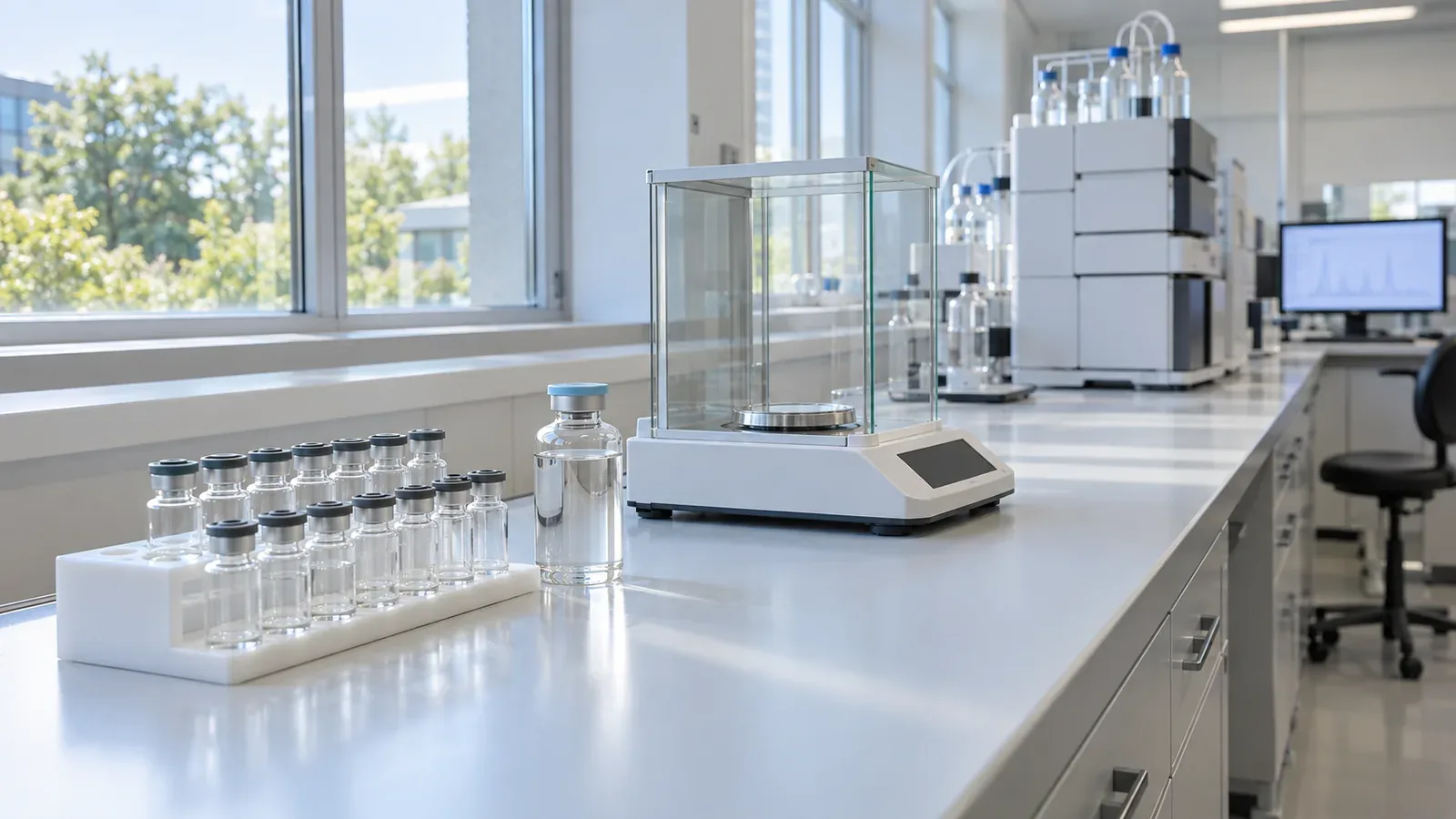
Bac water vs sterile water, distilled water and saline
Five other liquids get suggested in its place. They separate on two questions: is the liquid sterile to begin with, and does anything keep it that way once the stopper has been pierced?
| Liquid | What is in it | Sterile when sealed | Preservative | Made for |
|---|---|---|---|---|
| Bacteriostatic water | Water for Injection plus 0.9% benzyl alcohol | Yes | Benzyl alcohol | Repeated draws from one vial over 28 days |
| Sterile water | Water for Injection and nothing else | Yes | None | One use; Hospira supplies it only in single-dose vials |
| Bacteriostatic saline | 0.9% sodium chloride plus 0.9% benzyl alcohol | Yes | Benzyl alcohol | Repeated draws, for compounds whose instructions name saline |
| Normal saline | 0.9% sodium chloride in sterile water | Yes | None | One use |
| Distilled water | Boiled, condensed water bottled for drinking or appliances | No | None | Kitchens and humidifiers, not vials |
| Filtered or deionized water in vials | Water with its minerals removed | Rarely stated | None | Sold as high-purity water; not a stand-in |
Distilled water is the most common question and has the clearest answer. A gallon jug of it is filled into an ordinary bottle and opened in an ordinary kitchen, so it is neither sterile nor preserved, and deionized water in small vials sits in the same gap: deionizing strips minerals, not bacteria. Saline is a real option only as bacteriostatic saline, for compounds whose instructions name it, which is also why searches for a 10mL Hospira bac water end at the wrong vial: Hospira’s 10mL vials are single-dose sterile water or bacteriostatic saline, and its bacteriostatic water comes as a 30mL plastic vial or a 20mL glass one.
How much bac water for 10mg, 20mg and 30mg retatrutide
Add 1mL to a 10mg vial, 2mL to a 20mg vial and 3mL to a 30mg vial. Mixed that way, all three read the same: every 10 units on an insulin syringe is 1mg.
| Vial | Bac water to add | 1mg on the syringe |
|---|---|---|
| 10mg | 1mL | 10 units |
| 20mg | 2mL | 10 units |
| 30mg | 3mL | 10 units |
A different amount of water works too; it just moves the units. The Simms Research peptide calculator shows exactly where to draw for any mix, and How to Reconstitute Retatrutide covers every size, the 60mg vial included.
How much bac water to mix with 30mg tirzepatide
Add 2.4mL to a 30mg vial. Mixed that way, every 20 units on an insulin syringe is 2.5mg.
| Vial | Bac water to add | 2.5mg on the syringe |
|---|---|---|
| 10mg | 2mL | 50 units |
| 20mg | 2mL | 25 units |
| 30mg | 2.4mL | 20 units |
| 60mg | 2.4mL | 10 units |
A different amount of water works too; it just moves the units. The peptide calculator shows exactly where to draw for any mix, and How to Reconstitute Tirzepatide covers every size.
How long does bac water last?
Sealed, bac water lasts until the expiry date printed on the vial, kept at room temperature. Opened, it gets 28 days from the first puncture of the stopper, however much is left. That is the pharmacy standard for any opened multi-dose vial unless its maker sets another, and the branded kits print it too: the tesamorelin kit says to discard bac water left in the bottle 28 days after first use.
So how long is bac water good for? Until its printed expiry or 28 days after opening, whichever comes first, and a date written on the cap the day it is opened keeps the rule easy. A bottle that has gone bad usually shows it: bac water stays clear and colorless for its whole life, so haze, specks, a film or any tint ends it, and so does a seal that was already broken.
The 28 days also decide how much to buy. One mix rarely takes more than 3mL, so a 3mL vial suits a single mix, a 10mL vial covers a month of mixing for most work, and a 30mL pharmacy vial only pays off on a bench mixing several vials a week; for one vial a month, most of it is thrown away on day 28.
Does bac water need to be refrigerated?
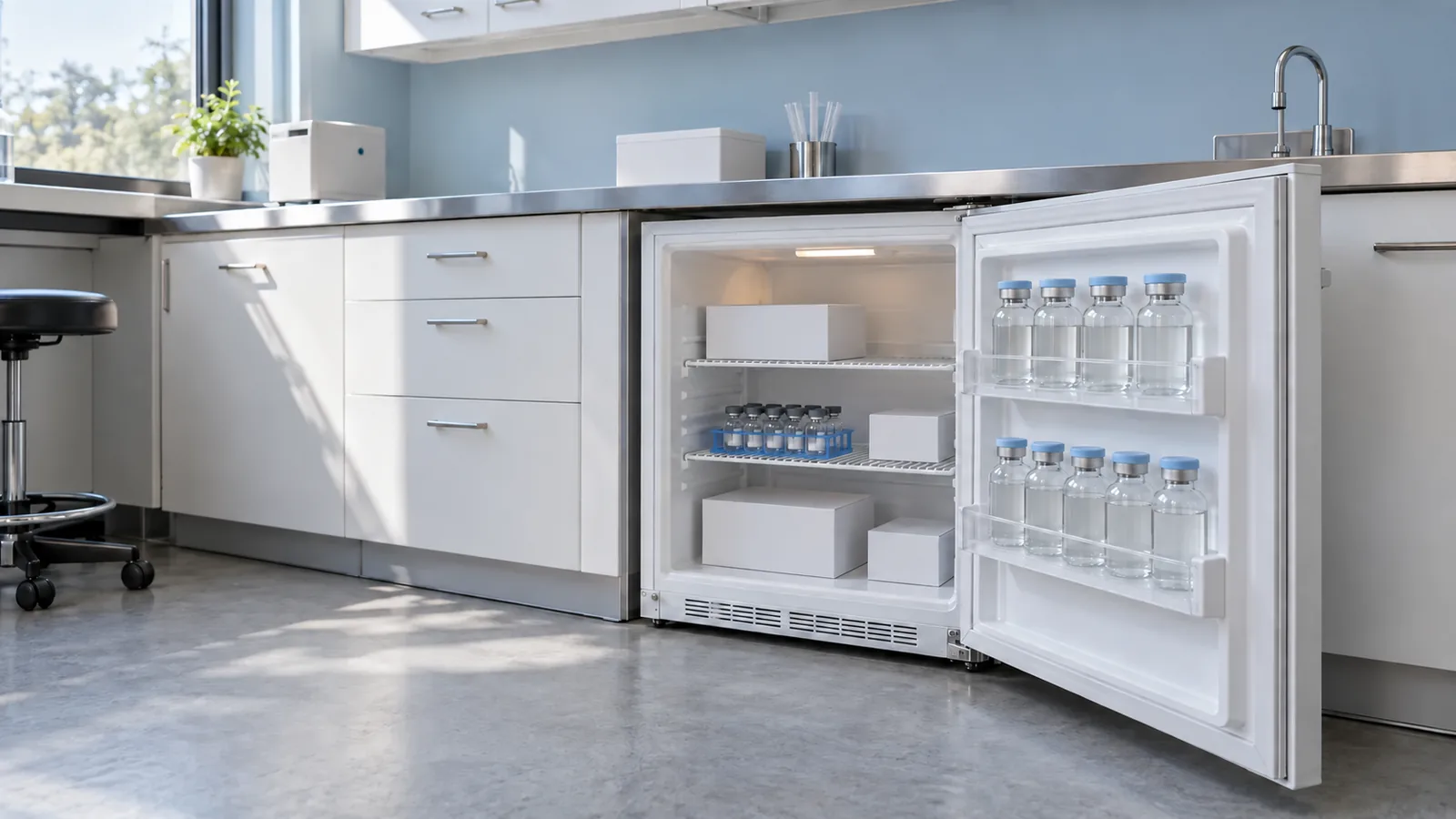
No. Bac water is labeled for room-temperature storage, 20 to 25°C, whether sealed or opened, which is why it ships without any cold chain, and refrigeration adds no days to the 28-day limit. An open vial can still share the fridge with mixed peptides without harm.
The mixed peptide vial is a different matter and keeps its own clock from mixing day; Do Peptides Need to Be Refrigerated? covers that side, and Traveling With Peptides covers carrying both on the road.
Where to buy bac water
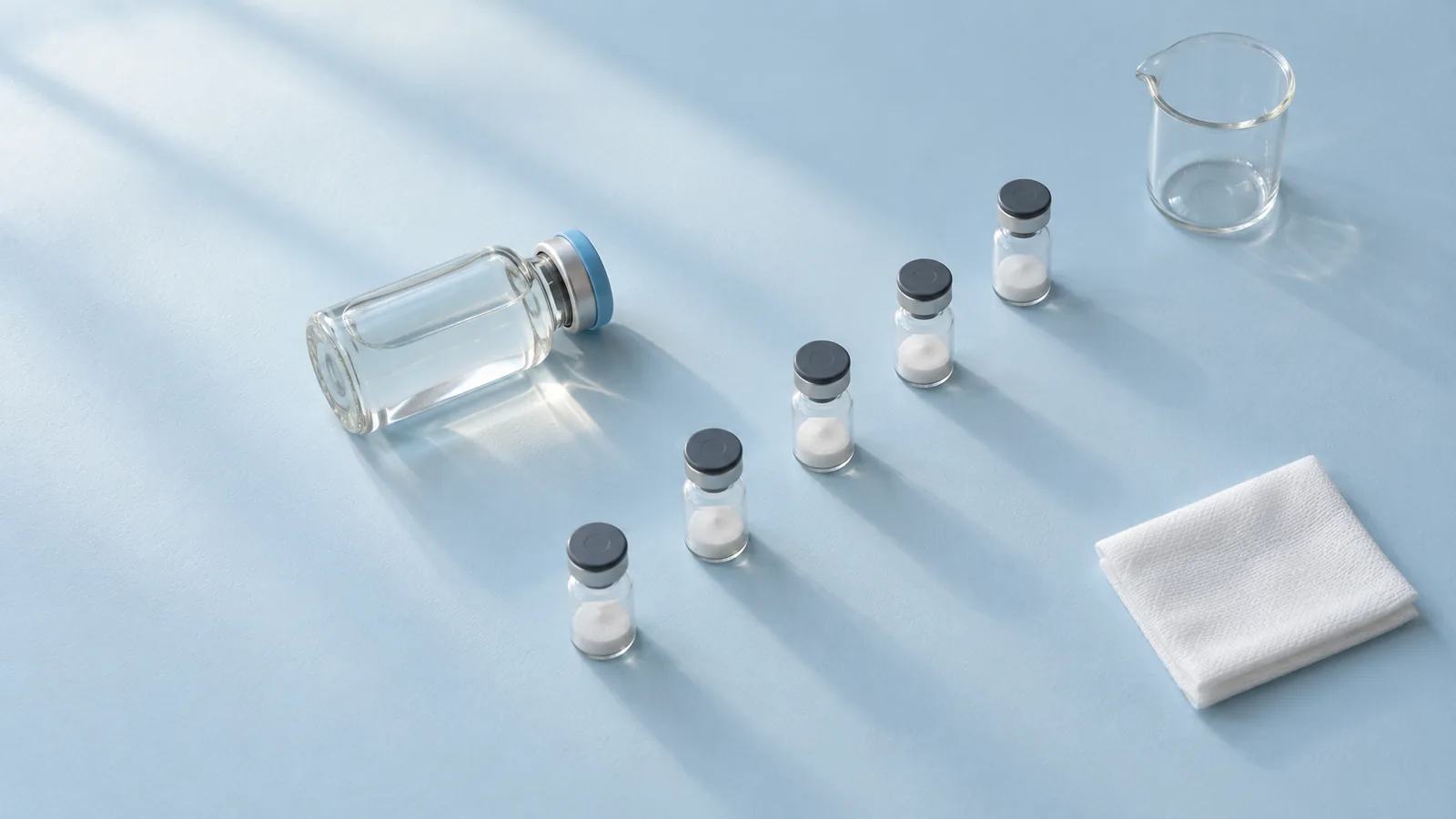
Bac water reaches a research bench from a handful of sellers, and they aren’t selling the same thing:
| Source | What it is | Usual sizes | Worth knowing |
|---|---|---|---|
| Simms Research, Research Water | Sterile water with 0.9% benzyl alcohol, sold for research | 10mL, $20 | Ships in the same box as the peptides |
| Pharmacy brands (Hospira and distributor labels) | Bacteriostatic Water for Injection, USP | 30mL; a 20mL glass vial at 1.1% | Prescription only; Hospira’s 30mL vial is plastic |
| Peptide-store own brands | Sterile water with 0.9% benzyl alcohol, sold for research | 3mL, 10mL and 30mL | Ships with the peptides; names vary from store to store |
| Water-only brands | Sterile water with 0.9% benzyl alcohol, sold on its own | Mostly 30mL glass | Sold apart from the peptides, mostly online |
| Amazon listings | Mostly filtered or deionized water, empty vials and saline | 10mL to 30mL | The water listings rarely name benzyl alcohol |
The pharmacy product is the reference point. Hospira, now part of Pfizer, is the name most researchers know, and distributors such as Henry Schein sell own-label 30mL vials made to the same standard. All of it is prescription-only, which answers the CVS and Walgreens question: the pharmacist fills it against a prescription and doesn’t keep it on the shelf.
Most researchers buy it where they buy the peptides, because it arrives in the same box. Simms Research sells Research Water, 10mL of sterile water with 0.9% benzyl alcohol, for $20. Other stores run from 3mL single-mix vials to 30mL bottles under a different name at nearly every shop, and a newer layer of brands sells nothing but water, mostly in 30mL glass. Amazon is where the search often goes first, and its results are mostly filtered or deionized water, empty vials and saline, with listings that stress purity without naming benzyl alcohol.
What to check on a bottle
Real bac water and a relabeled bottle can look identical in a listing photo. In hand they separate on four points: the preservative, named with its strength on the label or in the seller’s description; a seal nobody has broken, a rubber stopper under an aluminum crimp and a flip-off cap; a size of 30mL or less, the pharmacopeia’s limit per container; and water that looks like nothing at all against a light background and then a dark one.
Where a seller posts a lot report, four numbers carry it: benzyl alcohol close to 0.9%, pH between 4.5 and 7.0, a passed sterility test, and endotoxin under 0.5 EU per mL, the pharmacopeia’s limit for bacteriostatic water. Such reports read much like the ones in how to read a peptide certificate of analysis.
Frequently asked questions
Can I buy bac water at CVS or Walgreens?
Only with a prescription. The pharmacist can order and fill pharmacy bacteriostatic water against one; neither chain keeps it on the shelf.
Can anyone buy bac water over the counter?
Not the pharmacy product, which is prescription-only. Research-grade bac water is sold online by peptide stores and water-only brands for laboratory use, and ships like any other order.
Is bac water the same as reconstitution solution?
Usually, yes: reconstitution solution is bac water under a store’s own name, which a 0.9% benzyl alcohol line on the label or product page confirms. Without that line it is plain sterile water, or less.
Which bac water is best for peptides?
Any sterile water with 0.9% benzyl alcohol in a sealed multi-dose vial. Past that, the best one is the size that matches the work: 10mL for a month of mixing, 30mL only for a bench that goes through it.
Can you make bac water at home?
Not in a way anyone can check. Stirring benzyl alcohol into water says nothing about sterility, endotoxin or strength, the three things a sealed vial from a real maker exists to settle.