

Blog
Injectable Copper Peptides for Skin Care: Complete Guide (2026)
Copper peptides moved from blue serums to research vials in 2026. What injectable GHK-Cu is, how it compares with the cream, what the research shows for skin and hair, how long it takes, and what a real vial looks like.

For most of its fifty years, copper peptide was a skin care ingredient: a blue serum bought at a beauty counter and patted on at night. Over the past year it crossed over. The same molecule now sits in research vials, gets mixed with water instead of lotion, and turns up in stacks next to repair peptides. The interest followed it there, and the questions people search have changed with it: does the injectable form do more than the cream, what it does for hair, how long it takes and what to look for in a vial.
What are injectable copper peptides?
Injectable copper peptides are GHK-Cu, the tripeptide glycyl-L-histidyl-L-lysine bound to a copper ion, sold as a freeze-dried powder instead of a finished serum. The body makes GHK on its own. It circulates in blood plasma, saliva and urine, it pulls copper into the tissue that needs it, and its level in the blood falls by more than half between the ages of 20 and 60. That decline is the whole reason the molecule was studied for skin in the first place.
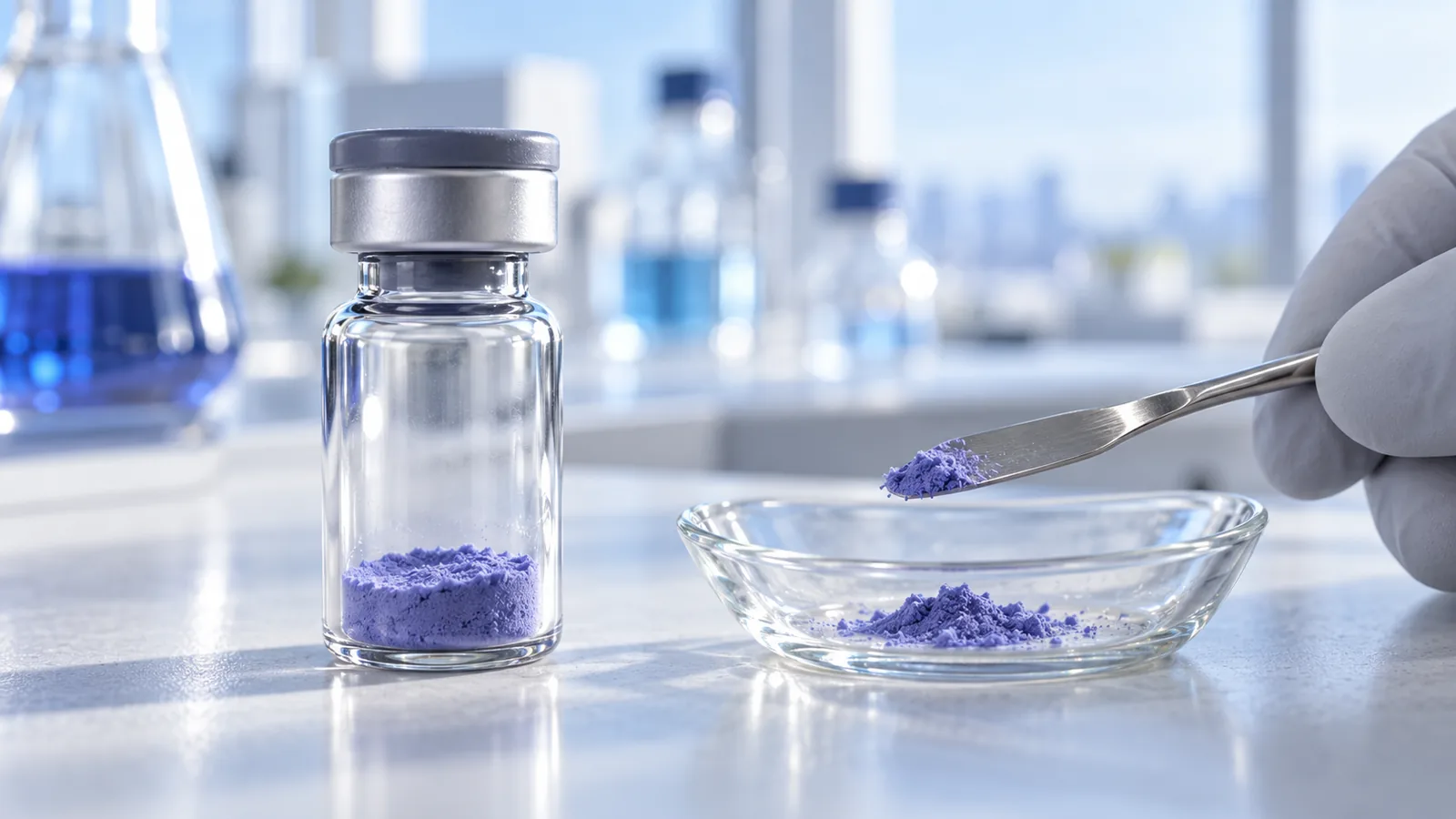
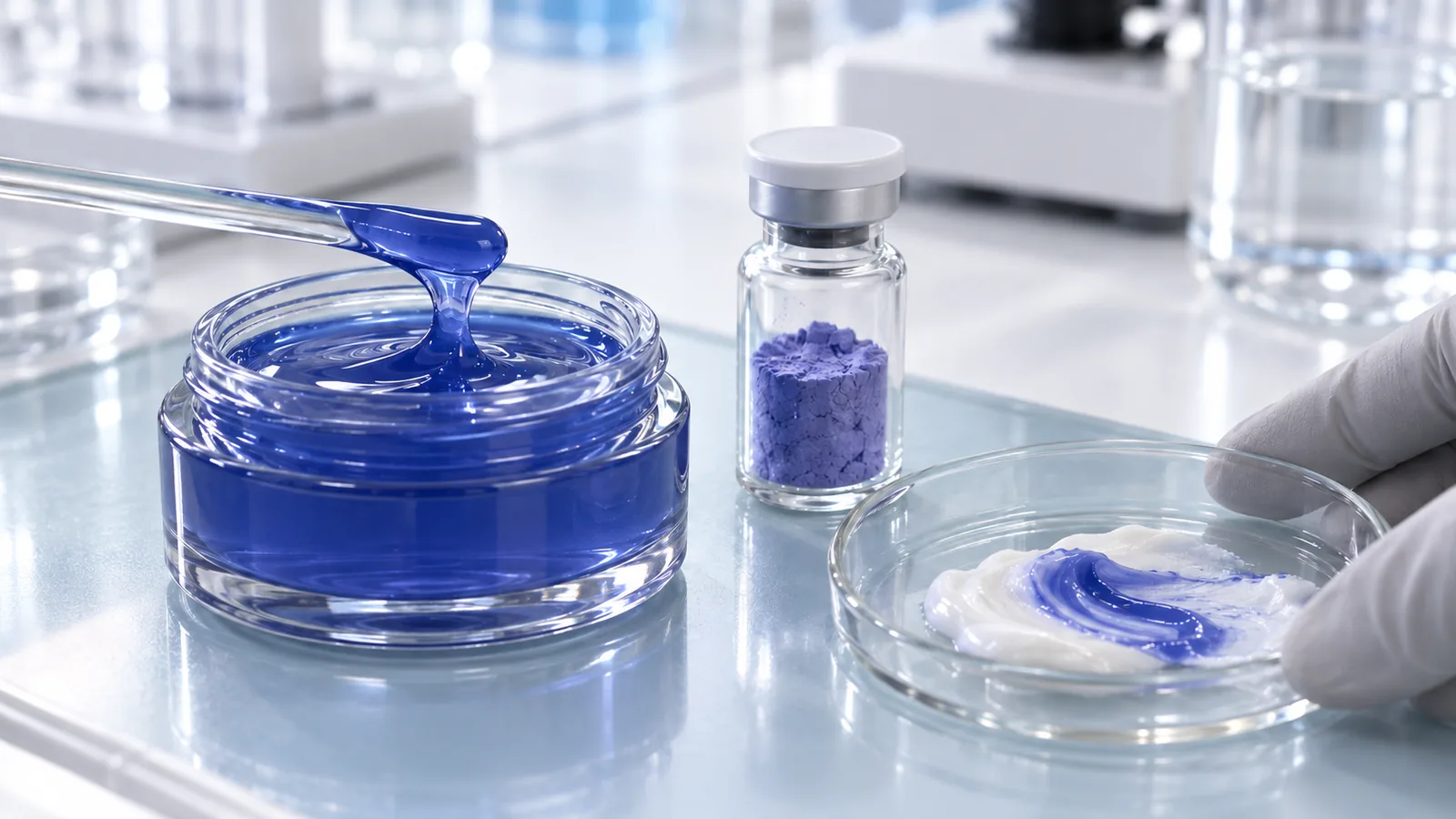
In a serum, GHK-Cu is diluted into a cream or water base at cosmetic strength. In a research vial it is the pure compound: a small cake of blue-violet powder, usually 50mg or 100mg, that turns a clear royal blue once bacteriostatic water goes in. Same molecule, different form. The colour comes from the copper, which is why a genuine vial never looks white.
“Copper peptides” on a skin care label can also mean AHK-Cu, a close cousin used mostly in hair products, or a blend that lists several. When people talk about the injectable trend, they mean GHK-Cu.
Why people are taking injectable copper peptides now
On September 7, 2026, NPR’s Morning Edition ran a story under the headline “The copper peptide trend has gone from creams to injections.” It described copper peptides as a darling of social media skin care, smeared on as an electric-blue serum or drawn up from a vial, and a staple of looksmaxxing content. Within a month, the search “injectable copper peptides skin care trend” was a Breakout on Google Trends, the label Google gives a search that has grown by more than 5,000%.
The move from cream to vial has a plain technical reason behind it. GHK-Cu is a water-loving, charged molecule, and intact skin is built to keep exactly that kind of molecule out. In a 2015 study from the National University of Singapore, almost no peptide and almost no copper crossed intact human skin over nine hours. Once the skin had been pre-treated with microneedles, measurable amounts of both came through. Dermatologists quoted in the NPR story made the same point: the serum doesn’t easily reach the deeper layers where collagen is made, so a route that skips the surface could plausibly do more.
The other driver is the peptide stack. GHK-Cu is rarely the only thing in the vial now. Glow pairs it with BPC-157 and TB-500, and Klow adds KPV, which is how a skin care ingredient ended up in the same conversation as repair and recovery peptides. The Glow vs Klow comparison covers what each blend adds.
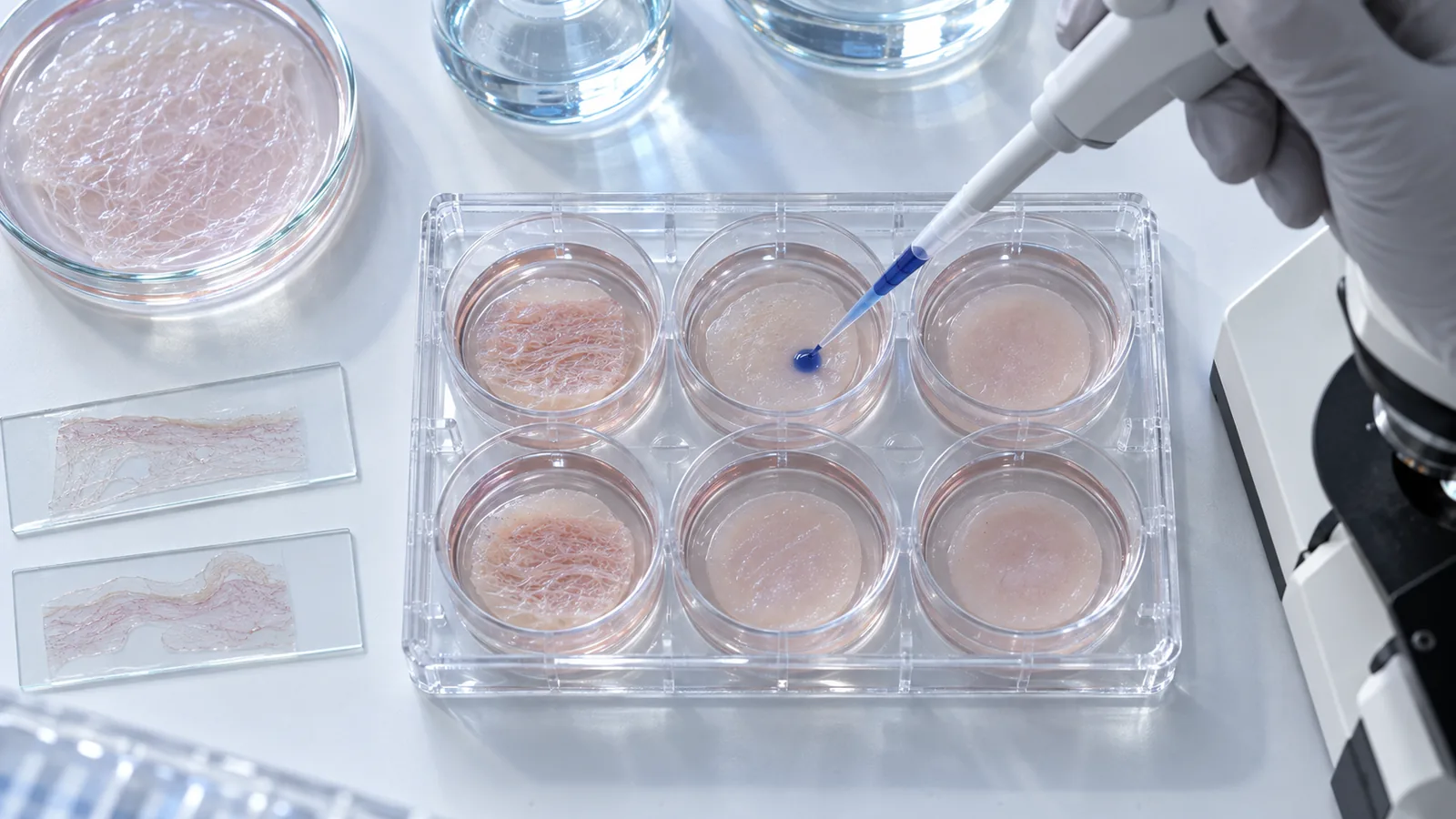
Do injectable copper peptides work for skin?
The skin evidence for GHK-Cu is real, and all of it is for the cream. A review of the GHK-Cu skin research co-written by the chemist who first isolated GHK collects the human trials: a GHK-Cu cream raised collagen production in more women than vitamin C or retinoic acid did over the same month, and twelve-week facial and eye cream studies measured firmer, denser, thicker skin with finer lines. Dermatologists who rate it alongside vitamin C and retinoids are rating those studies.
The case for injecting rests on two other things. The first is the delivery problem above. The second is animal work: GHK injected into one part of the body sped up wound healing elsewhere in rats, mice and pigs, which suggests the peptide acts system-wide rather than only where it lands. No published human trial has tested GHK-Cu as an injection for skin. A systematic review published in August 2026 screened 1,247 records on GHK-Cu and kept 64; it found deep and consistent cell and animal evidence, small human trials built on facial creams, and not one adequately powered human trial of the microneedle route either.
So the honest answer: copper peptides work for skin, and that is proven for the cream. The injectable form is where the research interest has moved, on a sound biological argument, ahead of the human trials that would settle it.
Topical vs injectable copper peptides
The question Google hears most is whether it is better to inject copper peptides. It depends on what the work is measuring. For the surface of the face, the cream has the trials. For anything below the skin barrier, or anything system-wide, the injectable form is the only one that gets there, and the evidence for it is preclinical. Microneedling with a copper serum sits in between: it opens a path through the barrier while keeping the peptide where the skin is being treated.
| Copper peptide serum | Serum with microneedling | Injectable GHK-Cu | |
|---|---|---|---|
| Form | Finished cream or serum at cosmetic strength | The same serum, applied after microneedling | Freeze-dried powder, mixed with bacteriostatic water |
| How it reaches skin | Surface only; little crosses intact skin | Through channels the needles open | Under the skin, then through the bloodstream |
| Where it acts | Where it is applied | Where it is applied | Throughout the body |
| Human evidence | Several small 1–3 month trials | Lab and animal studies | Animal studies |
| Typical source | Beauty and skin care brands | Skin clinics and home kits | Clinics, compounding pharmacies, research suppliers |
One vial can serve both. A 50mg vial can be mixed at injectable strength or diluted down to serum strength for topical work, and the GHK-Cu dosage guide has the topical percentages a vial makes.
Injectable copper peptides for hair growth
Hair is the second reason people reach for copper peptides, and the evidence there is thinner than for skin. The study most hair products lean on is a 2007 study at Seoul National University, and it used AHK-Cu, the cousin, not GHK-Cu: at very low concentrations it lengthened human hair follicles kept alive in the lab and helped the cells at the base of the follicle multiply. GHK-Cu itself speeds the healing of hair follicles in wound studies, and it is a common ingredient in scalp serums.
No human trial has looked at injected GHK-Cu for hair. The interest follows the skin logic: the follicle sits in the dermis, below the barrier a serum struggles to cross, which is why scalp microneedling with copper serum has become the clinic version of the idea.
How long do copper peptides take to work?
Two to three months. The trials measured collagen changes after one month and visible changes to lines, firmness and density at twelve weeks, and collagen is slow to build however it is delivered. A copper peptide before-and-after taken inside that window shows real change; one taken after a week or two is too early for collagen.
For a research timeline, that means planning in months, not weeks, and judging a change against a baseline photo taken in the same light before the first application.
Are injectable copper peptides safe?
GHK-Cu has an unusually clean record for a compound this widely used. It is a molecule the body already carries, it has been sold in cosmetics for decades, and the researchers who have studied it longest report that no problems have come up in its cosmetic use or in human wound-healing studies. Animal work points the same way. The injectable form has no human safety trial, so its safety record is the molecule’s, not the route’s.
Two points come up whenever the injectable form is discussed. The first is copper. GHK-Cu is about one-sixth copper by weight, and the GHK-Cu dosage guide sets each dose against the daily copper amounts the NIH publishes. The second is the side effect reported most often, a sting or redness where it goes in. It tracks concentration, and more water fixes it, as How to Reconstitute GHK-Cu explains.
The bigger variable is the vial itself. The dermatologists NPR spoke to put it plainly: with an injectable, the first question is whether it is even copper peptide. Identity, purity, the amount in the vial and endotoxin are all things a lab report answers and a product photo can’t.

Where to buy injectable copper peptides
There are two places injectable GHK-Cu comes from. Clinics, med spas and telehealth services prescribe it, usually sourced from a compounding pharmacy and priced as a monthly program. Research suppliers sell the freeze-dried vial itself, 50mg or 100mg, alongside the bacteriostatic water to mix it, for laboratory research. Either way, the same few things show whether the vial is what it says.
The first is the colour. GHK-Cu powder is blue-violet, never white, and it dissolves to a clear royal blue; green, brown or cloudy means something is off, and the reconstitution guide shows what colour GHK-Cu should be at each stage. The second is a lab report matched to the batch on the vial, not a generic certificate. It should show identity by mass spectrometry, purity by HPLC, and the net content actually measured in the vial rather than the amount printed on the label. The newest reports also carry endotoxin, heavy metal and sterility results, which matter more for an injectable than any purity figure. The guide on how to read a peptide certificate of analysis walks through each line.
Simms Research sells GHK-Cu in 50mg ($48) and 100mg ($76) vials, with Research Water at $20 for 10mL. Their four GHK-Cu batches so far each tested above 99.6% pure and each measured more than the 50mg on the label, and the latest adds endotoxin, heavy metal and sterility results; all four are on the lab results page. Glow and Klow are there for the stacked versions, and the peptide calculator handles the water and units for any vial size.
Frequently asked questions
What are GHK-Cu uglies?
The name skin care users gave to a temporary rough, dull or blotchy patch some people see when they start a strong copper serum every day. Copper peptides switch on collagen breakdown as well as collagen building, and too much too often is blamed for tipping that balance. Lower strength or fewer applications is the usual answer.
What peptide is Jennifer Aniston using?
She hasn’t said. In a 2023 interview she described weekly peptide injections and called them the future of anti-aging, but never named the peptide.
Can copper peptides be used with retinol or vitamin C?
Retinol, yes. Vitamin C is usually kept to a different time of day: pure ascorbic acid serums are very acidic and can pull the copper off the peptide, and copper speeds up the breakdown of vitamin C in return.
Are copper peptide injections FDA approved?
No. GHK-Cu isn’t an approved drug in any form; the serums are sold as cosmetics and the vials for research.