

Blog
Cloudy Peptide After Reconstitution: Causes, Warning Signs and What to Do
Why a peptide turns cloudy after mixing, which haze clears with rest or warmth, and when a vial goes back to the supplier.

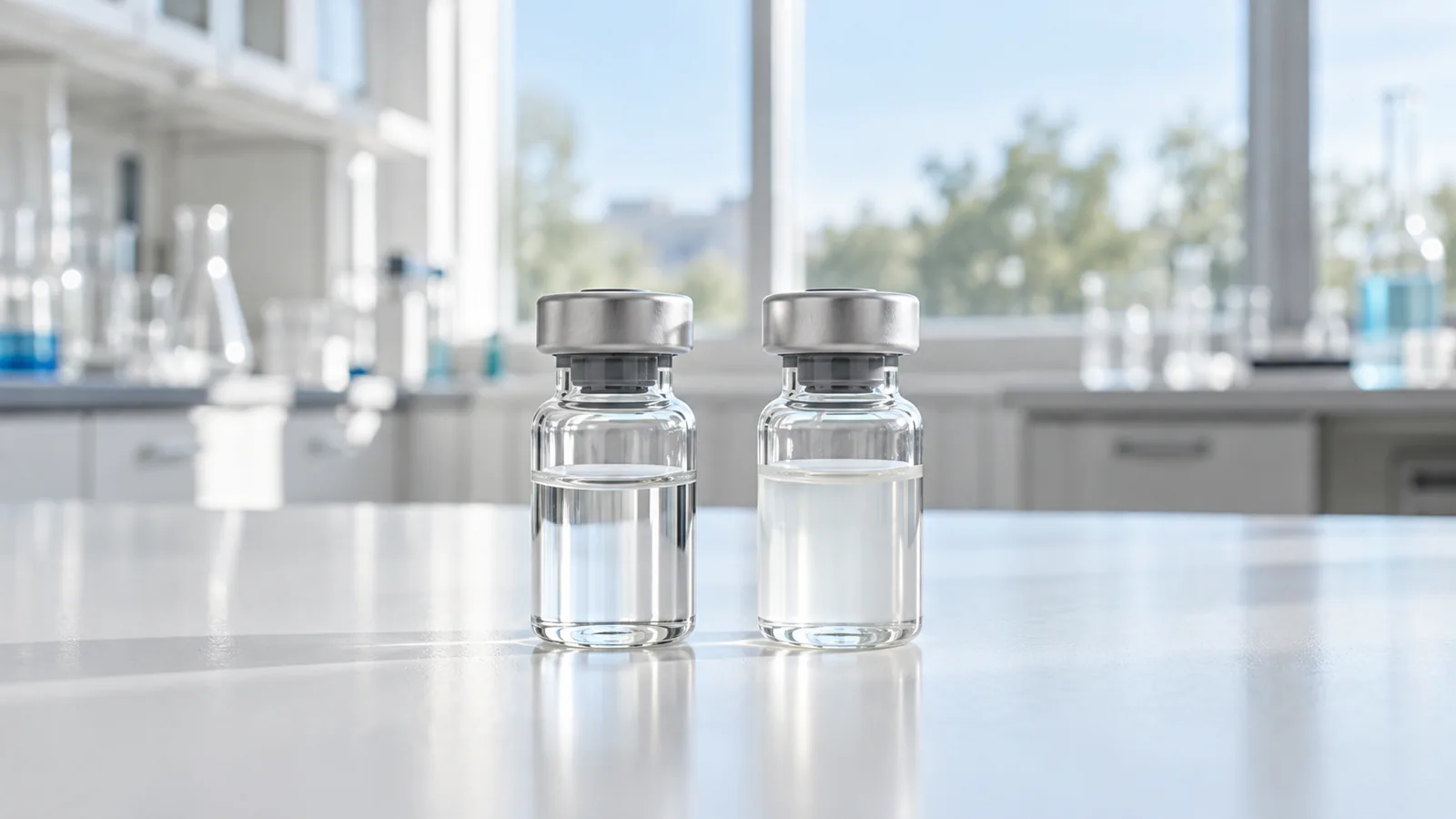
The water goes in, the vial gets its slow swirl, and the liquid that should look like nothing at all has a veil in it. For a buyer holding a first vial of retatrutide or BPC-157, that haze reads like a ruined order. Usually it is something far more ordinary: air that hasn’t risen yet, a vial that is still fridge-cold, or more powder than that much water holds at that temperature.
Prescription peptide makers see the same thing and write it into their instructions. Ferring’s growth hormone label says shaking will turn the solution cloudy, that some cloudiness can appear after refrigeration, and that the answer is to let the vial warm to room temperature (Zomacton label, FDA, 2026). Lilly gives a cloudy cartridge ten more gentle turns and five more minutes before ruling it out (Humatrope label, FDA, 2026). A vial is finished only when the haze is still there after all of that.
Simms Research publishes a set amount of bac water for every vial it sells, and its own Research Water, sterile water with 0.9% benzyl alcohol, is $20 for 10mL. A vial that still won’t clear after the steps below is a question for its support team.
What a cloudy peptide vial looks like
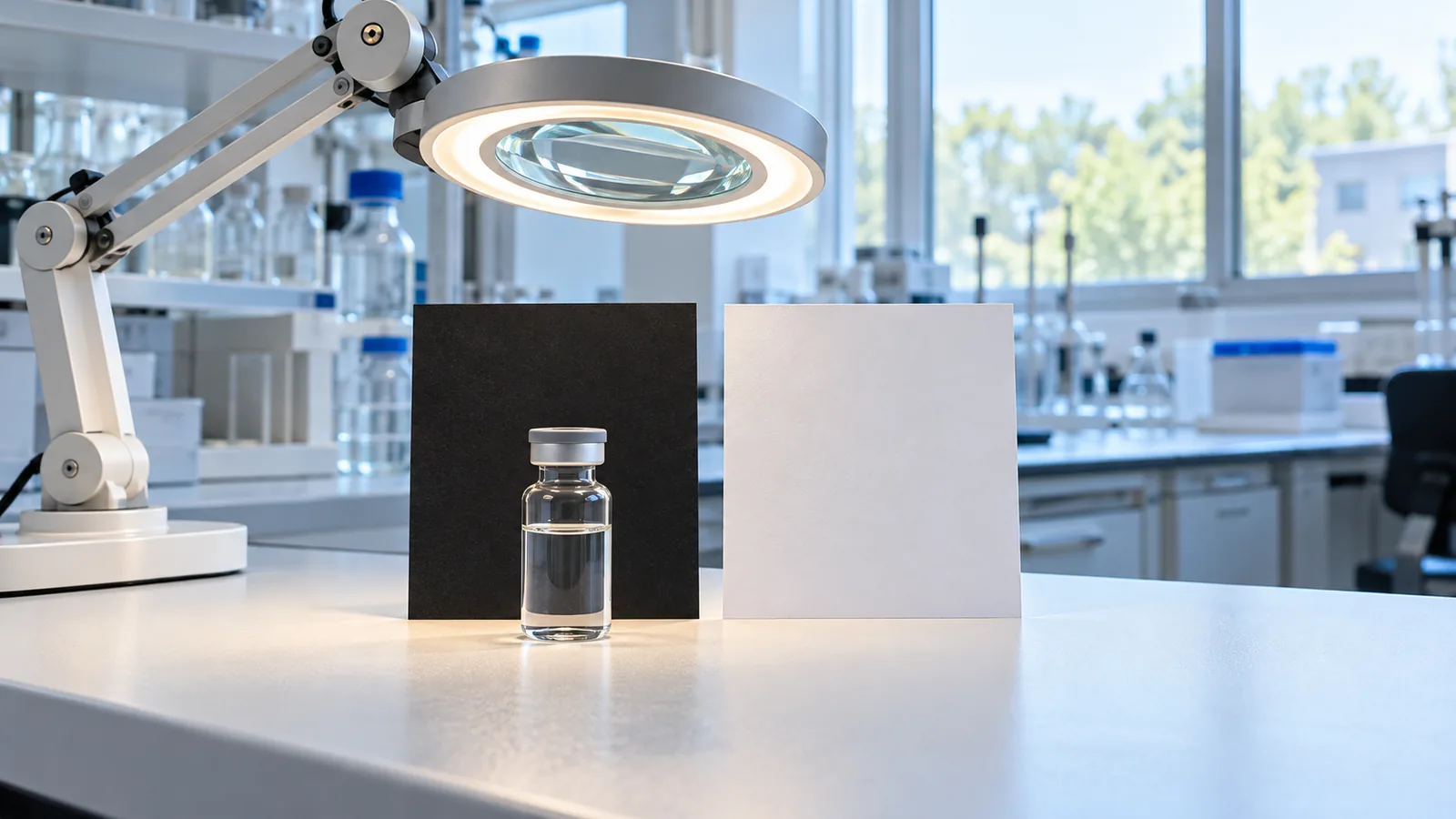
Against a dark background, a clear mix is invisible: the glass, the curve of the meniscus and nothing in between. Haze shows up there as a soft grey-white glow, the same way dust shows in a sunbeam. Drug inspectors check vials against a matte black card and then a white one under a bright lamp, since pale flecks vanish on white and dark ones on black; a dark phone screen and a sheet of printer paper do the same job.
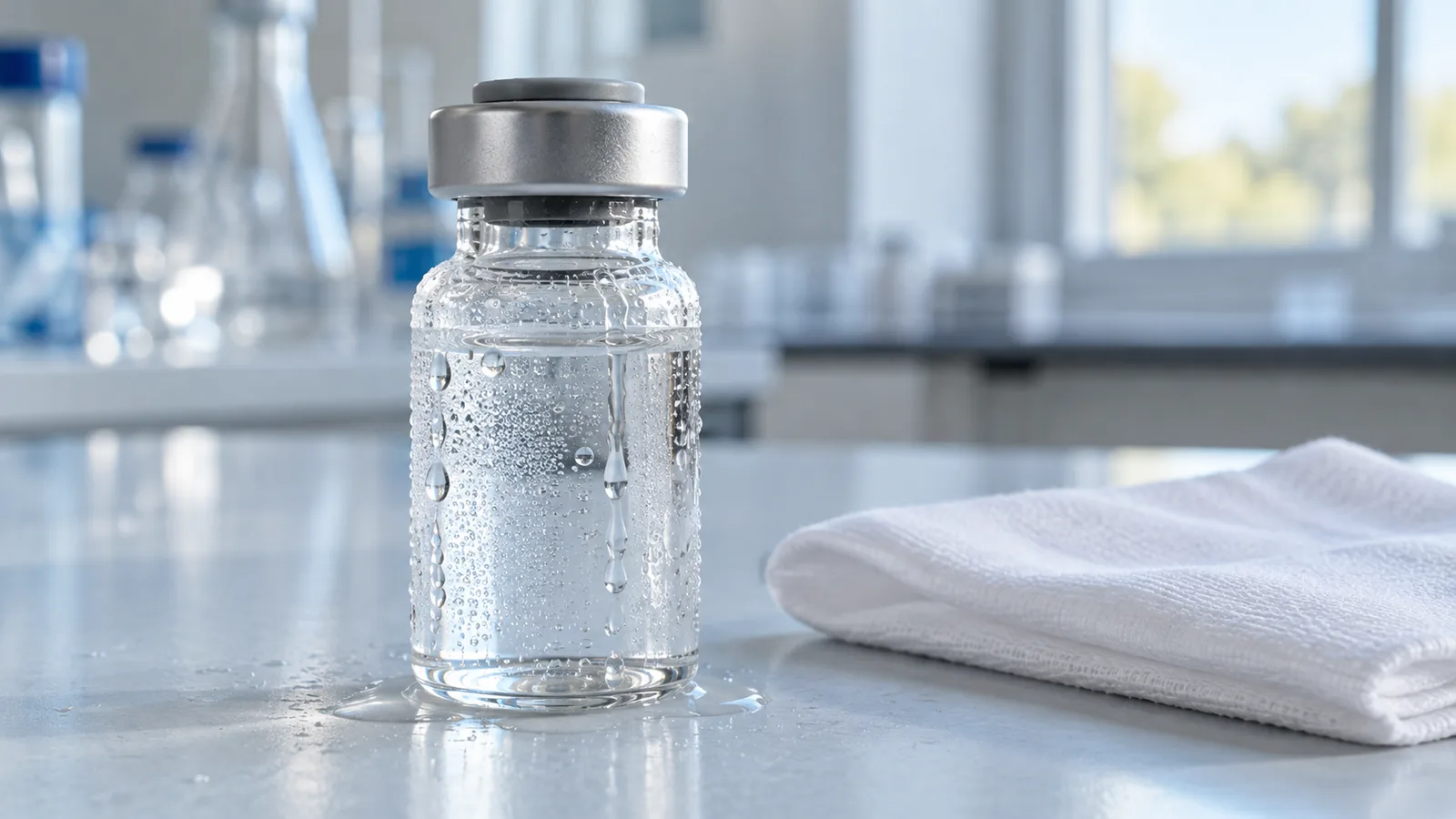
Three things look like cloud and aren’t. A vial straight from the fridge fogs on the outside within seconds in a warm room, and a dry wipe clears it. Fine bubbles make the liquid milky and clear from the bottom up within minutes. And color is not cloudiness: GHK-Cu, Glow and Klow mix to a clear blue, and Lilly describes its own tirzepatide as clear and colorless to slightly yellow (Zepbound label, FDA, 2026).
| What you see | What it usually is | Next |
|---|---|---|
| Fog on the outside of the glass | Condensation on a cold vial | Wipe it and look again |
| Milky, clearing from the bottom up | Air bubbles from mixing | Stand it upright for 10 minutes |
| Haze in the fridge that goes in a warm hand | Peptide dropping out of solution in the cold | Warm it until clear before each draw |
| A faint veil that stays at room temperature | Powder not fully in solution | The steps below |
| Specks, strings or flakes that won’t dissolve | Clumped peptide, or something that got in | Stop and contact the supplier |
| Clear blue | The copper in GHK-Cu, Glow or Klow | Nothing; it’s meant to be blue |
| Brown or green, or a tint that deepens over days | A changed solution | Don’t use it |
Why is my peptide cloudy after reconstitution?
Five causes cover nearly every hazy vial: air, cold, too little water, the wrong water, and a compound that behaves differently from a plain white cake. The first two fix themselves within minutes. The timing tells them apart: haze that is there from the first swirl is a mixing or strength problem, and haze that turns up days after a clear mix is something else entirely.
Peptide bubbly after reconstitution
A stream of water fired straight at the cake, or a vial given a quick shake, fills the liquid with bubbles too small to see one by one, and together they read as milk. Growth hormone labels tell users to aim the water at the glass wall to avoid foam, and Ferring’s adds that shaking or vigorous mixing will make the solution cloudy (Zomacton label, FDA, 2026). Fine bubbles rise out in a few minutes with the vial upright. A ring of foam on the surface can take longer and does no harm sitting there, since the needle draws from the liquid below it.
Peptide cloudy when cold
Cold causes two different hazes. The first is on the outside of the glass: a vial at fridge temperature fogs as soon as it meets warm, humid air, and the fog wipes off. The second is inside, and it comes and goes with temperature. Most peptides dissolve less well as they cool, and the strongest mixes cross that line first, so a vial can be clear on the bench and hazy after a night in the fridge. Ferring’s label expects exactly this: some cloudiness may occur after refrigeration, the vial warms to room temperature, and only cloudiness that persists rules it out.
A few minutes in a closed hand usually clears it. The draw comes after the haze has gone, because peptide that has dropped out of solution doesn’t make it into the syringe and the dose comes up short. A cake mixed straight from the fridge dissolves slowly too, so the vial gets a few minutes on the bench first, and the bac water stays at room temperature rather than chilled.
Too little water for the powder
Every peptide has a limit to how much will dissolve in a millilitre, and in plain bac water that limit sits lower than in the liquid inside a prescription pen. Lilly’s highest tirzepatide dose holds 15mg in 0.5mL, or 30mg per millilitre, but in a phosphate buffer held at pH 6.5 to 7.5. Egrifta WR dissolves 11.6mg of tesamorelin in 1.3mL of bac water with 145mg of a cyclodextrin and 43.5mg of mannitol in the same vial to help it along (Egrifta WR label, FDA, 2026). A research vial holds the peptide alone, in water with no buffer, so the strongest mixes are the ones that haze.
Another 0.5 to 1mL of bac water, a slow roll and a few minutes’ rest settle a vial that is simply too strong. The amount per unit changes with the new volume, and the peptide calculator gives the new number. Most 10mg vials take 2mL, which is 5mg per millilitre, well clear of the line; the full water table is in How to Reconstitute Peptides.
Cloudy bac water and the wrong water
The water gets checked before the peptide. Bac water is invisible in its own vial for its whole life, and its label says not to use it unless the solution is clear and the seal intact (Bacteriostatic Water label, FDA, 2026). A hazy bottle, or one past 28 days from its first puncture, is replaced rather than used. Sterile water and saline dissolve a peptide as cleanly as bac water on the first day; the difference shows days later, when a vial with no preservative clouds from whatever each needle carried in. Tap, bottled and distilled water were never sterile to begin with. The whole comparison is in bac water for peptides.
When the compound is the reason
Copper peptides are blue by nature, deep royal blue for GHK-Cu and lighter for the blends, and the blue should stay clear; a green or brown cast or flakes mean the copper has changed, as How to Reconstitute GHK-Cu explains. Large cakes take minutes rather than seconds, and 1,500mg of glutathione needs a little over 5mL before the last of it goes in, which the glutathione reconstitution guide sets out.
Can you use cloudy peptides?
Once it has turned clear again, yes. If it won’t clear, no. Haze that leaves with rest or warmth was peptide going back into solution, and nothing was lost. Haze that stays means part of the peptide is still out of solution, so no one knows what each unit holds, and every dose worked out on the calculator assumes all of it is dissolved.
Two cases are finished whatever the vial’s date: a mix that was clear and turned cloudy days later, which points to something growing in it or peptide breaking down, and particles or strings that never dissolve. The prescription labels draw the same line. Egrifta WR says not to use the vial if solid particles appear or the solution is cloudy or colored, and Humatrope allows one more round of gentle mixing and a five-minute rest before the same verdict.
What to do with a cloudy vial, in order
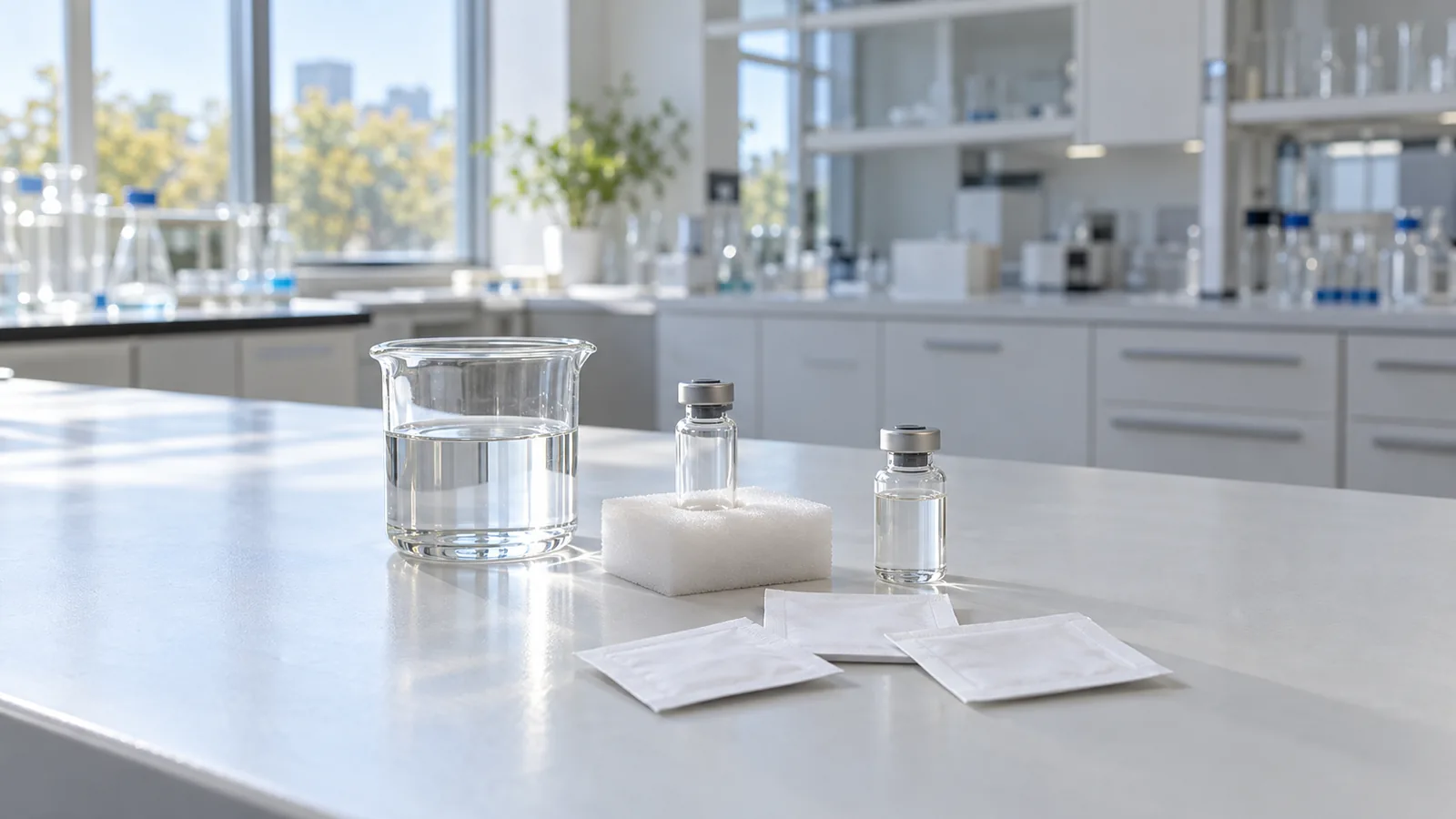
Wipe it, wait, warm it, roll it, then add water if the mix is strong, and stop there. Each step rules out one cause, cheapest first:
| Step | What to do | It was |
|---|---|---|
| 1. Wipe | Dry the outside of the glass and look against a dark background | Condensation |
| 2. Wait | Stand the vial upright for 10 minutes without touching it | Air bubbles |
| 3. Warm | Hold it in a closed hand for a few minutes; never hot water or a heater | Cold |
| 4. Roll | Ten slow turns between the palms, then five minutes’ rest | Powder still dissolving |
| 5. Dilute | For a strong mix only: another 0.5 to 1mL of bac water, roll, rest, redo the units | Too little water |
| 6. Stop | Still hazy: back in the fridge, photos against black and white, contact the supplier | A product question |
Shaking, heat and the freezer make it worse rather than better, and a cloudy vial is kept, not poured out, until the supplier has seen it.
Cloudy retatrutide and tirzepatide
Neither should stay cloudy. Both are mixed strong, which makes cold the first thing to rule out. Retatrutide (GLP-3) is mixed at twice the strength of most 10mg peptides. Simms Research’s water table puts 1mL in the 10mg vial, 2mL in the 20mg and 3mL in the 30mg, which is 10mg per millilitre in all three, and 3mL in the 60mg vial, which is 20mg. A 10mg vial of BPC-157 in 2mL is 5mg. A strong mix that hazes overnight and clears in the hand within minutes is behaving as expected.
A retatrutide vial that hazes in the fridge every time can simply take more water: 2mL in a 10mg vial puts each 1mg on 20 units rather than 10, and the retatrutide calculator handles every size. The vial-by-vial mixing is in How to Reconstitute Retatrutide. Tirzepatide (GLP-2) is mixed at 5 to 25mg per millilitre across its four sizes, and a faint straw tint is within what Lilly allows for its own; haze, specks or a deepening yellow are not. Its sizes are covered in How to Reconstitute Tirzepatide.
The powder side is on record. The newest batch on Simms Research’s retatrutide lab results page, tested July 16, 2026 by an independent ISO-certified lab, measured three 10mg vials at 99.611% average purity, with an endotoxin pass and no microbial growth.
When to contact the supplier
When a vial mixed with fresh bac water at its usual amount is still hazy after the six steps, or when the powder looked wrong before any water touched it: a cake that has shrunk, melted into a glassy film or turned sticky has taken on moisture, as Do Peptides Need to Be Refrigerated? describes. Specks that never dissolve, and color in a peptide that should be clear, belong in the same message.
A useful message carries the order number, a photo of the vial against a black background and a white one, which water went in and how much, and the day it was mixed. Simms Research covers defective products, and its support team works from exactly those details at support@simmsresearch.com or 855-592-8507, weekdays 9 AM to 5 PM Eastern, with most replies inside one business day.
Frequently asked questions
Why is my bac water cloudy?
It has gone off or was never right. Good bac water stays as clear as the day it was opened, so a hazy bottle is replaced, and a fresh vial of Research Water is $20.
Why is my AOD peptide cloudy?
Air, in most vials: water aimed at the cake whips in fine bubbles that rise out with the vial upright. AOD-9604 can also clump into a soft gel when water hits it hard, and a slow roll dissolves it; the AOD-9604 dosage guide has its water amount.
Does a cloudy peptide mean it is fake?
No. A vial with the wrong peptide in it can mix as clear as a genuine one, and a genuine one can haze in the cold. Identity is settled by the mass on the lab report; the guide to reading a peptide certificate of analysis shows where it sits.
Is Simms Research legit?
Its lab results pages carry batch reports from an independent ISO-certified lab, an order in before 5 PM Eastern leaves that day, support answers at 855-592-8507 on weekdays, and each order sits under a Free Delivery Guarantee written into its policy.
Does this page carry a discount code or affiliate link?
No. Nothing here pays a commission, and there is no code to enter.