

Blog
Glow Peptide Dosage Chart and Calculator: BPC-157, TB-500 and GHK-Cu Protocol
Glow peptide dosage for the 70mg vial: the daily draw in units with 2.5mL of bac water, weekly totals and cycle length, how long a vial lasts, and what each batch measured.

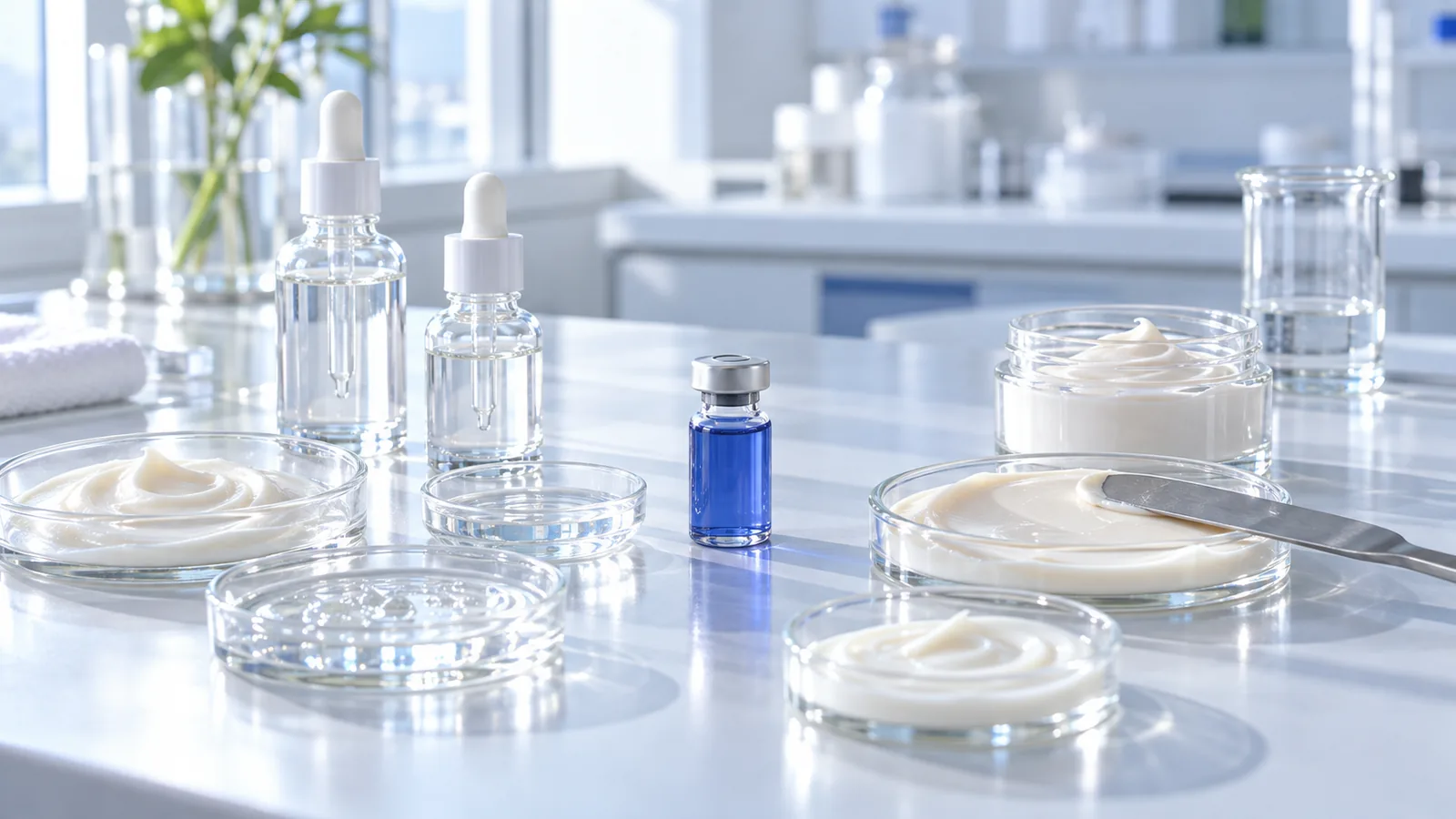
Glow is three research peptides freeze-dried into one vial: GHK-Cu, the copper peptide from skin-care research, with BPC-157 and TB-500, the two most studied repair peptides. Because they share one cake, every draw carries all three in the same proportion, and a Glow dose is read from its GHK-Cu.
Simms Research sells the Glow Peptide Blend as a 70mg vial for $96. This guide covers that vial: the draws in units, the water, the daily and weekly rhythm, how long it lasts, and what to expect from it over the weeks.
Glow peptide dosage calculator
Pick the water and the GHK-Cu dose, and the calculator gives the units to draw on a U-100 insulin syringe; BPC-157 and TB-500 come along at a fifth of the GHK-Cu. It opens on the 50mg of GHK-Cu in the 70mg vial, with 2.5mL and a 2mg dose: 10 units.
Glow peptide dosage chart
A Glow dose is 5 to 10 units a day from a 70mg vial mixed with 2.5mL of bac water. That draw delivers 1 to 2mg of GHK-Cu, the range the copper peptide is run at on its own, with 200 to 400mcg of both BPC-157 and TB-500 riding along:
| Units (U-100) | GHK-Cu | BPC-157 | TB-500 | Draws per vial |
|---|---|---|---|---|
| 5 units | 1mg | 200mcg | 200mcg | 50 |
| 7.5 units | 1.5mg | 300mcg | 300mcg | 33 |
| 10 units | 2mg | 400mcg | 400mcg | 25 |
A single unit, one hundredth of a mL, carries 40mcg of each partner alongside 0.2mg of GHK-Cu, so the chart reads in fives: 5 units per milligram of GHK-Cu. The 10-unit draw is the one most Glow protocols settle on. For any other water amount or dose, the peptide calculator does the conversion; enter 50mg, the GHK-Cu share, as the vial size.
What is in a 70mg Glow vial
50mg of GHK-Cu, 10mg of BPC-157 and 10mg of TB-500. The copper peptide outweighs each partner five to one, and that split is set when the powder is made: water and syringe can change how much blend a draw holds, never the proportions inside it.
GHK-Cu is glycine, histidine and lysine wrapped around a copper ion, a peptide human plasma carries naturally and loses with age (Pickart, International Journal of Molecular Sciences, 2018). BPC-157 is a 15-amino-acid sequence taken from a protein in gastric juice. TB-500 is the short actin-binding stretch of thymosin beta-4, made synthetically. Each also comes as its own vial with its own chart: the BPC-157 dosage chart and the TB-500 dosage chart. Glow plus a fourth peptide, KPV, is Klow, and Glow vs Klow sets out when that extra peptide is worth having.
Glow peptide benefits
Each peptide brings its own line of research. GHK-Cu is the skin peptide: in human cream studies it raised collagen production and, over twelve weeks, left facial skin firmer, denser and less lined (Pickart, BioMed Research International, 2015). It is also studied around hair follicles. BPC-157 is studied in rats for tendon, ligament, muscle and gut healing, and TB-500 for how cells migrate into a wound and close it. Glow puts collagen and repair research in one vial, which is why it draws interest from skin-care and fitness circles alike.
How much bac water for Glow 70mg
2.5mL. The vial then holds 20mg of GHK-Cu and 4mg each of BPC-157 and TB-500 in every mL, the strength the chart is written for. It is also the strength of a 50mg GHK-Cu vial or a Klow vial given the same 2.5mL, so a 10-unit draw means 2mg of GHK-Cu across all three.
Many Glow charts online are written for 2mL, where 10 units holds 2.5mg of GHK-Cu and 500mcg of each partner, and some for 3mL. Less water makes every unit stronger, so a unit count only carries over with the water it was written for; the calculator converts between them.
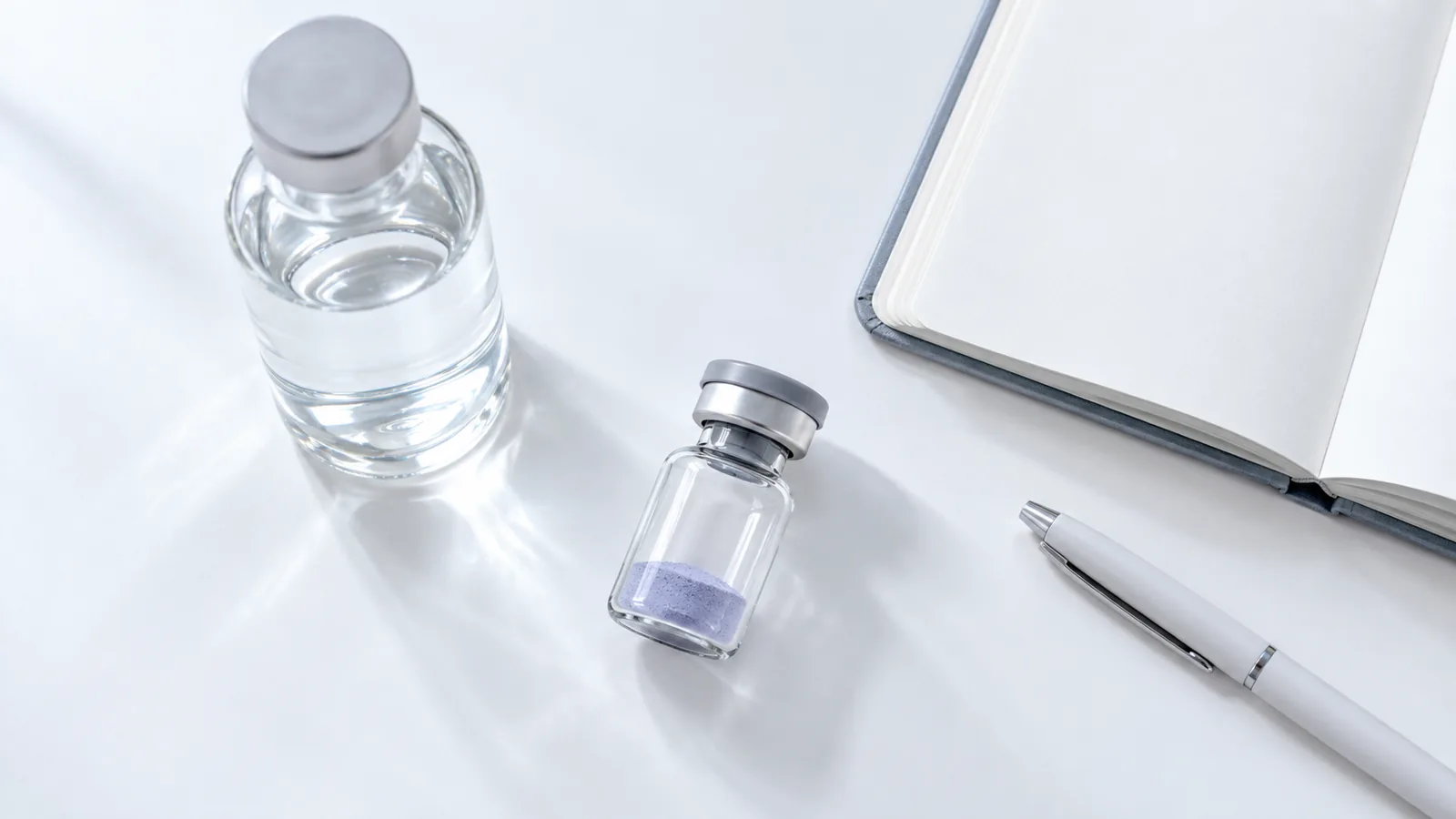
Add the water slowly against the side of the vial and swirl it gently, no shaking, until no lavender dust is left on the glass and the liquid is one even, see-through blue. Date the vial and put it in the fridge. The full routine is in how to reconstitute peptides.
A 10mL vial of Simms Research’s Research Water ($20) covers four Glow mixes at 2.5mL. It carries 0.9% benzyl alcohol as a preservative, and the bac water guide covers why that matters for a vial in use for weeks.
Glow peptide dose per day
5 to 10 units, once a day. Protocols open at 5 units, 1mg of GHK-Cu, for the first week, then step up to 10 units and hold there. 10 units is also the ceiling: past it, the GHK-Cu climbs over 2mg, the top of its range.
BPC-157 and TB-500 follow the GHK-Cu. At 10 units each sits at 400mcg. For BPC-157 that is inside the 250 to 500mcg daily range it is run at alone. TB-500 alone is usually drawn in milligrams twice a week, and 400mcg a day adds up to 2.8mg a week, a little above a maintenance week. At 5 units each is 200mcg. Getting 500mcg of BPC-157 out of Glow would take 12.5 units and 2.5mg of copper peptide. Research that wants the pair at full strength runs them from a vial without GHK-Cu, as the Wolverine stack dosage guide sets out, and BPC-157 vs TB-500 explains what each one is studied for.
The time of day is free. None of the three is timed to meals, sleep or a hormone pulse: pick one time and keep it.
Glow peptide dosage per week and cycle
7 to 14mg of GHK-Cu a week on a daily schedule, with 1.4 to 2.8mg of each partner. Some protocols take weekends off, and a lighter version doses on three days only:
| Schedule | GHK-Cu per week | BPC-157 and TB-500 per week, each |
|---|---|---|
| 5 units every day | 7mg | 1.4mg |
| 10 units every day | 14mg | 2.8mg |
| 10 units five days a week | 10mg | 2mg |
| 10 units three days a week | 6mg | 1.2mg |
Blocks last four to twelve weeks, with a few weeks off before the next one. Those two markers come from the GHK-Cu skin studies, which found collagen changes at one month and scored visible results at twelve weeks (Pickart, BioMed Research International, 2015). A pattern common online runs the first four weeks five days a week, then drops to three days a week for the rest of the block.
How long 70mg of Glow lasts
25 days at 10 units a day, and four weeks on any lighter plan. A mixed vial keeps 28 days refrigerated at 2–8°C (36–46°F), and on lower doses that clock runs out before the powder does:
| Plan | Days of GHK-Cu in the vial | Where the vial ends |
|---|---|---|
| 5 units every day | 50 | Day 28, with 22mg of GHK-Cu unused |
| 7.5 units every day | 33 | Day 28, with 8mg unused |
| 10 units every day | 25 | Day 25, empty |
| 10 units five days a week | 35 | Day 28, with 10mg unused |
That makes the vial count for a block simple: one per four weeks, so two for eight weeks and three for twelve. Real vials also run over their label. The latest Glow batch measured 55mg of GHK-Cu, so the daily 10-unit plan stretches to nearly the full 28 days.
Why Glow is blue, and why it stings
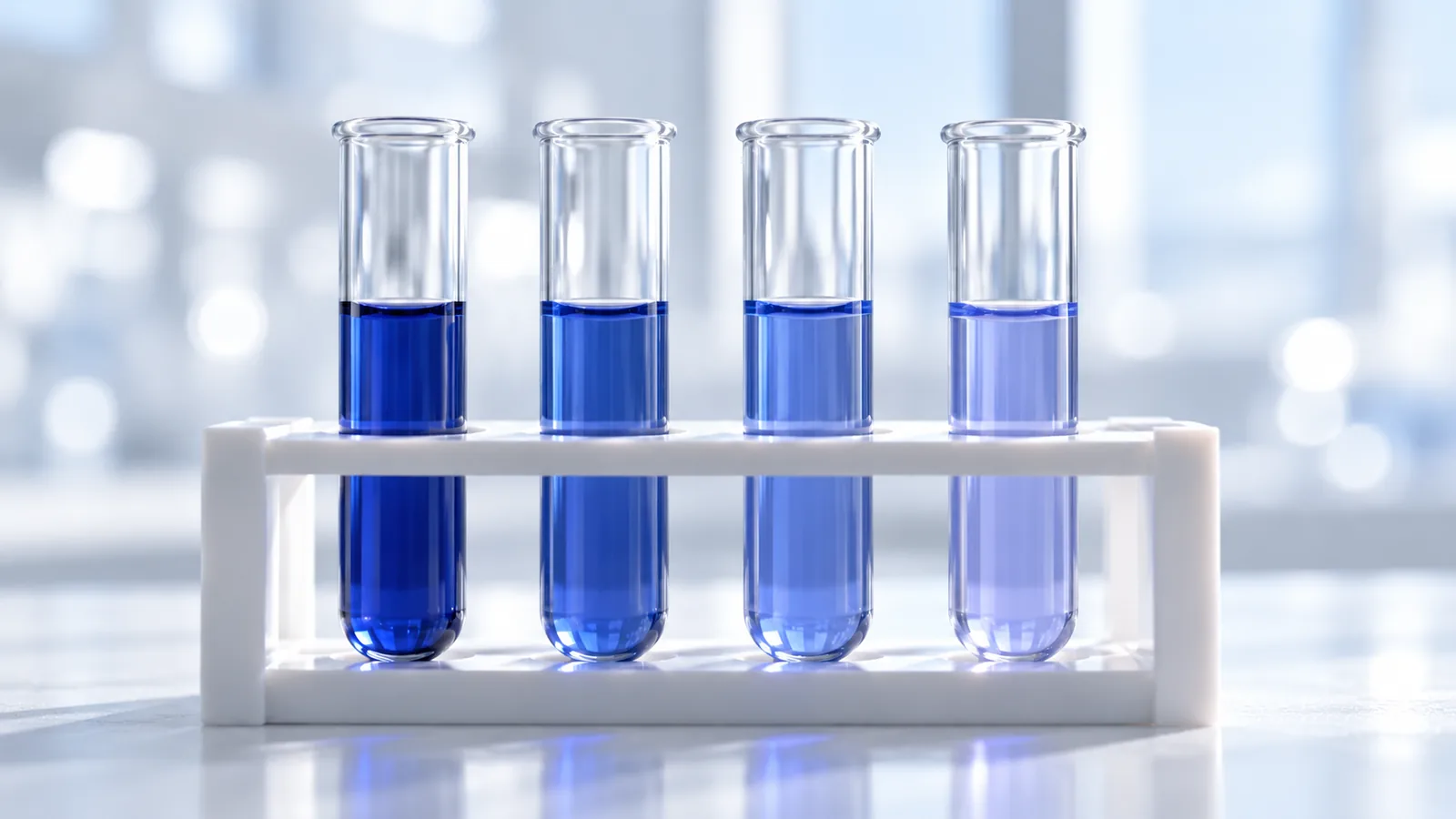
Both come from the copper. GHK-Cu holds one copper ion per molecule, and copper complexes absorb orange-red light, so Glow looks blue at every stage. The freeze-dried cake is a pale, chalky lavender-blue, lighter than plain GHK-Cu because 20mg of white peptides share it, which is why some describe it as purple. Mixed, it turns a clear blue that lightens as more water goes in. A blue that clouds over, or drifts toward green or brown, marks a vial to set aside.
The sting is the GHK-Cu as well. It is the complaint researchers raise most with the copper peptide, and it grows with strength: Glow at 2.5mL carries 20mg of GHK-Cu per mL, and a 2mL mix 25mg. Mixing with 5mL halves the strength and doubles every unit count, so 2mg of GHK-Cu becomes 20 units, still inside a 0.3mL syringe. The GHK-Cu dosage guide covers why GHK-Cu stings and the other small fixes, and injectable copper peptides explains how the copper peptide moved from blue skin serums to research vials.

Glow peptide before and after
Change shows on a scale of months, not days. No study has tested the blend itself, so the timeline comes from its parts, and the human data belongs to GHK-Cu, all of it measured with creams on the skin:
| Point in a block | What the research found |
|---|---|
| First two weeks | Too early for collagen; the studies took their first reading at one month |
| One month | Skin biopsies showed collagen production up in 70% of women on a GHK-Cu cream, against 50% on vitamin C and 40% on retinoic acid |
| Twelve weeks | Facial studies scored firmer, denser and thicker skin, fewer fine lines and less mottled pigment |
BPC-157 and TB-500 have no human before-and-after of their own. In the rat studies behind them, injuries were tracked over weeks: a 2006 rat study of a severed thigh muscle found BPC-157 improving healing at every check across 72 days. Pictures from week two show too little to judge. The comparison that matches the research is the first day of a block against week twelve, taken in the same light.
Glow peptide side effects
For most, nothing beyond a brief sting or some redness where the dose goes in. Each peptide’s record points the same way. GHK-Cu has been in cosmetics for decades, and the researchers who have studied it longest report no safety problems in that use or in human wound-healing work (Pickart, BioMed Research International, 2015). A 2010 trial gave 40 healthy volunteers intravenous thymosin beta-4 at up to 1,260mg a day for 14 days with no dose-limiting toxicity and only infrequent, mild to moderate side effects. A 2025 pilot infused 10mg and then 20mg of BPC-157 into two adults and found no change in heart, liver, kidney, thyroid or glucose markers.
The copper in a dose is small. A 10-unit draw, 2mg of GHK-Cu, carries about 317mcg of copper: around a third of the 900mcg the NIH sets as the adult daily allowance, and about 3% of its 10mg upper limit (Copper fact sheet, NIH Office of Dietary Supplements, 2022). Food alone gives most adults more than that every day.
Glow lab results, peptide by peptide
Simms Research’s two published Glow batches each measured more of every peptide than the label states. The certificates give each of the three its own figure:
| In the vial | Label | Latest batch, Apr 14, 2026 | Earlier batch, Feb 13, 2026 |
|---|---|---|---|
| GHK-Cu | 50mg | 55.14mg | 54.12mg |
| BPC-157 | 10mg | 12.32mg | 13.94mg |
| TB-500 | 10mg | 11.59mg | 11.18mg |
| Whole vial | 70mg | 79.05mg | 79.24mg |
The latest batch tested at 99.28% purity by HPLC-UV, with the identity of all three peptides confirmed by LC-MS and both endotoxin replicates passing. The earlier batch tested at 99.58%, before the endotoxin screen joined the panel.
In practice each unit carries slightly more than the label suggests. On the latest batch, 10 units from the 2.5mL mix holds about 2.2mg of GHK-Cu and close to 500mcg of BPC-157, so a 2mg dose sits nearer 9 units. Entering the measured 55mg in place of 50mg in the calculator gives units matched to that batch. The two certificates are posted on the Glow lab results page, and the COA reading guide explains how to read them.
Frequently asked questions
Is Glow a daily injection?
In most protocols, yes, either every day or on weekdays only. The lightest common plan doses on three days, 6mg of GHK-Cu a week on 10-unit draws.
How much Glow should I start with?
5 units of a 2.5mL mix: 1mg of GHK-Cu and 200mcg each of BPC-157 and TB-500. Protocols hold that for about a week before moving to 10 units.
How many units of Glow is 2mg?
10 units with 2.5mL of water. Charts written for 2mL put it at 8 units, and those for 3mL at 12.
Is Glow peptide supposed to be blue or purple?
Both, at different stages. The powder looks lavender, sometimes close to purple, and the mixed vial is a clear blue. A Glow vial that mixes colorless has no GHK-Cu in it.
Is the Glow dose different for women?
No. Glow protocols use one fixed draw for everyone, with nothing scaled to sex or body weight.
Does Glow need to be refrigerated?
Once water is in, yes: keep it in the fridge and use it within 28 days. The dry powder is stable at room temperature through shipping and keeps longest cold; the peptide refrigeration guide has the detail for each stage.
Does Glow help with weight loss?
No. Its three peptides are studied for skin and tissue repair, not body fat.
Is Glow approved?
No. Simms Research sells Glow for laboratory research only.