

Blog
Tesamorelin vs Retatrutide: Belly Fat or Weight Loss
Tesamorelin vs retatrutide compared on body weight, visceral and liver fat, lean mass and speed, with side effects, stacking the two, units, cost and which suits which research.

Tesamorelin and retatrutide land in the same conversation because both get bought to lose fat. Past that they share almost nothing. Retatrutide is Eli Lilly’s weekly weight-loss compound, the one sold as GLP-3, and its trials took more than a quarter off body weight. Tesamorelin is a daily growth-hormone-releasing peptide whose trials left body weight nearly where it started, while visceral fat inside the abdomen and fat in the liver shrank and lean mass went up.
Simms Research stocks both, Tesamorelin at $95 for 10mg and $158 for 20mg, Retatrutide (GLP-3) from $84 for 10mg up to $259 for 60mg, and the choice comes down to which kind of fat loss the research is after.
What are tesamorelin and retatrutide?
Tesamorelin is growth-hormone-releasing hormone, the brain’s signal for growth hormone, built from all 44 of its amino acids with a trans-3-hexenoyl cap that shields it from the enzymes that clear the natural hormone. The pituitary answers with pulses of its own growth hormone, and IGF-1 from the liver follows. Its US approval came in 2010, as Egrifta, for one use: shrinking the excess belly fat that builds up in some people on long-term HIV treatment.
Retatrutide is a 39-amino-acid peptide from Eli Lilly, built on the gut hormone GIP and carried on a fatty-acid chain that keeps it in the blood for about six days. It switches on three receptors at once: GIP, GLP-1 and glucagon. Research stores sell it as GLP-3, a name that counts those receptors (What Is GLP-3 explains it). It isn’t approved yet; Lilly plans to file with the FDA early in 2027 on the strength of five positive Phase 3 trials.
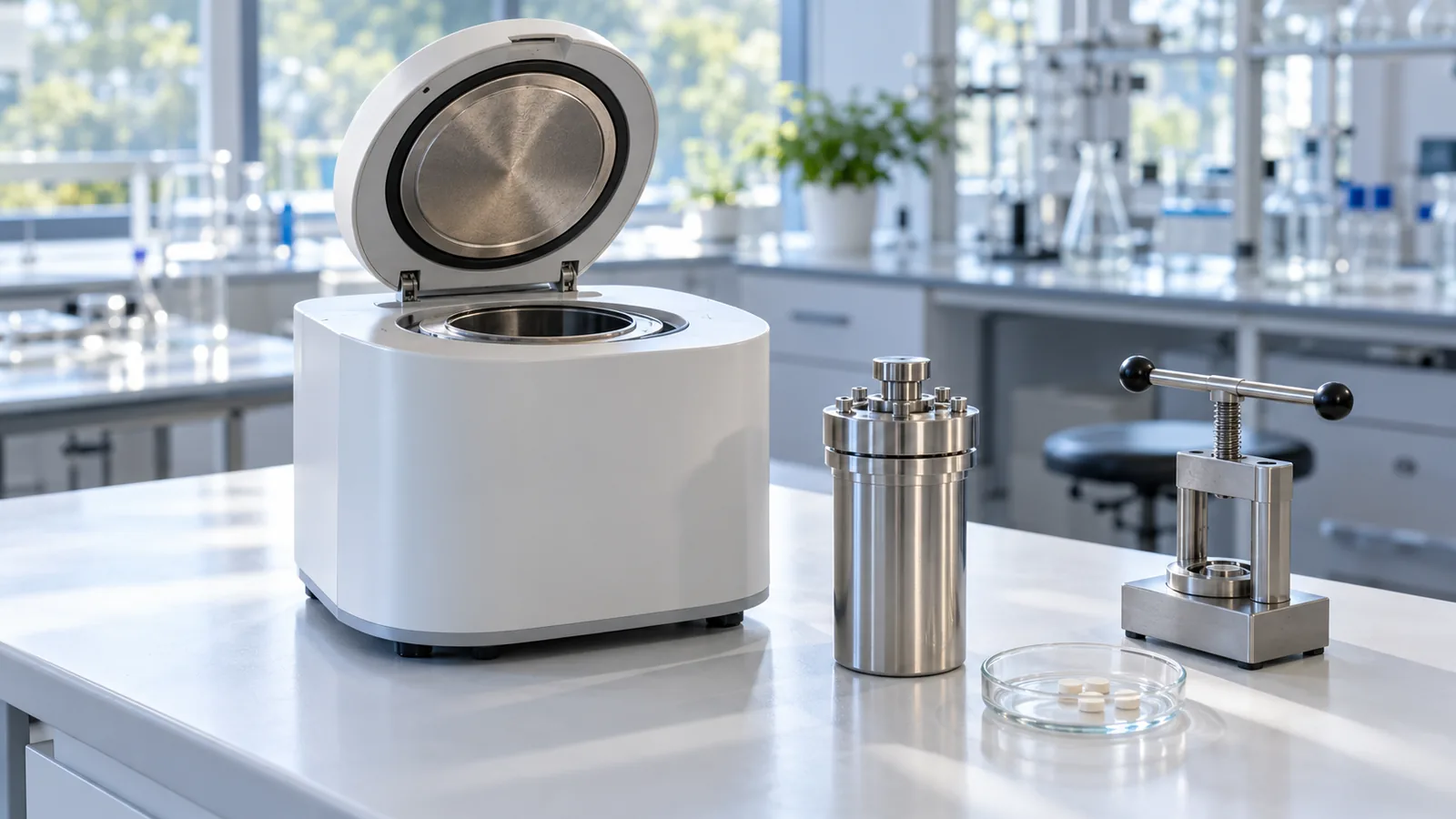
What is the difference between tesamorelin and retatrutide?
Where each one works. Retatrutide works on intake and output: its GLP-1 and GIP activity turns appetite down and slows the stomach, and the glucagon receptor tells the liver to burn fat and raises the energy the body spends. Less food in and more energy out takes fat off everywhere it is stored, with some lean mass alongside.
Tesamorelin leaves appetite alone. The growth hormone it releases breaks down fat with a strong preference for the visceral fat packed around the organs, and builds lean tissue at the same time. On the scale the two cancel out: across six months in its trials, body weight moved by less than half a kilogram while waists came in. That is the sense in which the forums call the pair “not even the same”. One is a weight-loss compound; the other changes where the fat sits and what the weight is made of.
Tesamorelin vs retatrutide side by side
Line by line:
| Tesamorelin | Retatrutide | |
|---|---|---|
| What it is | GHRH, all 44 amino acids, with a protective cap | A 39-amino-acid chain riding on a fatty acid |
| Works on | GHRH receptor: growth hormone and IGF-1 | GIP, GLP-1 and glucagon receptors |
| Dosing | Once a day | Once a week, stepped up every 4 weeks |
| Half-life | 8 to 11 minutes | About 6 days |
| Body weight | Flat: −0.4kg and +0.5kg at 26 weeks | −28.3% at 80 weeks on 12mg |
| Visceral fat | −18% and −14% at 26 weeks | Down by up to 48% at 48 weeks |
| Liver fat | 37% below placebo at 12 months | 82.4% lower at 24 weeks on 12mg |
| Lean mass | Up by just over a kilogram in 26 weeks | Falls with the weight, in the usual share |
| First change | IGF-1 up within 2 weeks | 17.5% weight loss by week 24 on 12mg |
| Status | Approved as Egrifta (2010) | Investigational, FDA filing planned for 2027 |
| Simms Research price | $95 (10mg) and $158 (20mg) | $84 (10mg), $129 (20mg), $159 (30mg), $259 (60mg) |
Each figure comes from that compound’s own trials, and the people differed: adults with HIV and excess belly fat in tesamorelin’s main trials, adults with obesity in retatrutide’s.
Tesamorelin vs retatrutide for fat loss
For weight loss, retatrutide, by a wide margin. For visceral fat with body weight held and lean mass gained, tesamorelin.
Body weight
In TRIUMPH-1, 2,339 adults with obesity lost an average of 19.0% of body weight on 4mg of retatrutide, 25.9% on 9mg and 28.3% on 12mg over 80 weeks, against 2.2% on placebo. On 12mg that came to 70.3 lb. Tesamorelin’s two Phase 3 trials, 816 people over 26 weeks, moved weight by −0.4kg and +0.5kg, and its label calls it weight-neutral.
Visceral and liver fat
This is tesamorelin’s ground. In its Phase 3 trials, visceral fat measured by CT fell 18% and 14% in 26 weeks while placebo groups moved +2% and −2%, trunk fat dropped 1.0kg and 0.8kg, and the fat you can pinch barely moved. The effect isn’t limited to HIV: in a 12-month Harvard trial, 60 people with ordinary abdominal obesity and lower than normal growth hormone output took 2mg a day, and visceral fat shrank while it grew on placebo, with fasting glucose and A1C unchanged. In a 12-month liver trial, liver fat fell 37% more than on placebo, and 35% finished under the 5% line for a normal liver, against 4% on placebo.
Retatrutide takes visceral fat too, as part of taking fat everywhere. In the Phase 2 liver study, visceral fat fell by up to 31.5% at 24 weeks and up to 48.3% at 48 weeks across the doses, while it rose slightly on placebo, and liver fat fell 82.4% at 24 weeks on 12mg, with 86% reaching a normal level. In raw percentages that is more than tesamorelin removes. The difference is what comes with it: on retatrutide the visceral fat leaves along with a quarter of the body weight; on tesamorelin it leaves on its own while the scale stays put.
Lean mass
Tesamorelin’s Phase 3 trials added lean mass, 1.3kg in one and 1.2kg in the other, while placebo groups lost a little. Retatrutide’s body-scan study, in type 2 diabetes, found fat mass down 26.1% on 8mg and 23.2% on 12mg over 36 weeks, against 4.5% on placebo, with lean mass making up the same share of the loss as on other obesity treatments.
How fast each one works
Tesamorelin raises IGF-1 within two weeks, and visceral fat follows over months: −15.7% at 12 weeks, −18% at 26. It returns once dosing stops, up 22% and 16% within 26 weeks of a switch to placebo. Retatrutide’s weight loss builds through the dose steps: on 12mg, 17.5% at 24 weeks, 24.2% at 48 and 28.3% at 80.
Tesamorelin vs GLP-3 and tirzepatide
GLP-3 is retatrutide’s market name, so the comparison is the same, and tesamorelin vs tirzepatide (GLP-2) comes out the same way. Each incretin compound lowers weight through appetite, from 16.9% on semaglutide’s top dose to 22.5% on tirzepatide’s and 28.3% on retatrutide’s, while tesamorelin targets visceral fat and leaves weight alone. Only retatrutide adds the glucagon receptor, the extra push on liver fat. Retatrutide vs Tirzepatide compares the two Lilly compounds dose by dose.
Tesamorelin vs retatrutide side effects
In both trial programs most people stayed on treatment. What differs is the kind: retatrutide’s effects sit in the stomach, and tesamorelin’s come from the growth hormone it releases.
On 4mg of retatrutide in TRIUMPH-1, 71% had no nausea, and fewer people stopped for side effects (4.1%) than on placebo (4.9%). On 12mg, nausea reached 42.4% against 14.8% on placebo, vomiting 25.3%, and 11.3% stopped. Retatrutide also brings dysesthesia, skin that tingles or feels oddly sensitive: 12.5% on 12mg against 0.9% on placebo, mostly mild to moderate and mostly resolving while dosing continued.
Tesamorelin’s label puts injection-site reactions at 17% against 6% on placebo, joint pain at 13% against 11%, and fluid swelling of the ankles or hands at 6% against 2%. Its one metabolic marker is glucose, which growth hormone nudges up: A1C reached the diabetes line of 6.5% in 5% of people on tesamorelin against 1% on placebo. Retatrutide moves glucose the other way, lowering A1C by up to 1.6 points in adults with type 2 diabetes in TRIUMPH-2.
Can you stack tesamorelin and retatrutide?
Yes, and researchers do, though no trial has paired them yet. The case rests on what each does alone, and there they cover different ground.
Retatrutide takes weight off fast, and part of that weight is lean mass. Tesamorelin adds lean mass and goes after the visceral fat specifically. Obesity also blunts growth hormone release, and in the Harvard trial tesamorelin lifted IGF-1 in exactly that group. Glucose is where the two meet. Tesamorelin nudges it up and retatrutide pulls it down, and in the obesity and liver trials tesamorelin alone left fasting glucose and A1C no different from placebo.
The second vial adds least for liver fat: retatrutide alone cut it 82.4% in 24 weeks, more than tesamorelin’s 37% over a year. Aimed at body composition, fat lost against lean tissue kept, the pair makes more sense. Each keeps its own vial and its own schedule.
Tesamorelin vs retatrutide dosage and cost
Tesamorelin runs daily at a steady dose; retatrutide runs weekly and climbs:
| Tesamorelin | Retatrutide | |
|---|---|---|
| Water | 2mL in the 10mg or 20mg vial | 1mL per 10mg: 1, 2 or 3mL |
| 10 units holds | 500mcg (10mg vial), 1mg (20mg vial) | 1mg |
| Schedule | 1 to 2mg daily | 2mg a week, then 4, 6, 9 and 12mg, 4 weeks per step |
| Units per dose | 20 to 40 (10mg vial), 10 to 20 (20mg vial) | 20 at 2mg, 40 at 4mg, 90 at 9mg |
| How long a vial lasts | 20mg vial: 10 days at 2mg, 20 days at 1mg | 5 weekly doses at its matching step |
| Cost per week | $111 at 2mg a day, $55 at 1mg (20mg vials) | $17 at 2mg, $26 at 4mg, $52 at 12mg |
2mg is the tesamorelin dose with trial outcomes behind it; in the dose-finding trial, 1mg raised IGF-1 but didn’t move visceral fat beyond placebo. Over 30 days, tesamorelin at 2mg a day comes to $474 in 20mg vials ($570 in 10mg vials), and $237 at 1mg. A $129 vial of retatrutide holds five 4mg doses, days 0 to 28, inside the 28 days a mixed vial keeps.
Each compound has its own full chart, in the tesamorelin dosage guide and the retatrutide dosage guide; how to reconstitute retatrutide walks through the mixing, and the peptide calculator handles any other vial, water and dose. Research Water comes in 10mL vials at $20, enough for five 2mL tesamorelin mixes. Mixed vials of either keep 28 days in the fridge, and the peptide storage guide covers them before and after.
Both current batches tested above their label at better than 99.5% purity. Three vials of each went to an independent ISO-certified lab on July 16, 2026: tesamorelin measured 11.11mg per 10mg vial and retatrutide 10.68mg, mass spectrometry matched each to its sequence, and endotoxin, heavy-metal and sterility results came back clean. The certificates for tesamorelin and retatrutide sit with every batch Simms Research has posted, and the guide to reading a certificate walks through the fields.
Is tesamorelin or retatrutide better?
For weight loss, retatrutide. For visceral and liver fat without losing weight, tesamorelin.
Choose retatrutide when the scale is the target. It produced 28.3% average weight loss at 80 weeks on 12mg, cleared most liver fat within six months, and runs $26 a week at 4mg, a dose where fewer people stopped for side effects than on placebo. Expect stomach effects during the climb and some lean mass to leave with the fat.
Choose tesamorelin when the weight is already close to where it should be and the question is the fat around the organs: a waist that stays wide on an otherwise lean frame. It costs more per week, needs a daily dose, and its result lasts as long as the dosing does.
Choose both when the research is body composition during a large weight loss: retatrutide for the weight, tesamorelin for the lean tissue and the visceral fat.
Frequently asked questions
What peptide is better than tesamorelin?
Retatrutide and the other incretin compounds, if the goal is weight. For visceral fat with lean mass kept, no peptide has a larger trial record than tesamorelin. For a growth hormone pulse without the visceral-fat focus, ipamorelin is the usual alternative, compared in Tesamorelin vs Ipamorelin.
What’s better than retatrutide?
On weight loss, nothing approved has matched it; tirzepatide’s top dose averaged 22.5% against retatrutide’s 28.3%. What it doesn’t do is add lean mass, which is tesamorelin’s side.
How much fat can you lose on tesamorelin?
About a sixth of the visceral fat in six months: 18% and 14% in the two Phase 3 trials, with trunk fat down about 1kg and body weight about flat.
Does tesamorelin make you bigger?
Not in size. Lean mass rose by just over a kilogram in 26 weeks while waists shrank 2 to 3cm and body weight held.