

Blog
GHK-Cu vs Glow: Is the Blend Worth It Over GHK-Cu Alone?
Glow holds the same 50mg of GHK-Cu as the plain vial plus BPC-157 and TB-500, so this compares what those two add for skin, hair and repair, whether the fixed ratio gives them enough, and what each costs to run.

Glow is often treated as a stronger GHK-Cu, the version to buy once the plain copper peptide feels too basic. The vial says otherwise. Glow carries exactly the GHK-Cu a standard vial carries and puts two repair peptides beside it, so the comparison is not one peptide against another. It is GHK-Cu against GHK-Cu with company, and the question is whether that company earns its place in the research and its share of the price.
Simms Research sells both: GHK-Cu in 50mg and 100mg vials, and the Glow Peptide Blend as a single 70mg vial.
Is Glow just GHK-Cu?
No. Glow is 50mg of GHK-Cu with 10mg of BPC-157 and 10mg of TB-500 freeze-dried into the same powder, 70mg in all. The GHK-Cu portion matches a 50mg GHK-Cu vial milligram for milligram, so with the same water a unit of either holds the same copper peptide. The difference is what rides along: every Glow draw also carries one part BPC-157 and one part TB-500 for each five parts GHK-Cu.
The mix-up is easy to make. GHK-Cu is nicknamed the glow peptide in skin-care writing, both powders are the same blue, and the blue in Glow comes entirely from its GHK-Cu. BPC-157 is a chain of 15 amino acids from a protein in stomach juice. The TB-500 in Simms Research’s vials is the seven-amino-acid piece of thymosin beta-4 that binds actin, the part linked to cell movement into a wound. Neither is a copper peptide, and neither changes the GHK-Cu.
GHK-Cu vs Glow side by side
Row by row, at Simms Research’s regular prices, with the current batch figures:
| GHK-Cu | Glow | |
|---|---|---|
| In the vial | GHK-Cu only, 50mg or 100mg | 50mg GHK-Cu, 10mg BPC-157, 10mg TB-500 |
| Price at Simms Research | $48 for 50mg, $76 for 100mg | $96 for 70mg |
| Colour | Blue powder, blue once mixed | Blue powder, blue once mixed |
| Water for a 2mg daily draw | 2.5mL in a 50mg vial | 2.5mL |
| What 10 units holds | 2mg of GHK-Cu | 2mg of GHK-Cu plus 400mcg each of BPC-157 and TB-500 |
| Days per vial at 2mg a day | 25 days from 50mg | 25 days |
| Human skin data | Facial and eye cream trials, 12 weeks each | Only through its GHK-Cu |
| Hair-follicle research | Copper peptide follicle studies | Only through its GHK-Cu |
| Wound and tendon research | Wound studies in animals | Adds BPC-157 and TB-500 animal repair studies |
| Latest batch report | 99.82% pure, 52.05mg in a 50mg vial | 99.28% pure, every peptide measured over label |
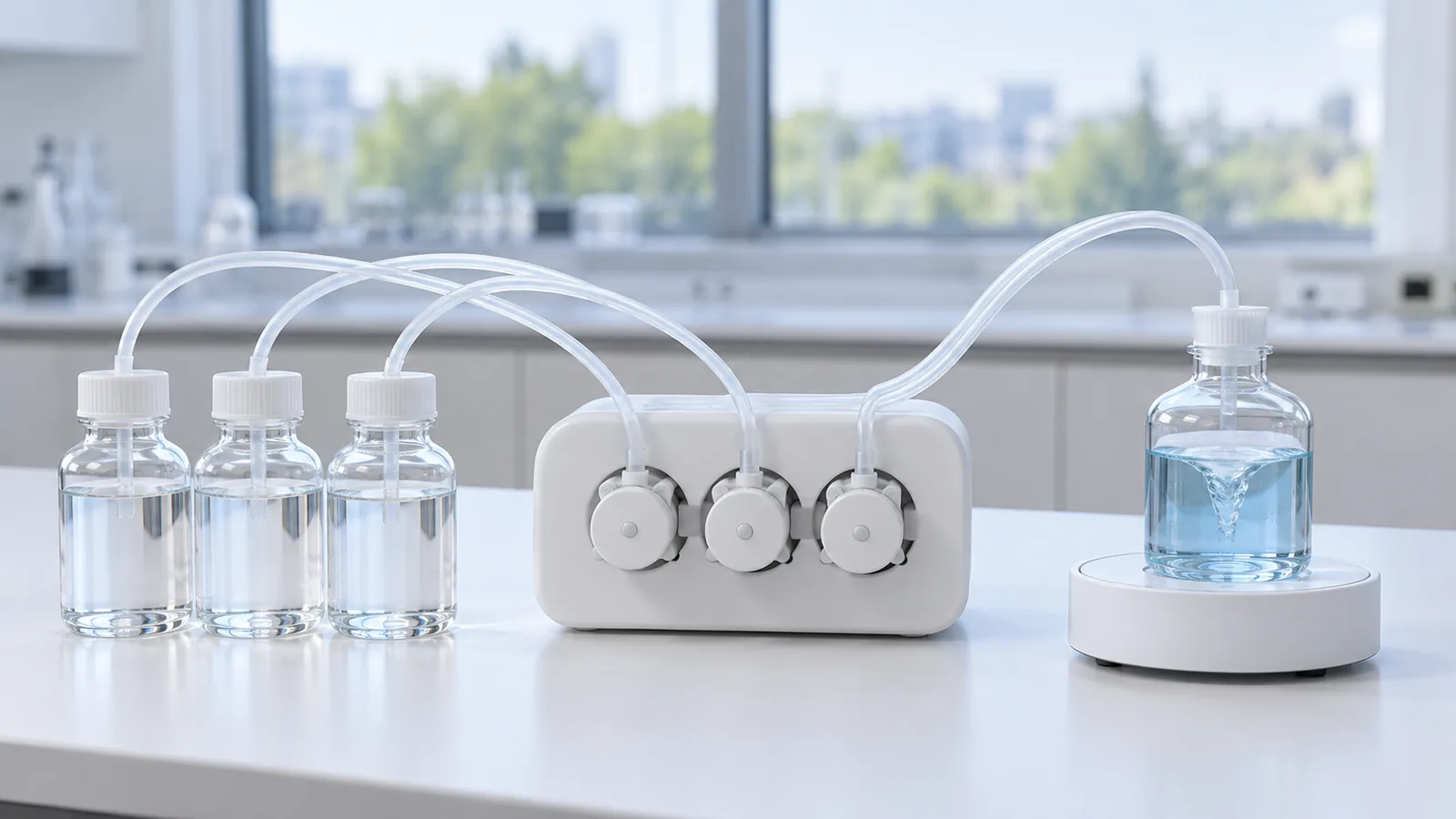
What Glow adds beyond GHK-Cu
Repair research: new blood supply, wound closure and tendon healing. Both partners are studied on injuries rather than on how skin looks.
BPC-157’s record is built on injury models. It drives new blood vessel growth and repair-cell movement, and in rats it has helped severed tendons and ligaments and damaged gut lining heal. Its skin work is about burns and open wounds: a BPC-157 cream sped healing of burns in mice, and later studies repeated that on laser wounds and chemical burns. BPC-157 vs GHK-Cu sets that record next to GHK-Cu’s tissue by tissue.
TB-500 is about getting cells into a wound. Thymosin beta-4, the protein it comes from, sped skin repair in a 1999 NIH study in rats: the new skin closing over treated wounds ran 42% ahead of saline by day four and up to 61% ahead by day seven. That work used the whole 43-amino-acid protein. The seven-amino-acid TB-500 has its own result in a 2003 NIH study, where it repaired skin wounds in 26-month-old mice about as well as the full protein did.
What neither partner adds is evidence on skin quality. Neither BPC-157 nor TB-500 has been tested on fine lines, laxity, firmness or density, the measures the GHK-Cu cream trials report. No study has tested the three together either. Glow is a design built from three separate research records, and its case rests on each record holding at the amount the vial delivers.
Is there enough BPC-157 and TB-500 in Glow?
At the top of the GHK-Cu range, yes for BPC-157 and roughly for TB-500. At the bottom, no for either. The ratio is fixed when the powder is made, so the copper peptide sets the draw and the partners get a fifth of it. Research protocols run GHK-Cu at 1 to 2mg a day, and the partners land where that puts them:
| Daily draw, 2.5mL mix | GHK-Cu | BPC-157 a day (own range 250–500mcg) | TB-500 a week (own maintenance 2–2.5mg) |
|---|---|---|---|
| 5 units | 1mg | 200mcg, under the floor | 1.4mg, under a maintenance week |
| 7.5 units | 1.5mg | 300mcg, inside the range | 2.1mg, a maintenance week |
| 10 units | 2mg | 400mcg, inside the range | 2.8mg, just over maintenance |
| 10 units, current batch as measured | about 2.2mg | about 490mcg, near the top | about 3.2mg, still short of loading |
A Glow protocol that opens at 5 units, as many do for the first week, gives the partners less than either one is run at alone. From 7.5 units up, BPC-157 sits inside its daily range and TB-500 matches a maintenance week. TB-500’s loading weeks, 4 to 5mg in the TB-500 dosage chart, stay out of reach: getting there through Glow would push the GHK-Cu near 3mg a day, past its 2mg ceiling.
The last row runs higher because the current batch measured over label on all three peptides, most of all on BPC-157. The plain reading: the partners count when Glow runs at 10 units a day, and they are passengers at 5.
GHK-Cu vs Glow for skin
For skin quality, GHK-Cu alone does the same job as Glow. Every human skin result, from collagen to firmness, density and finer lines, comes from GHK-Cu, and Glow holds the same 50mg of it. In one of the trials collected in Pickart and Margolina’s 2015 review, 67 women aged 50 to 59 used a GHK-Cu cream twice a day for 12 weeks and finished with firmer, thicker, denser skin, fewer fine lines and coarse wrinkles, and less mottled pigmentation. Biopsies showed the skin’s outer cells multiplying faster.
Those trials were creams. No published human study has injected GHK-Cu for skin, a gap Injectable Copper Peptides for Skin Care looks at in full. Nothing about that changes between the two vials: the GHK-Cu in each is the same, at the same amount.
Glow earns its place in skin research when the skin has been injured. Burns, open wounds and laser damage sit inside the BPC-157 and TB-500 record, where repair speed and wound closure are the measures. Skin ageing research reads collagen, laxity and lines, which belong to GHK-Cu, and the plain vial delivers them for $48 less.
GHK-Cu vs Glow for hair growth
GHK-Cu. The hair-follicle research behind both vials belongs to the copper peptides. Pickart’s review lists faster healing of hair follicles among GHK-Cu’s wound findings, and in a 2007 Seoul National University study its close relative AHK-Cu lengthened human hair follicles kept alive in the lab and helped the cells at the follicle’s base multiply.
Of Glow’s partners, only one has a hair connection, and it does not carry over. Thymosin beta-4 sped hair growth in rats and mice by moving follicle stem cells to the base of the follicle during the growth phase, but that was the full 43-amino-acid protein. No hair study has used the seven-amino-acid TB-500, and BPC-157 has no hair research at all. For hair, Glow works through its GHK-Cu, the same 50mg as the plain vial at more than twice the price.
GHK-Cu vs Glow cost
Glow costs $48 more per vial than 50mg of GHK-Cu, and that $48 is the price of the two partners. It buys 20mg of peptide at $2.40 per mg. Bought as their own vials, BPC-157 is $69 for 10mg and TB-500 is $66 for 10mg, $6.90 and $6.60 per mg, and the Wolverine Peptide Stack pairs 10mg of each for $79, $3.95 per mg. No other Simms Research vial prices BPC-157 and TB-500 as low.
Per 30 days at 2mg of GHK-Cu a day, both vials run 25 days, so a 50mg GHK-Cu vial comes to about $58 and Glow to about $115. The same three peptides at Glow’s amounts from separate vials cost about $220, or about $152 as GHK-Cu plus Wolverine. When all three are wanted, Glow is the cheapest way to run them. When only the GHK-Cu is wanted, the plain vial is about $57 a month cheaper for an identical dose of it.
Lighter protocols widen the gap. Once mixed, a vial is good for 28 days in the fridge, and below about 1.8mg of GHK-Cu a day that clock ends before the powder does, so either product costs one vial every four weeks: $48 against $96. That is also the range where the partners fall under their own working amounts.
Can you take GHK-Cu and Glow together?
Yes, though a full dose of both doubles the copper peptide. Glow already brings the GHK-Cu, so 10 units of Glow plus a 2mg draw of GHK-Cu comes to 4mg a day, twice the top of the range research protocols use. Two pairings make sense instead.
The first keeps the GHK-Cu vial off the syringe. Glow covers the daily injected dose, and a GHK-Cu vial is diluted for skin work on the side, the route the human cream trials used. The GHK-Cu dosage guide lists the topical strengths a 50mg or 100mg vial makes.
The second is for research that wants the partners at full strength, which Glow cannot reach. Plain GHK-Cu with the Wolverine stack takes the copper peptide out of the ratio: the Wolverine vial runs BPC-157 and TB-500 at 500mcg each a day, and the GHK-Cu vial sits anywhere in its 1 to 2mg range. With 2mg of GHK-Cu, that comes to about $176 per 30 days, against about $115 for Glow at its fixed ratio.
Is GHK-Cu or Glow better?
For most research asking this question, GHK-Cu. Glow is better only when repair is part of what is being measured, and only when it runs in the upper half of its range.
Choose GHK-Cu for skin quality, anti-ageing, hair and topical work, and for any protocol held near 1mg a day. Every human skin result comes from it, Glow holds no more of it, and the plain vial costs $48 less, about $58 per 30 days against $115.
Choose Glow when the research spans skin and repair: burns, open wounds, skin recovering from a procedure, tendon work alongside skin. Run at 7.5 to 10 units a day, it puts BPC-157 inside its range and TB-500 at a maintenance week or a little over, and it is the cheapest way to have all three. The Glow peptide dosage chart sets out the draw and the weekly schedule, and the peptide calculator works out the units for any other water amount.
Choose neither when BPC-157 and TB-500 are the subject and GHK-Cu is not. The Wolverine stack doses the pair directly, with no copper peptide setting the amount.
GHK-Cu and Glow lab results
Both measured over label at their latest test. The current GHK-Cu batch went to an independent lab in July 2026, which ran three vials: 99.82% average purity and 52.05mg of GHK-Cu in each 50mg vial, identity confirmed by LC-MS. It passed the endotoxin screen, tested negative for heavy metals and showed no microbial growth. All four GHK-Cu batches posted so far hold more than 50mg.
The current Glow batch was tested in April 2026 with each peptide counted on its own: 55.14mg of GHK-Cu, 12.32mg of BPC-157 and 11.59mg of TB-500 against 50mg, 10mg and 10mg on the label, at 99.28% purity. LC-MS confirmed all three peptides, and the batch passed its endotoxin screen. Each certificate opens from the GHK-Cu lab results and Glow lab results pages, and how to read a peptide COA walks through every field on them.
Frequently asked questions
Can I switch from GHK-Cu to Glow without changing the dose?
Yes, if the water matches. A 50mg GHK-Cu vial and a Glow vial mixed with 2.5mL each hold 20mg of GHK-Cu per mL, so 10 units is 2mg of it from either. The Glow draw simply adds 400mcg of each partner. One bottle of Research Water, $20 for 10mL, covers four mixes at that volume.
Does Glow have more side effects than GHK-Cu?
Nothing in the record says so. The usual report from either is a brief sting at the site, and it comes from the copper peptide, at the same strength in both when the water matches; 5mL instead of 2.5mL softens it. Thymosin beta-4 given intravenously to healthy volunteers showed no dose-limiting toxicity, and BPC-157’s recent human pilots recorded no adverse events.
Is Klow better than GHK-Cu?
Only where inflammation is part of the research. The Klow Peptide Blend is Glow plus 10mg of KPV, the anti-inflammatory tail of alpha-MSH, at $122 for 80mg with the same 50mg of GHK-Cu, and KPV adds nothing measured for collagen or hair. Glow vs Klow sets out when that fourth peptide pays off.
Are GHK-Cu and Glow approved?
No. Neither has drug approval; GHK-Cu has a long history in cosmetics, and Simms Research sells both for laboratory research only.