

Blog
BPC-157 vs TB-500: Which Is Better? (2026)
BPC-157 and TB-500 compared: what each is, how they differ, the first head-to-head tendon study, doses, stacking them as the Wolverine stack, and which suits which research.

BPC-157 and TB-500 are the two names that come up first in tissue-repair research. They sit next to each other on every peptide store’s shelf, share the same blends and get searched together, so they are easy to take for two versions of one thing. They aren’t. They come from different proteins, work on different parts of the cell, and their research is strongest in different tissues.
Simms Research sells both on their own, BPC-157 in 10mg and 20mg vials and TB-500 in a 10mg vial, and together as the Wolverine Peptide Stack. Choosing between them comes down to the tissue being studied, the schedule the protocol can keep, and whether the two belong in the same research at all.
What are BPC-157 and TB-500?
Both are short synthetic peptides studied for repair. BPC-157 is 15 amino acids taken from body protection compound, a protein in human gastric juice. It stays intact in stomach acid, which is rare for a peptide and the reason it has been studied by mouth as well as by injection. Most of its record comes from rat studies of injured tendon, ligament, muscle and gut.
TB-500 is seven amino acids, Ac-LKKTETQ, copied from the stretch of thymosin beta-4 that grips actin, the protein cells use to change shape and move. Thymosin beta-4 itself is a 43-amino-acid protein found in nearly every cell, and much of the research quoted for TB-500 was done on that full protein, in skin wounds, the heart, the eye and hair. The TB-500 Simms Research sells is the seven-amino-acid peptide; the Wolverine guide covers which TB-500 is in the vial and what the smaller molecule does to milligram figures.
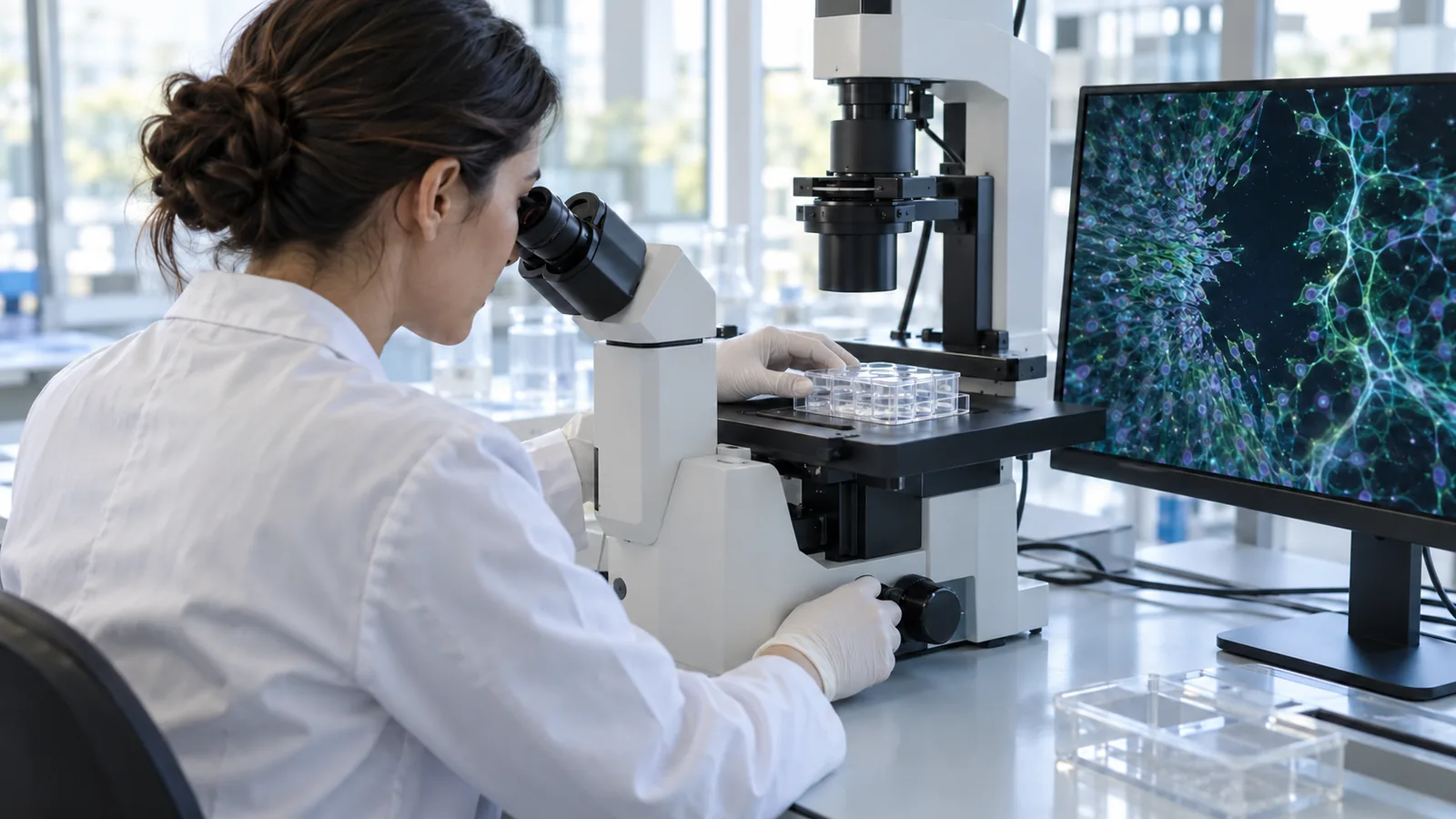
What is the difference between BPC-157 and TB-500?
What each one acts on. BPC-157 works on the signals around an injury. It switches on VEGFR2, the receptor that drives new blood vessels, tunes the nitric oxide system, and in rat tendon cultures it drew fibroblasts out of tendon fragments faster, sped their migration and kept them alive under oxidative stress. A 2014 follow-up found it raised the number of growth hormone receptors on the same cells.
TB-500 works on the cell’s skeleton. It binds single actin units and holds them in reserve, so a cell can rebuild its frame quickly and crawl toward damage. In the first wound study of its parent protein, run at the National Institutes of Health in 1999, thymosin beta-4 increased new skin cover over a rat wound by 42% against saline at day 4 and by up to 61% at day 7, and drew two to three times as many skin cells across a migration filter.
The market’s shorthand is that BPC-157 works locally and TB-500 systemically. Half of that holds. TB-500’s parent protein is present throughout the body, and its research runs across skin, heart, eye and hair. BPC-157’s research clusters in gut and connective tissue, yet nearly every rat study gave it into the abdomen or in drinking water, well away from the damaged tendon or ligament, and the tissue still healed. The real split is in what each is studied for, not in how far it travels.
BPC-157 vs TB-500 side by side
The two at a glance, with the vials Simms Research sells:
| BPC-157 | TB-500 | |
|---|---|---|
| Length | 15 amino acids | 7 amino acids, cut from a 43-amino-acid protein |
| Comes from | A protein in human gastric juice | Thymosin beta-4, present in nearly every cell |
| Main action | New blood vessels and tendon-cell outgrowth | Actin binding and cell migration |
| Strongest research | Tendon, ligament, muscle, gut | Skin wounds, heart, eye, hair (mostly full thymosin beta-4) |
| Studied by mouth | Yes, in rats’ drinking water | No, injected or applied to the surface |
| Half-life | Under 30 minutes in rats and dogs | No published figure |
| Human reports | Three small pilots since 2021 | None on TB-500; formal trials of full thymosin beta-4 |
| Usual research schedule | 250–500mcg daily | 2–2.5mg twice a week, then weekly |
| Simms Research vials | 10mg $69, 20mg $109 | 10mg $66 |
| Current batch | 99.651% purity, 10.19mg per 10mg vial | 99.678% purity, 10.44mg per 10mg vial |
BPC-157 vs TB-500 for tendon repair
Both work, and in the only head-to-head test TB-500 came out slightly ahead. In a July 2026 study in rats, 32 animals had the Achilles tendon cut and stitched, then got daily injections for 30 days: BPC-157 at 10mcg per kilogram, TB-500 at 60mcg per kilogram, both, or neither. Four weeks on, the repaired tendons broke at:
| Group | Median breaking load | Against untreated |
|---|---|---|
| Untreated | 26.9 newtons | Baseline |
| BPC-157 alone | 37.2 newtons | 38% stronger |
| TB-500 alone | 37.4 newtons | 39% stronger |
| BPC-157 and TB-500 | 34.5 newtons | 28% stronger |
Either peptide alone made the repair close to 40% stronger, and the two were almost level. TB-500’s gain was the one that reached statistical significance, and its tendons also scored best for fibre alignment and collagen structure. The pair together added nothing over either one at four weeks.
BPC-157 has the longer tendon record behind it. A 2003 study restored breaking strength, stiffness and walking function in rats whose Achilles tendon was cut and left unrepaired; a 2006 study sped the healing of a tendon detached from the bone; and a 2010 study healed the knee’s medial collateral ligament whether BPC-157 was injected, added to drinking water or spread on the site as a cream. Before 2026, TB-500 had almost no tendon-specific data, which is why the head-to-head was run. For ligament research, BPC-157 is the one with a study.
BPC-157 vs TB-500 benefits for muscle, gut and skin
Outside tendon, the two split cleanly: muscle and gut belong to BPC-157, skin, hair, heart and eye to TB-500’s parent protein.
Muscle
BPC-157 has three rat muscle-injury studies: a quadriceps cut clean through, which it kept healing across 72 days until the muscle looked and worked close to normal; a crushed calf muscle; and muscle healing slowed by corticosteroids. Thymosin beta-4’s muscle work is in mice with muscular dystrophy, where six months of twice-weekly injections raised the count of regenerating fibres without improving grip strength. Neither peptide is studied for building muscle; both are studied for repairing it.
Gut
BPC-157’s home ground. It was found in gastric juice, survives it, and in rats it healed colitis, fistulas, surgical joins in the bowel and stomach damage from anti-inflammatory painkillers, very often given in the drinking water. It reached clinical trials for inflammatory bowel disease under the code PL 14736. Gut repair is not where TB-500’s research sits.
Skin, hair, heart and eye
TB-500’s territory, through thymosin beta-4: the 1999 skin-wound study, a 2004 study in which it sped hair growth by activating follicle stem cells, a 2004 paper in Nature in which it kept heart muscle alive and improved heart function after a heart attack in mice, and eye drops of the protein that have been through clinical trials for corneal healing. The seven-amino-acid peptide on its own has a wound result too: in a 2003 National Institutes of Health study it sped skin repair in aged mice about as well as the full protein.
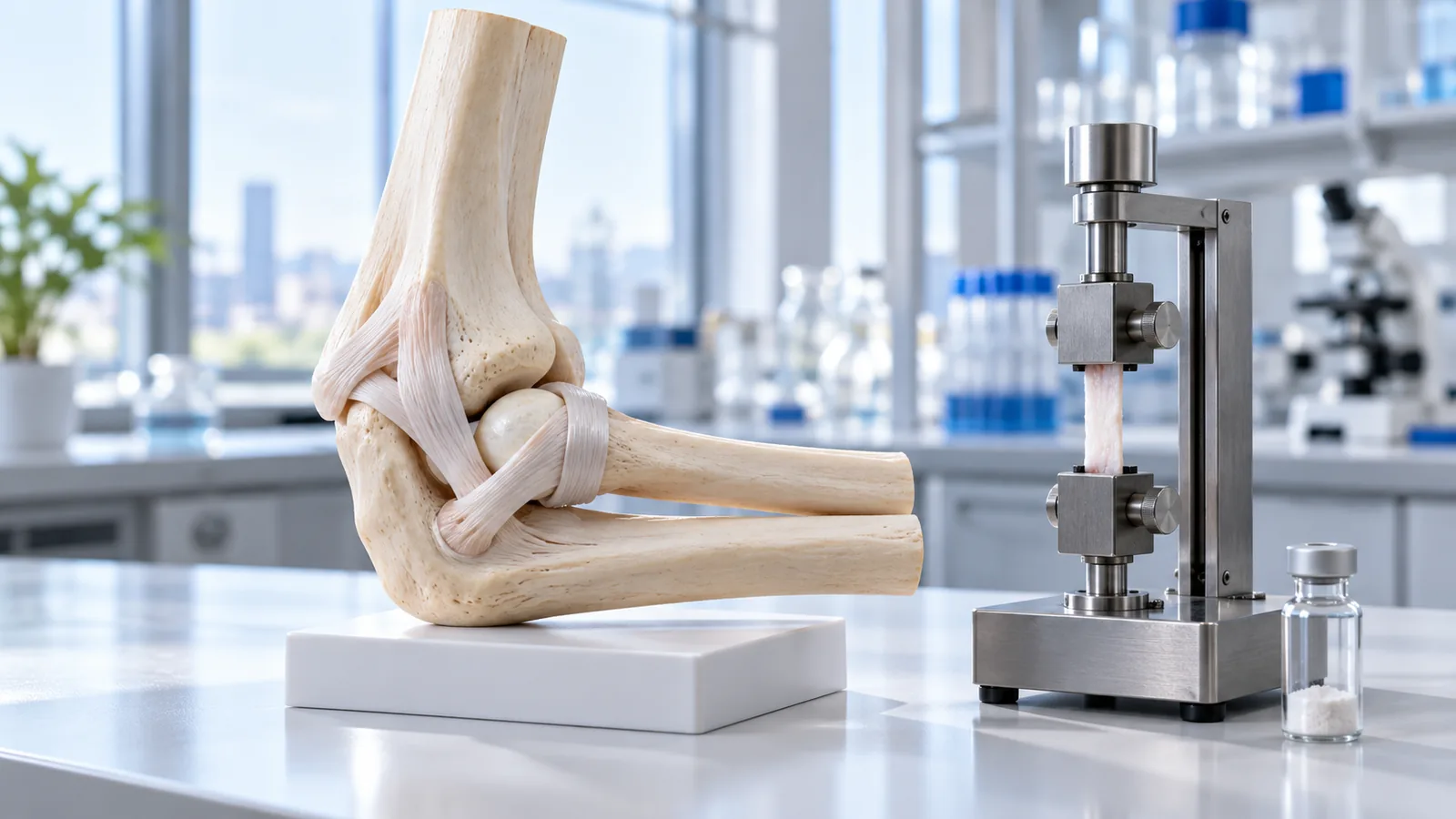
BPC-157 vs TB-500 for armwrestling
Armwrestlers search this because the sport’s injuries are connective-tissue injuries: the flexor tendons at the inner elbow, the biceps tendon, and the ligaments of the elbow and wrist, loaded in ways gym training never does. That is exactly the tissue where both peptides have their tendon data and where BPC-157 has its ligament data.
Read against those injuries, the research points three ways. BPC-157 carries the broader record across tendon and ligament. TB-500 carries the head-to-head strength result in a repaired tendon. And a tendon insertion at the elbow, poorly supplied with blood and slow to rebuild, is where BPC-157’s blood-vessel work and TB-500’s cell-migration work both apply. That overlap is the usual case for running the two together.
Should you take TB-500 with BPC-157?
Most tissue-repair protocols do, and the pairing has its own name: the Wolverine stack. The reasoning is the difference above. One peptide builds the blood supply and draws repair cells into the gap; the other gives those cells the moving parts to get there.
Evidence on the pair itself is thin and points both ways. The one published human report pairing BPC-157 with thymosin beta-4, TB-500’s parent protein, was a 2021 review of knee injections: the two went in together as a single shot into the joint, and three of four patients improved. The 2026 rat tendon study found the pair no stronger than either alone at four weeks. Each also stands on its own: nearly every BPC-157 study used BPC-157 alone.
There are two ways to run both. Separate vials keep each on its own schedule, BPC-157 daily and TB-500 twice a week. One pre-mixed vial, Simms Research’s Wolverine Peptide Stack, holds 10mg of each in a 20mg vial for $79 and runs both daily in equal amounts; its units, schedules and vial life are in the Wolverine stack dosage guide. Glow and Klow carry the same 10mg of each with 50mg of GHK-Cu, which sets their dose (GHK-Cu dosage guide), and Klow adds KPV (Klow dosage chart); Glow vs Klow sets out which fits which research.
Which is better, BPC-157 or TB-500?
Neither wins everywhere. Each wins its own tissues, and in tendon they finish almost level.
Choose BPC-157 for gut research, ligament work, muscle injury models, and tendon work that leans on the larger body of studies. It has the deeper record on the exact peptide in the vial, it is the one studied by mouth, and its daily schedule suits protocols built around a daily draw.
Choose TB-500 for skin wounds, hair, heart and eye models, and for tendon work measured on breaking strength and fibre structure, where it led the only head-to-head study. Its twice-weekly schedule suits protocols that don’t want a daily draw.
Choose both for connective-tissue injuries where blood supply and cell migration both matter, the armwrestler’s elbow included. The Wolverine Peptide Stack runs them from one vial.
BPC-157 vs TB-500 dosage
BPC-157 is dosed in micrograms every day, TB-500 in milligrams twice a week. Units are on a U-100 insulin syringe:
| BPC-157 | TB-500 | |
|---|---|---|
| Research protocol range | 250–500mcg once or twice a day | 2–2.5mg twice a week for 4–6 weeks, then once a week |
| Vial and water | 10mg with 2mL, or 20mg with 4mL | 10mg with 2mL |
| Units for common draws | 250mcg is 5 units, 500mcg is 10 units | 2mg is 40 units, 2.5mg is 50 units |
| One vial covers | 20 days at 500mcg a day (10mg vial) | 2 weeks at 2.5mg twice a week |
| Usual protocol length | 6–12 weeks | 6–12 weeks |
The peptide calculator gives the units for any other vial, water amount or dose, and the mixing steps for both are in how to reconstitute peptides. One 10mL vial of Simms Research’s Research Water covers five 2mL mixes (more in bac water for peptides), and once mixed, each vial keeps 28 days in the fridge; Do Peptides Need to Be Refrigerated? covers the powder and the mixed vial.
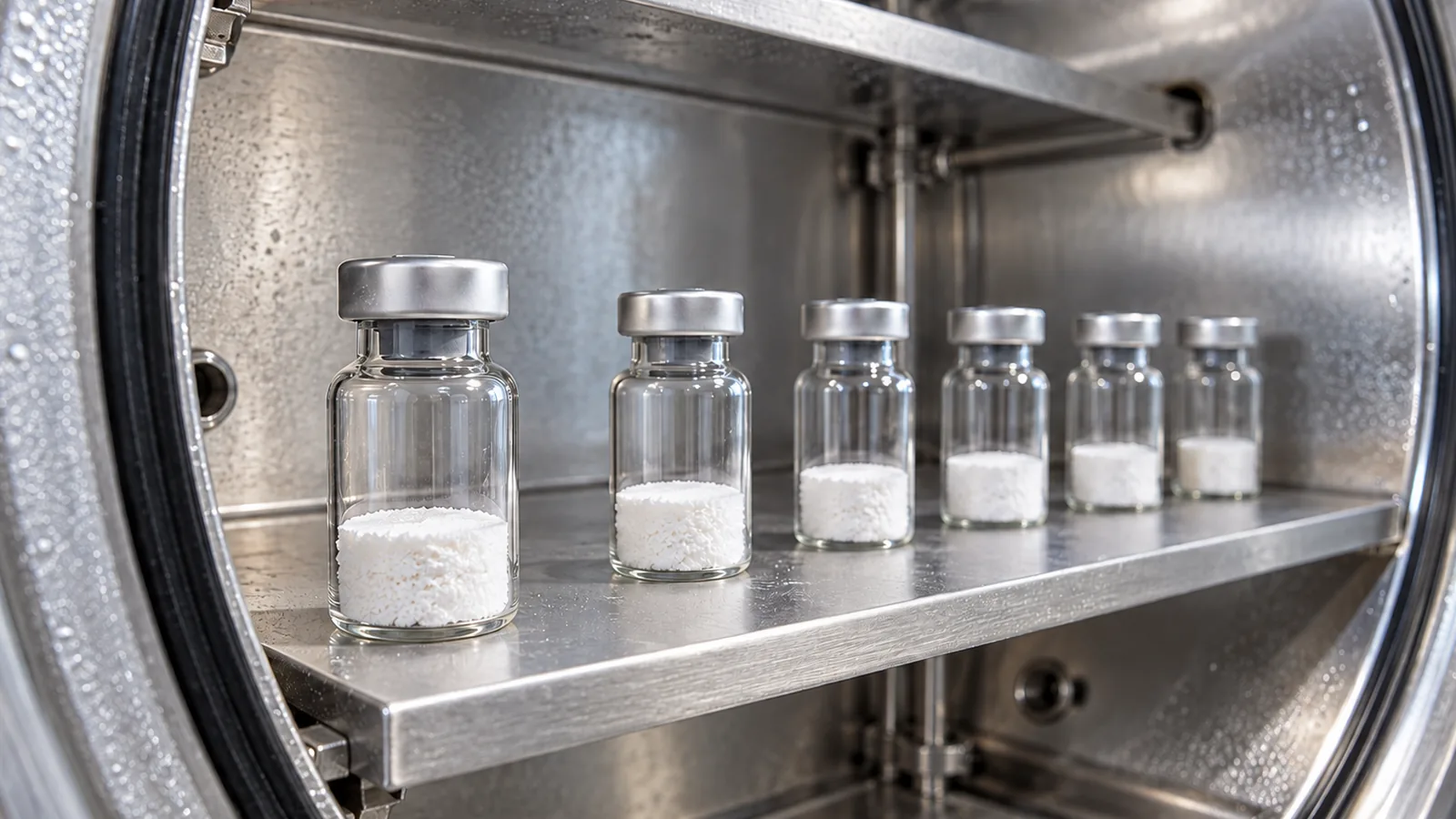
What the BPC-157 and TB-500 batch reports show
Both measured a little above their 10mg labels at better than 99.6% purity. The current batch of each was tested in July 2026 by an independent ISO-certified lab across three vials: BPC-157 averaged 10.19mg at 99.651% purity, and TB-500 averaged 10.44mg at 99.678%. LC-MS confirmed the identity of both, and both passed endotoxin, heavy-metal and sterility screens.
For the bench, that means a draw from a vial mixed by its label holds about 2% more BPC-157, or 4% more TB-500, than its unit count says. BPC-157 has five published batches going back to September 2025, every one above 99.1% purity and above its 10mg label; this TB-500 batch is the first posted for it. Each certificate opens in full from the BPC-157 lab results and TB-500 lab results pages, alongside every published certificate, and How to Read a Peptide Certificate of Analysis explains each line.
Frequently asked questions
Should I take TB-500 with BPC-157?
For connective-tissue research most protocols do, as the Wolverine stack. Each also works alone: in the one head-to-head tendon study, either peptide by itself did as well as the pair.
Which peptide does Joe Rogan take?
BPC-157 is the one Joe Rogan has talked about on his podcast for injuries. Paired with TB-500 it becomes the Wolverine stack, which Simms Research sells as the Wolverine Peptide Stack.
Can BPC-157 cause liver damage?
No study has found that it does. In rats it counteracted the liver damage from overdoses of diclofenac, ibuprofen and paracetamol, bringing liver enzymes back down; a 2020 toxicology program found no serious toxicity in mice, rats, rabbits or dogs; and a 2025 pilot that infused up to 20mg into two adults found no change in liver markers.
Does BPC-157 mess with testosterone?
No study has linked it to testosterone. BPC-157 is not a hormone, and its research sits in blood vessels, nitric oxide and tissue repair. Its one hormone-related finding is that it raised growth hormone receptors on rat tendon cells.
Are BPC-157 and TB-500 approved?
Not as drugs. Simms Research sells both for laboratory research use only.