

Blog
How to Reconstitute Peptides: Step-by-Step Guide With Calculator
How to reconstitute any research peptide vial, with the bac water for every vial Simms Research sells and how to store peptides before and after mixing.

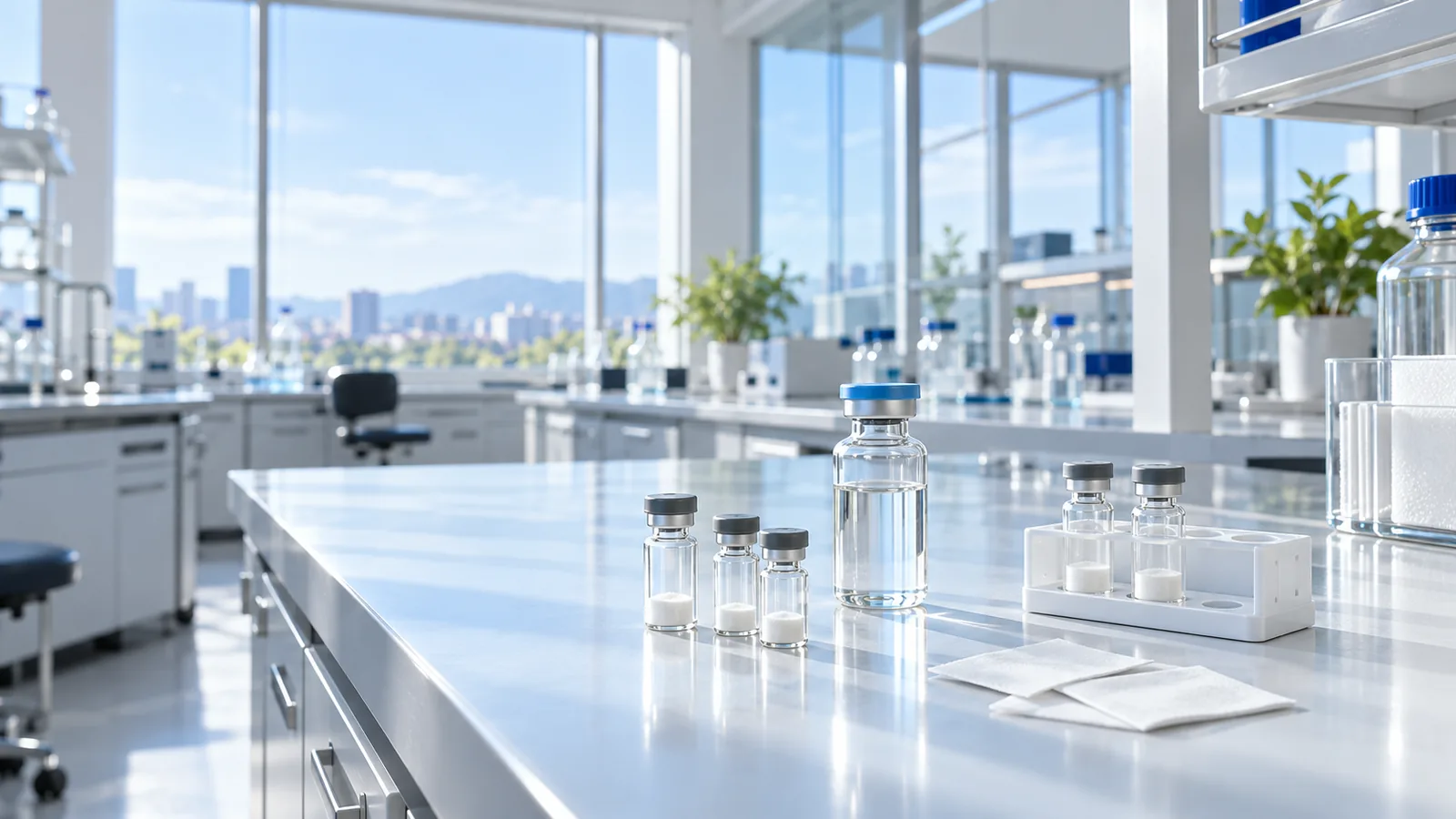
Research peptides arrive as a dry, freeze-dried cake at the bottom of a vial, and nothing in it can be measured until it has been dissolved. The bench work takes about five minutes and is the same for every compound: water in slowly, a gentle swirl, a clear vial into the fridge. What changes from one vial to the next is the amount of water, and that decides how many units on the syringe every dose takes until the vial is finished.
Simms Research stocks 27 compounds and blends across 37 vial sizes, from 10mg of KPV to 1,500mg of glutathione. Its bac water, Research Water, costs $20 for 10mL.
How to reconstitute peptides step by step
Let bac water run slowly down the glass, swirl until the powder has gone, and never shake it. The kit is short: the peptide, bac water, a few alcohol swabs and an insulin syringe of the U-100 type, the 1mL kind marked in units, which measures both the water and every dose after it.
| Step | What to do |
|---|---|
| 1. Let it warm | A vial from the fridge or freezer gets 10 to 15 minutes at room temperature, still sealed. |
| 2. Clean both tops | Flip off the caps and wipe the rubber of the peptide vial and the water vial with an alcohol pad. Give them a few seconds to dry. |
| 3. Fill the syringe | Draw the amount for that vial from the table below. A 1mL syringe filled to 100 holds exactly 1mL, so 2mL is two fills. |
| 4. Aim at the glass | Tilt the vial, rest the needle tip on the glass and press slowly, so the water slides down to the cake rather than hitting it. |
| 5. Release the air | Before the needle comes out, let the plunger ease back a little. The water has displaced air, and the vial pushes back. |
| 6. Swirl, never shake | Turn the vial in slow circles or roll it between the palms until no powder is left anywhere, including the shoulder of the glass. Shaking turns peptide into foam. |
| 7. Date it | Write the mixing date and the strength on the vial and put it straight in the fridge. |
Most 10mg cakes are gone within a minute or two of swirling. Heavy cakes, such as NAD+, glutathione and the 60mg GLP vials, take several minutes. Flecks that hang on usually clear after the vial rests 10 minutes and gets one more slow swirl; more force only adds foam. The vial is ready to use the moment it is clear.
NAD+ and glutathione take 5mL or more, so their water goes in with a 5mL or 10mL syringe, or in several fills of a 1mL one, letting the air back out between fills.
How much bac water to reconstitute peptides
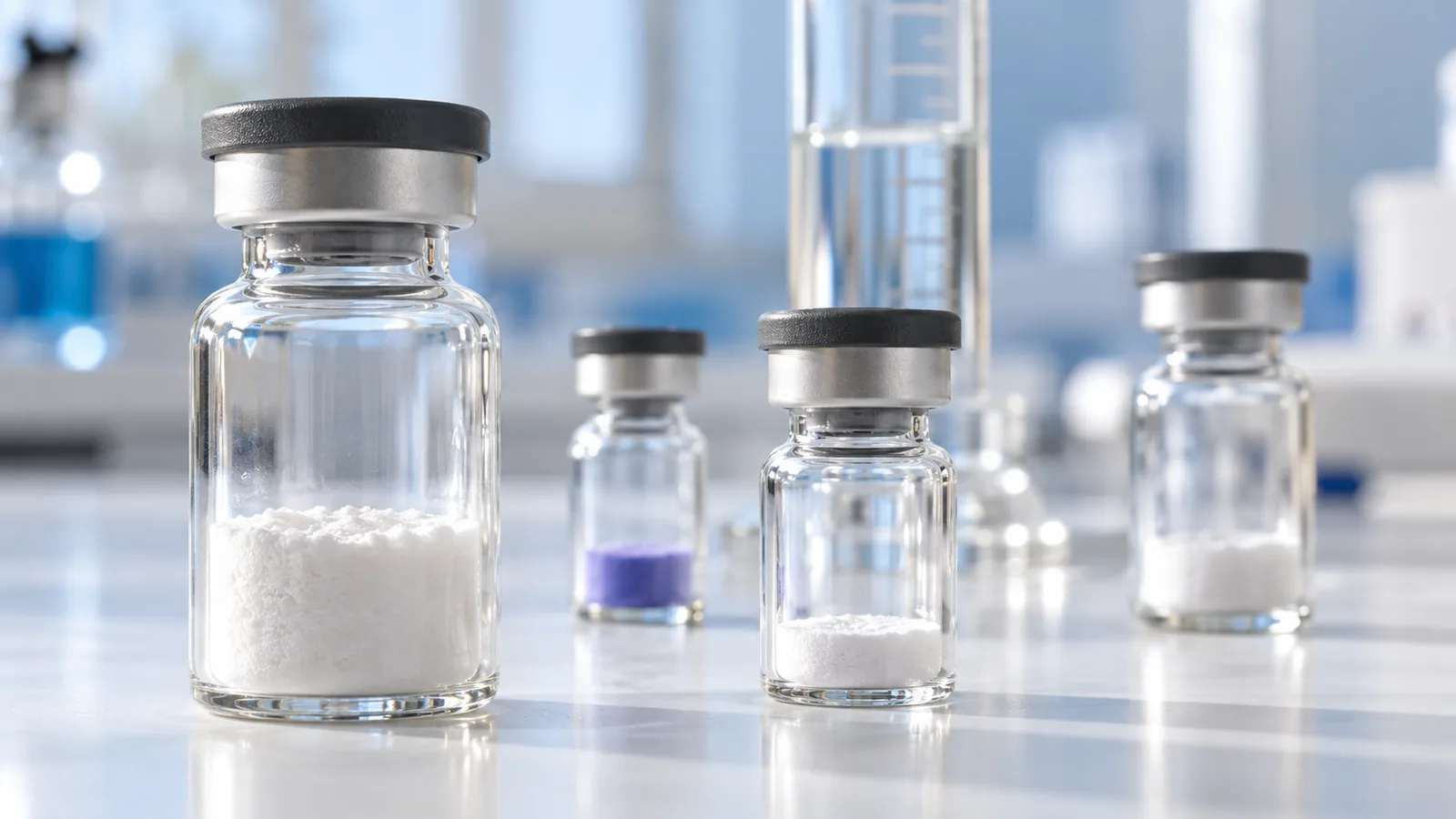
2mL for most 10mg vials. Every 10 units on the syringe then holds 500mcg, and 5 units holds 250mcg. The bigger vials take more water, and the GLP and copper-peptide vials are mixed so their usual doses land on whole lines. The water for every vial Simms Research sells, with what 10 units holds once it is mixed:
| Vial | Bac water | 10 units holds |
|---|---|---|
| AOD-9604 10mg | 2mL | 500mcg |
| BPC-157 10mg | 2mL | 500mcg |
| BPC-157 20mg | 4mL | 500mcg |
| CJC-1295 noDAC / Ipamorelin 10mg | 2.5mL | 200mcg of each |
| DSIP 10mg | 2mL | 500mcg |
| Epithalon 10mg | 2mL | 500mcg |
| GHK-Cu 50mg | 2.5mL | 2mg |
| GHK-Cu 100mg | 5mL | 2mg |
| Glow 70mg | 2.5mL | 2mg GHK-Cu, 400mcg each of BPC-157 and TB-500 |
| Glutathione 1,500mg | 6mL | 25mg |
| Ipamorelin 10mg | 3mL | 333mcg; every 3 units is 100mcg |
| Kisspeptin-10 10mg | 2mL | 500mcg |
| Klow 80mg | 2.5mL | 2mg GHK-Cu, 400mcg each of BPC-157, TB-500 and KPV |
| KPV 10mg | 2mL | 500mcg |
| Melanotan I 10mg | 2mL | 500mcg |
| Melanotan II 10mg | 2mL | 500mcg |
| MOTS-c 10mg | 2mL | 500mcg |
| NAD+ 500mg | 5mL | 10mg |
| NAD+ 1,000mg | 10mL | 10mg |
| PT-141 10mg | 2mL | 500mcg |
| Retatrutide 10mg | 1mL | 1mg |
| Retatrutide 20mg | 2mL | 1mg |
| Retatrutide 30mg | 3mL | 1mg |
| Retatrutide 60mg | 3mL | 2mg |
| Selank 10mg | 2mL | 500mcg |
| Semax 10mg | 2mL | 500mcg |
| Sermorelin 10mg | 2mL | 500mcg |
| SS-31 10mg | 2mL | 500mcg |
| TB-500 10mg | 2mL | 500mcg |
| Tesamorelin 10mg | 2mL | 500mcg |
| Tesamorelin 20mg | 2mL | 1mg |
| Thymosin Alpha-1 10mg | 2mL | 500mcg |
| Tirzepatide 10mg | 2mL | 500mcg |
| Tirzepatide 20mg | 2mL | 1mg |
| Tirzepatide 30mg | 2.4mL | 1.25mg |
| Tirzepatide 60mg | 2.4mL | 2.5mg |
| Wolverine 20mg | 2mL | 500mcg each of BPC-157 and TB-500 |
Water goes in once, on mixing day, and a larger dose later on simply means drawing more units from the same vial. In the blends, each draw carries every peptide in the vial in a fixed ratio, which is why the last column lists them all.
One 10mL vial of Research Water covers five 2mL mixes, four at 2.5mL or two at 5mL, inside the 28 days it keeps once opened. The two largest vials use more: a 1,000mg NAD+ vial takes the whole 10mL, and 1,500mg of glutathione only fully dissolves in a little over 5mL, so it gets 6mL, as the glutathione guide lays out.
Peptide reconstitution calculator
For any dose or water amount the table doesn’t cover, the Simms Research peptide calculator does the conversion. It takes three numbers, the milligrams in the vial, the millilitres of water and the dose, and returns the units to draw on a U-100 syringe: a 10mg vial with 2mL and a 250mcg dose comes back as 5 units. Retatrutide and tirzepatide have their own versions with every vial size preset, the retatrutide and tirzepatide calculators.
Blends need one adjustment: enter a single peptide’s share of the vial rather than the total. The 10mg CJC-1295 / Ipamorelin vial is 5mg of each, so 5mg goes in the vial field, the mistake the CJC-1295 / Ipamorelin guide walks through; for Glow and Klow, the GHK-Cu share is 50mg.
Labels are round numbers, and vials usually hold a little more. Simms Research posts each tested batch’s measured net content on its lab results pages; typing that figure into the vial field instead of the label gives units matched to that batch, and the certificate guide explains where that figure sits.
What reconstituted peptides should look like
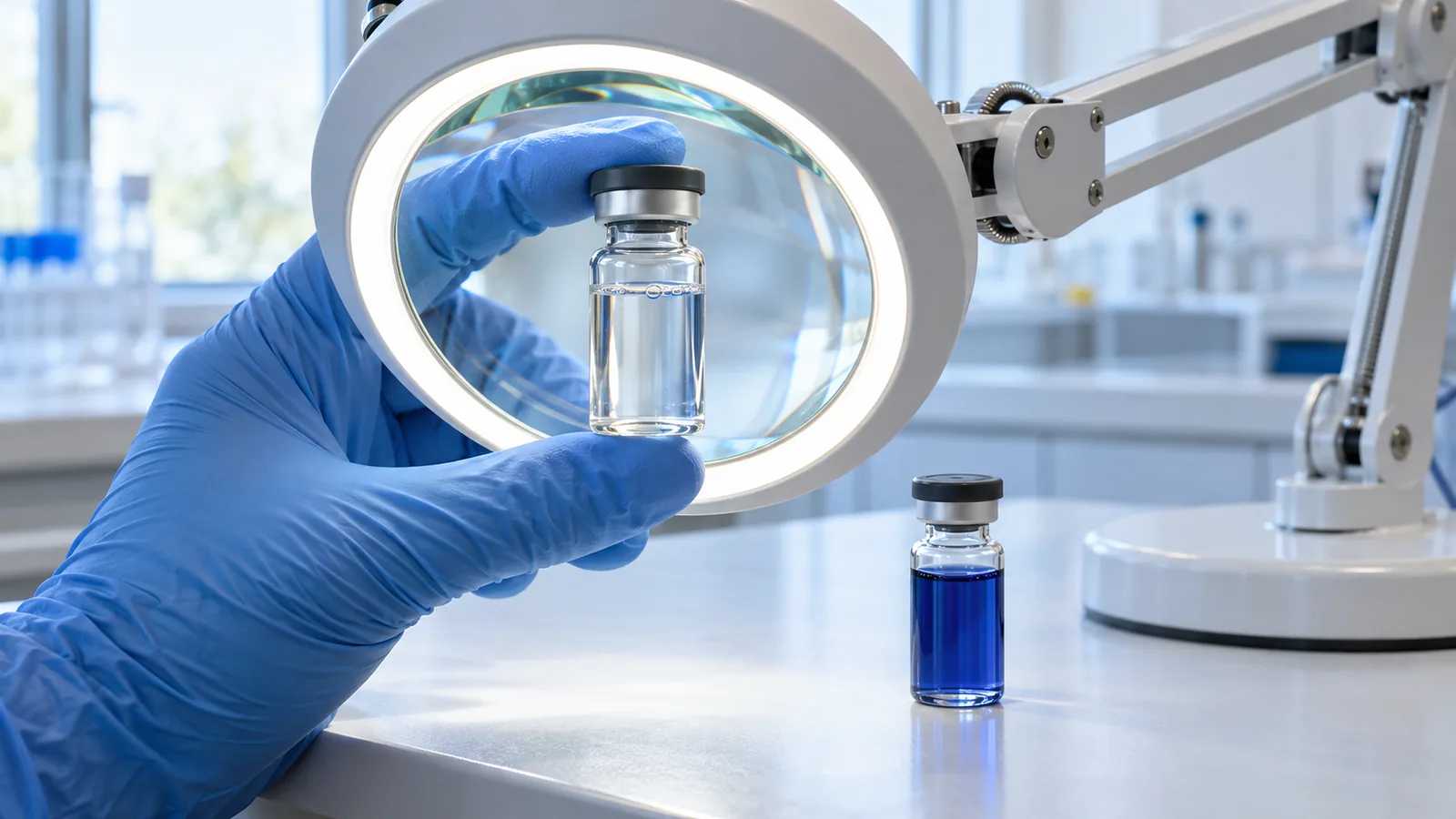
Clear and colorless, as plain as water, with nothing floating and nothing settled on the bottom. Copper is the one exception: GHK-Cu, and the Glow and Klow blends built around it, mix to a clear blue, a deep royal blue in a vial of GHK-Cu.
Three things look wrong and are not. Small bubbles or foam on top come from a fast stream or a shake, and clear on their own once the vial stands in the fridge for a few minutes. A milky look in the first minute is the same bubbles, not the peptide. White or blue dust stuck high on the glass, or under the stopper, is cake the water never reached; tilting the vial and rolling it slowly washes it down.
Cloudiness that survives a rest, specks that won’t dissolve, strings, or any yellow or brown tint in a peptide that should be clear rule the vial out (Bacteriostatic Water label, FDA, 2019), and so does a copper vial that turns green or brown.
How to store peptides before reconstitution
Sealed, cold, dry and dark: the fridge, 36–46°F (2–8°C), or a −20°C freezer for vials that will wait months for their turn. Every Simms Research product page gives the same instruction for the powder.
The dry cake is far tougher than the mixed vial. It handles weeks at room temperature, and Simms Research ships it without ice for that reason; a sealed vial left out overnight simply goes back in the fridge. A vial from the freezer is mixed exactly like one from the fridge, once it has had its few minutes on the bench.
With several vials of one compound, only the vial in use gets water. The others stay sealed, because a vial’s 28 days start on mixing day and the powder keeps far longer than the solution. Bac water lives at room temperature, and its own 28 days start the first time a needle goes through its stopper (Egrifta WR label, FDA, 2025).
How to store peptides after reconstitution
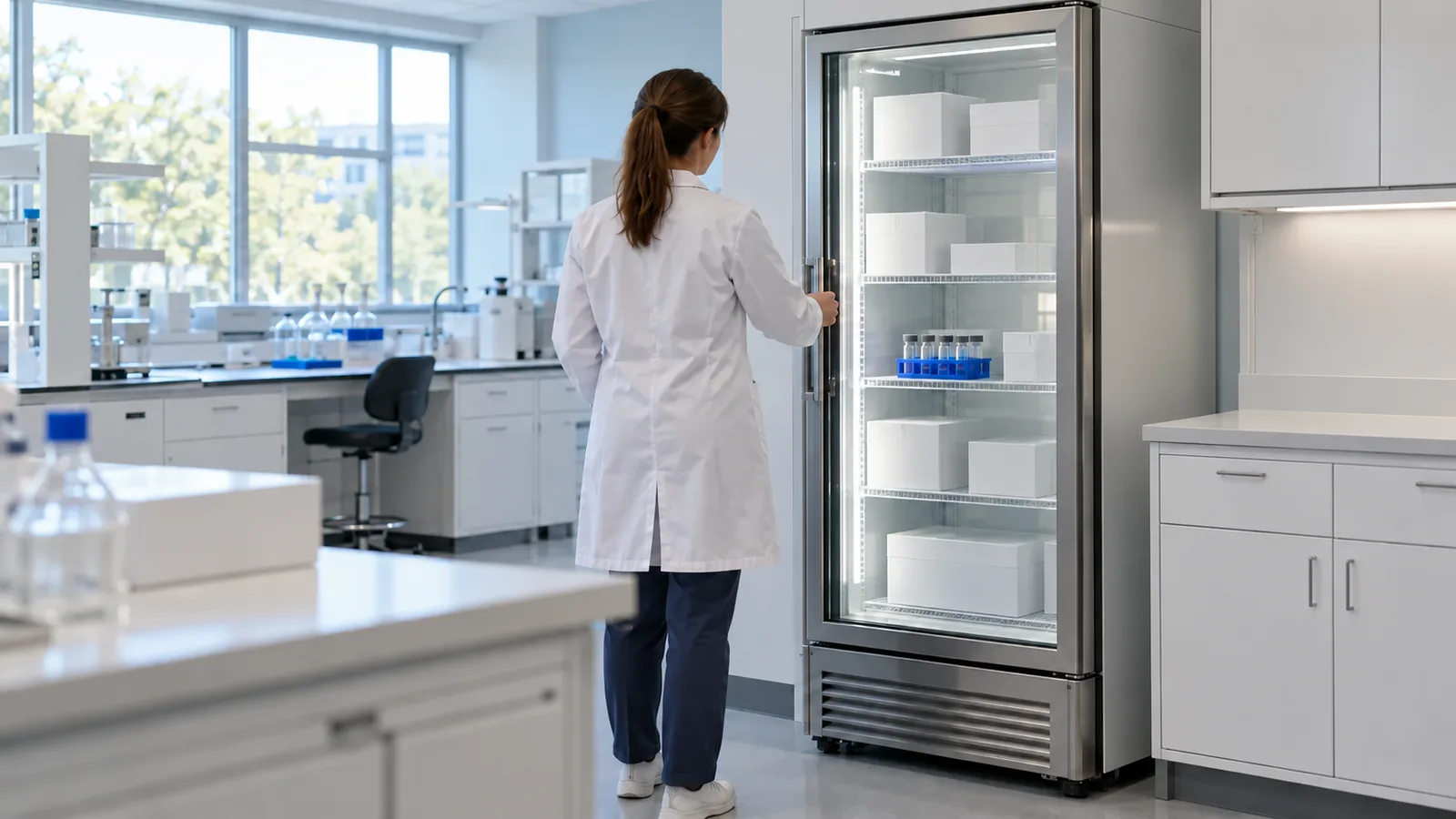
In the fridge, standing upright in its box or somewhere dark, for up to 28 days from the date written on it. The limit comes from the bac water: its benzyl alcohol keeps bacteria carried in by each needle from multiplying for that long, and Simms Research gives every mixed vial the same 28 days.
A mixed vial comes out for each draw and goes straight back. It never goes in the freezer, and one that froze at the back of a cold fridge is replaced (Zepbound label, FDA, 2026), since freezing and thawing breaks peptide down; the dry powder takes the cold without harm. Topping up with water later adds no days, because the clock runs from the first mixing.
A mixed vial that spent a few hours or a night on the counter is covered in the guide to peptide refrigeration.
How to reconstitute each peptide
The routine above fits every vial. Several compounds add something of their own, and each has a guide that covers it:
| Compound | What its guide adds |
|---|---|
| Retatrutide | Each vial matched to a step of the dose ladder, and water matched to every published batch |
| Tirzepatide | Why its two largest vials take 2.4mL, with the calculator built in |
| GHK-Cu | What the copper must never be mixed with, the color at each stage and topical batches |
| Klow | Where the four peptides’ ranges overlap, unit by unit |
| Glow | How the three-peptide blend compares with Klow |
| Wolverine stack | Which TB-500 is in the vial and the 1:1 draw chart |
| BPC-157 vs TB-500 | How the two differ, and which suits which research |
| KPV | The 10mg vial in units, and KPV inside Klow |
| Ipamorelin | The 10mg vial in units, timing and cycle length |
| CJC-1295 / Ipamorelin | Dosing a two-peptide vial by each peptide’s share |
| Tesamorelin | Both vial sizes measured against the trial doses |
| NAD+ | Mixing 500mg and 1,000mg cakes, and why a strong mix stings |
| Glutathione | The least water 1,500mg needs, and the strength each amount makes |
| Semax and Selank | Diluting a 10mg vial to nasal label strengths |
The water itself, and what separates real bac water from look-alikes, is the subject of bac water for peptides.
Frequently asked questions
How much water do I mix with my peptides?
It follows the vial. Most 10mg vials take 2mL, retatrutide takes 1mL for every 10mg, tirzepatide 2mL or 2.4mL, GHK-Cu and its blends 2.5mL per 50mg of GHK-Cu, and NAD+ and glutathione 5 to 10mL. The table above lists every vial.
How much BAC water to mix with BPC-157 10mg?
2mL. Each 10 units then holds 500mcg, and 250mcg is 5 units. A 20mg vial takes 4mL and reads the same. How BPC-157 compares with its usual partner is in BPC-157 vs TB-500.
How many units is 1mL for peptides?
100 units. A U-100 insulin syringe is marked 100 units to the millilitre for every peptide, so 50 units is 0.5mL and 10 units is 0.1mL. The milligrams in those units depend on the mix.
How do you calculate reconstitution?
Milligrams in the vial over millilitres of water gives the strength; the dose over the strength, times 100, gives the units to draw. The peptide calculator does both at once.
Does it matter how much bac water you use?
Not for the amount of peptide, which the water never changes. It matters for reading the syringe: too little water crowds a dose into a few units, too much spreads it past one syringe. The amounts in the table keep the usual doses on whole lines.
Can you reconstitute peptides with sterile water or saline?
Both dissolve peptides, but neither carries a preservative, so a vial mixed with either is for use the same day. A vial drawn from over weeks needs bacteriostatic water (Serostim label, FDA, 2026). Distilled, bottled and tap water aren’t sterile to begin with.
Do you reconstitute peptides every time?
No. Each vial is mixed once, and that one mix serves every draw for up to 28 days. A new vial gets its own water on the day it goes into use.
Should peptides be refrigerated before reconstitution?
They keep longest in the fridge or freezer, but sealed powder tolerates room temperature for weeks. Once mixed, the vial lives in the fridge.